Dog Nail Trimming Tips: A Calm Method That Actually Works
By:Author:Raising Dog Editorial
Updated on:October 20, 2026
- Does Trimming Nails Regularly Actually Make a Difference?
- Clippers or a Grinder: Which Tool Fits Your Dog
- Why Short Paw Handling Sessions Beat One Long Trim
- Adjusting Nail Trimming for Different Dogs
- Fitting Nail Care Into a Normal Week
- The Myth of the One-Session Perfect Trim
- Making Nail Trimming Part of Raising Dog's Routine
- Getting the First Trim Done This Week
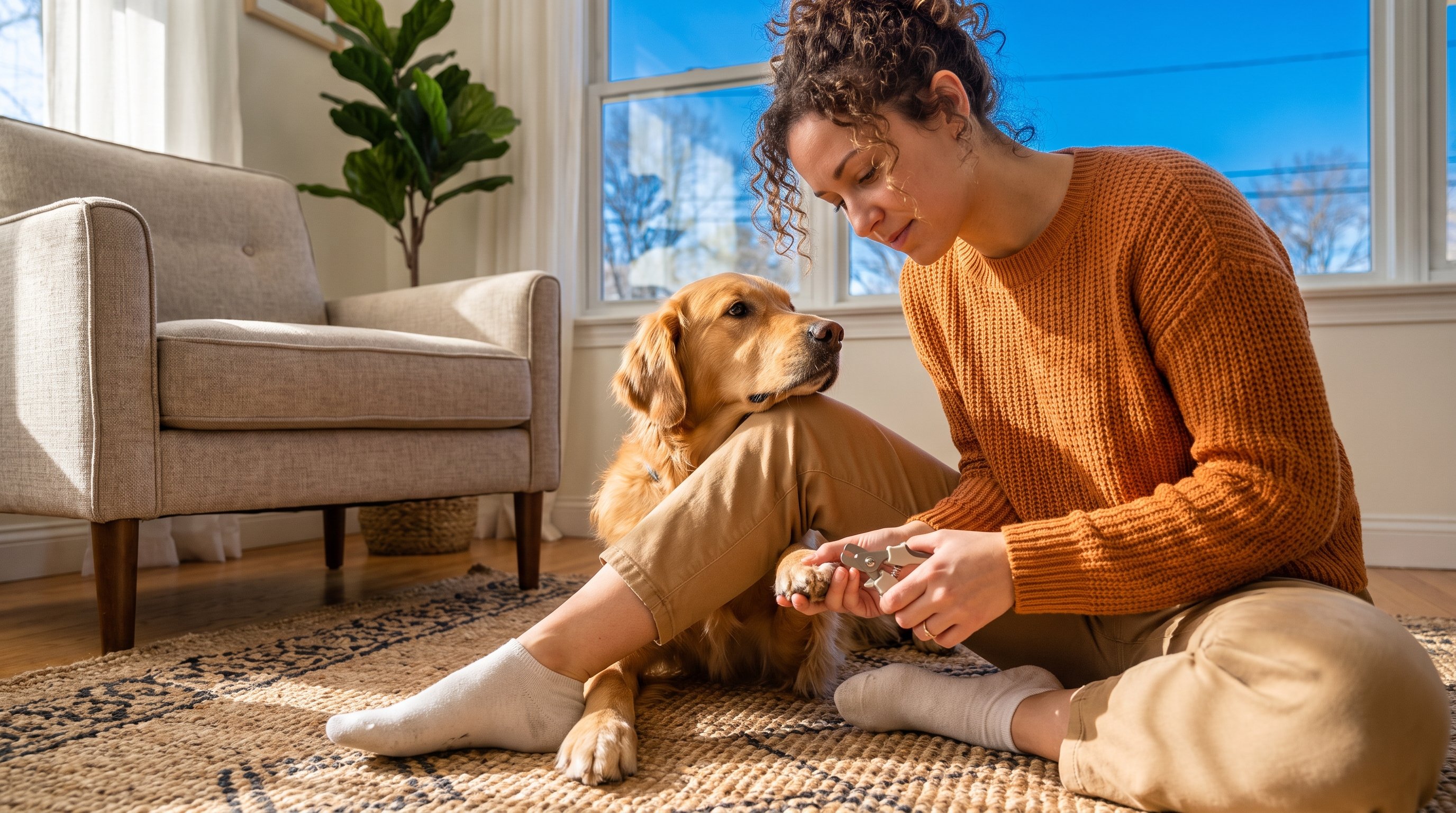
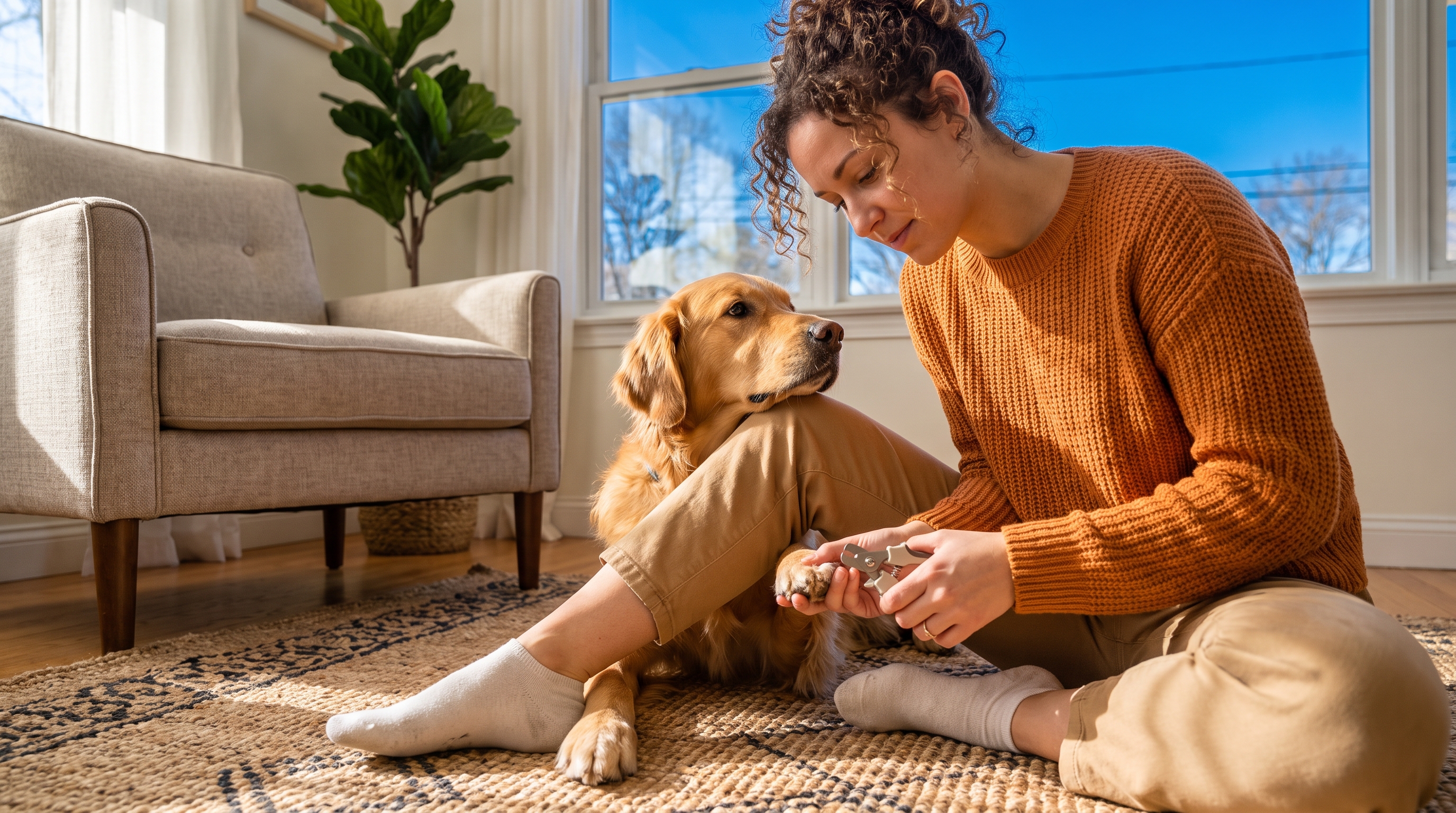
The most useful dog nail trimming tip is this: trim a little, often, rather than trying to get it all done in one sitting. Short, low-stress sessions let a dog get used to having its paws handled, which is the real barrier for most dogs, not the clipper itself.
Nails grow continuously, and a dog that avoids trims ends up with longer nails that are harder to cut safely, which makes the next trim feel worse too. Breaking the task into small steps interrupts that cycle before it starts.
This guide covers whether trimming actually needs to happen as often as people assume, how clippers compare with grinders, who needs to adjust the approach, and where a structured plan helps more than guesswork.
Does Trimming Nails Regularly Actually Make a Difference?
Yes, and the mechanism is simple: nails that touch the ground when a dog stands change how weight sits on the paw, which is why long nails tend to make dogs splay their toes or shift their gait.
Keeping nails short enough that they don't contact the floor removes that pressure. Most dogs need a trim every two to four weeks, though this depends on how much walking they do on hard surfaces, since pavement naturally wears nails down a bit.
The arithmetic is straightforward: a dog walked daily on concrete might need trims closer to once a month, while a dog mostly on grass or carpet may need them every two weeks.
None of this requires a single marathon session. Four short five-minute sessions a month add up to the same total nail care as one twenty-minute ordeal, without the stress spike that makes a dog dread the clippers next time.
Clippers or a Grinder: Which Tool Fits Your Dog
Both tools get the job done, but they suit different dogs and different comfort levels for the person holding them.
Clippers work fast and are familiar to most people, but one wrong cut can hit the quick. A grinder files the nail down gradually, which some dogs tolerate better once they get used to the sound, though the noise itself can be a hurdle at first.
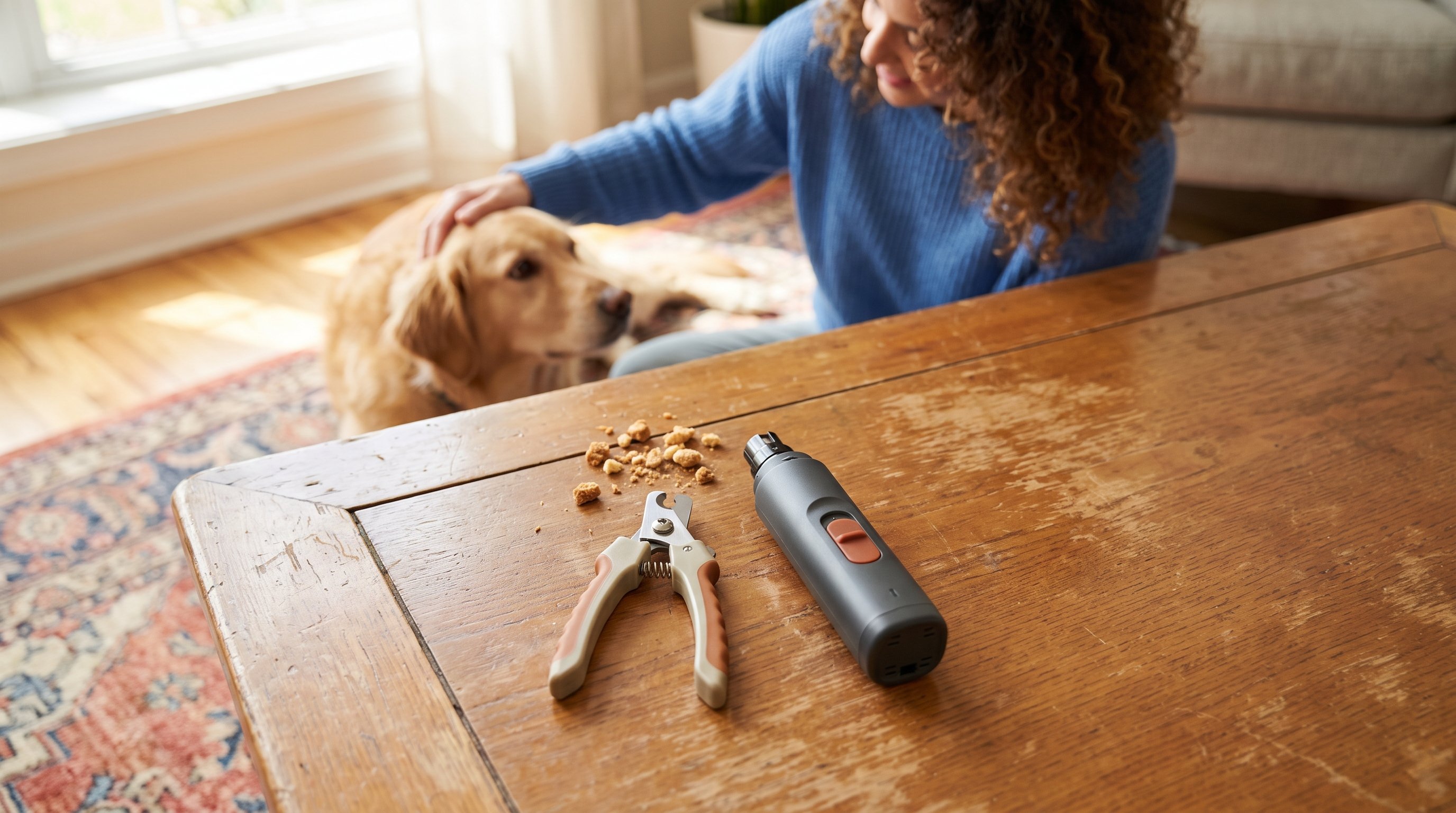
| Factor | Clippers | Grinder |
|---|---|---|
| Speed | Fast, one snip | Slower, gradual filing |
| Risk of cutting quick | Higher if rushed | Lower, more control |
| Noise | Silent | Buzzing sound |
| Best for | Calm, practiced dogs | Dark nails, nervous dogs |
| Learning curve | Quick to learn | Takes more patience |
Neither option is wrong. The better choice is whichever one lets the dog stay relaxed long enough to finish the job.
Why Short Paw Handling Sessions Beat One Long Trim
Trying to finish all four paws in one sitting sounds efficient, but for a dog that's unsure about having its feet touched, it just stacks stress on stress until the dog starts pulling away.
Short sessions - even just touching paws and trimming one or two nails - keep the experience below the threshold where a dog shuts down or struggles.
Over repeated short sessions, a dog starts associating paw handling with something ordinary rather than something to brace for. That's the whole goal: the trim stops being an event.
A dog that fights the clippers once often fights them worse the next time, because it remembers the discomfort. Keeping sessions brief and calm breaks that pattern before it sets in.
Adjusting Nail Trimming for Different Dogs
Puppies New to Handling
Start by just touching and holding paws with no clippers involved, so the dog gets comfortable before any cutting happens. Short daily handling sessions build tolerance faster than occasional full trims.

Nervous or Reactive Dogs
A grinder's steady filing can feel less alarming than the sudden snap of clippers for a dog that startles easily. Going at the dog's pace, even if that means one nail per session, matters more than speed.
Older Dogs With Joint Stiffness
Holding a paw up for too long can be uncomfortable for a dog with stiff joints, so shorter sessions with more breaks make sense. Trimming while the dog is lying on its side rather than standing can ease the strain.
Busy Households
Nail trims don't need a dedicated block of time; a minute here and there while watching television works just as well. Spreading four paws across a few days still gets the job done without anyone needing a free afternoon.
Fitting Nail Care Into a Normal Week
Nail trimming tends to get skipped because it feels like its own separate chore, something that needs planning rather than something that just happens.
Attaching it to something that already happens daily - after a walk, before dinner, during a calm evening moment - removes that friction. The dog is already settled, and the trim becomes one more small thing rather than an event.
This is where having a plan written down helps, because it turns a vague intention into a specific routine. Raising Dog's lesson structure includes guidance on handling exercises like this alongside the rest of a dog's everyday training, so nail care isn't something owners have to figure out alone.
The Myth of the One-Session Perfect Trim
There's a common idea that a well-trained dog should sit still for a full nail trim in one go, no fuss, no breaks.
That's not realistic for most dogs, and expecting it just sets both the dog and the person up for frustration.
The honest version is slower: short sessions, steady repetition, and tolerance that builds gradually rather than arriving all at once. A dog that accepts a few nails today and a few more next week is making real progress, even if it doesn't look like the tidy one-sitting version people picture.
Making Nail Trimming Part of Raising Dog's Routine
Nail trimming is really a handling skill wrapped up in a grooming task, and it benefits from the same approach as any other behaviour a dog needs to learn at its own pace.
Raising Dog's lessons are built around a dog's age and individual needs, which matters here because a jumpy ten-week-old puppy and a calm five-year-old need very different starting points for paw handling.
The app side tracks progress across sessions, so instead of guessing whether last week's attempt went better than this week's, there's an actual record to look back on. That kind of tracking turns a vague sense of 'it's getting easier' into something concrete to build on.
Raise A Happy Dog
Train Your Dog Right
Getting the First Trim Done This Week
Pick one paw, pick one nail, and treat tonight as the first short session rather than the whole job. That single step matters more than any tool choice.
Raising Dog can help turn that first attempt into an actual routine, with handling exercises that fit around whatever else is already happening in the week. Progress here looks like a calmer paw next time, not a finished job tonight.
FAQ
Most dogs need a trim every two to four weeks, depending on how much walking they do on hard surfaces like pavement. Dogs that spend more time on grass or indoors usually need trims on the shorter end of that range.
Drop back to just touching the paw without clippers until that feels normal, then reintroduce the tool slowly. Trying to force a full trim on a dog that's already struggling usually makes the next attempt harder, not easier.
Cutting the quick happens occasionally even with care, and it's uncomfortable for the dog but not usually serious. Trimming small amounts at a time rather than one big cut lowers the chances of it happening.
Slow progress is still progress, and some dogs just need more repetitions before paw handling feels ordinary. Raising Dog's step-by-step handling exercises are built to work at whatever pace a dog actually needs, rather than assuming every dog adapts at the same speed.
Share this post