Dog Nail Trimming Tips: How to Trim Your Dog's Nails Calmly and Safely
By:Author:Raising Dog Editorial
Updated on:October 29, 2026
- How Short Should Your Dog's Nails Be?
- How to Find the Quick
- How to Trim Your Dog's Nails, Step by Step
- Clippers or a Grinder: Which Tool Fits Your Dog
- What to Do If You Nick the Quick
- Myth: "A Well-Behaved Dog Sits Still for a Full Trim"
- Adjusting Nail Trimming for Different Dogs
- Making Nail Trimming Part of Raising Dog's Routine
- Getting the First Trim Done This Week
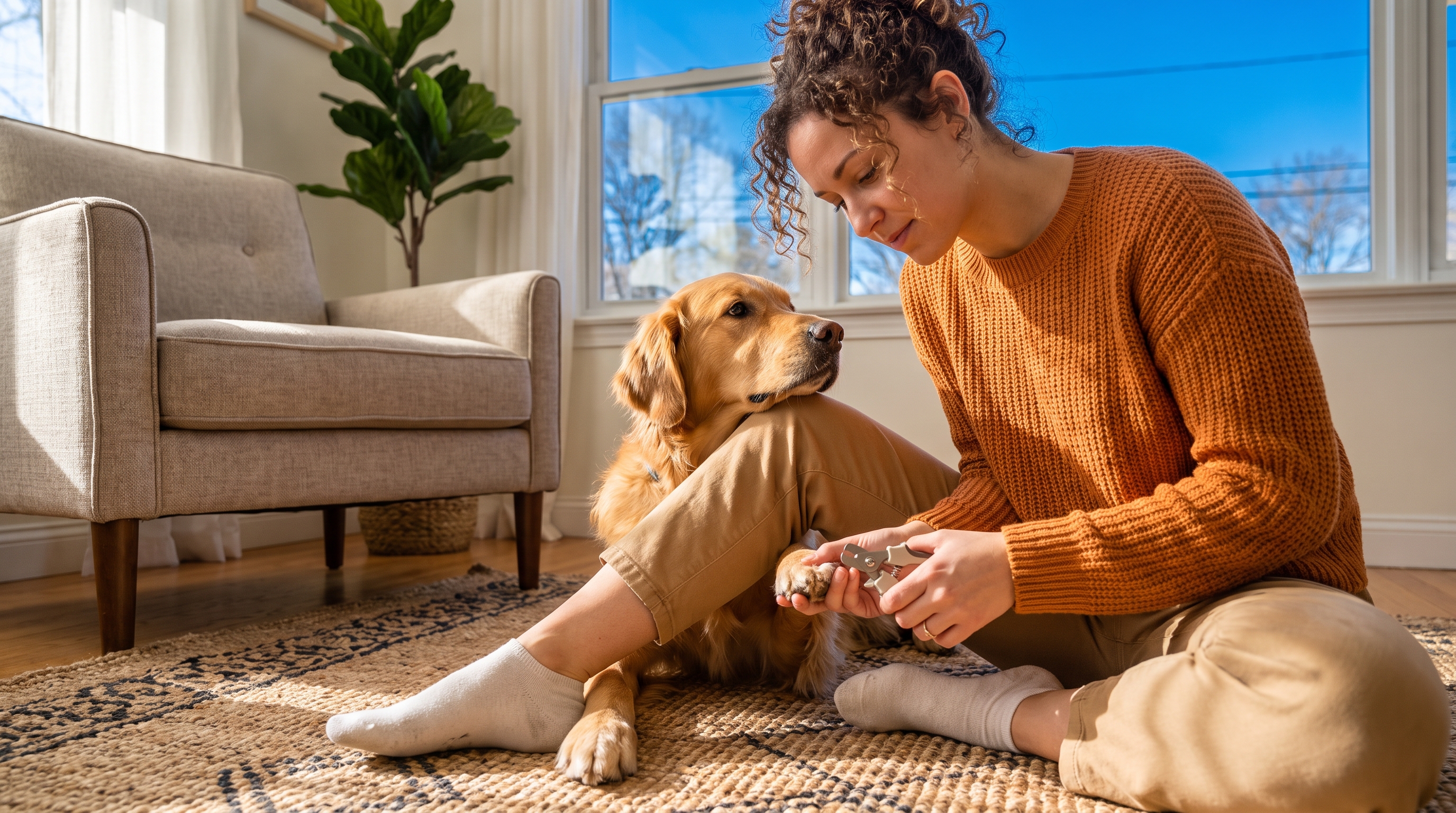
The best dog nail trimming tip is to take a little off, often: cut thin slices from the tip, stop before the quick, and reward your dog after every nail. Short, calm sessions teach your dog that paw handling is ordinary, and that matters more than the tool you choose.
The quick is the living core of the nail, with its own blood supply and nerves, so cutting into it hurts and bleeds. Everything below is about staying clear of it while keeping the nails short enough to do their job.
How Short Should Your Dog's Nails Be?
Short enough that they do not touch the floor when your dog stands. A quick check: if you hear clicking on a hard floor, the nails are ready for a trim.
Nails that press into the ground push the toes up and change how weight sits on the paw, which is why long nails can make a dog splay their toes or shift their gait. Keeping them short takes that pressure away.
If you walk your dog daily on pavement, a trim about once a month may be enough; if your dog is mostly on grass or carpet, check every two weeks. Look at the dewclaws on the inside of the leg too, if your dog has them - they never touch the ground, so they never wear down.
How to Find the Quick
Clear or White Nails
Hold the paw in good light and look at the nail from the side. You will see a pink core running from the toe toward the tip - that is the quick. Cut in the white part, leaving a small margin in front of the pink.
Dark or Black Nails
You cannot see the quick through a dark nail, so you find it by taking thin slices and checking the cut surface after each one. Early on, the cut face looks pale and dry. As you get closer it turns grayish, then a small dark dot appears in the center - stop there, because the quick is just behind it.
Long Nails Have Long Quicks
The quick grows with the nail, so a nail that has been long for months has a quick that reaches further toward the tip. You cannot fix that in one trim. Take a thin slice every week or so and the quick gradually recedes, letting you get the nails shorter over time.
How to Trim Your Dog's Nails, Step by Step
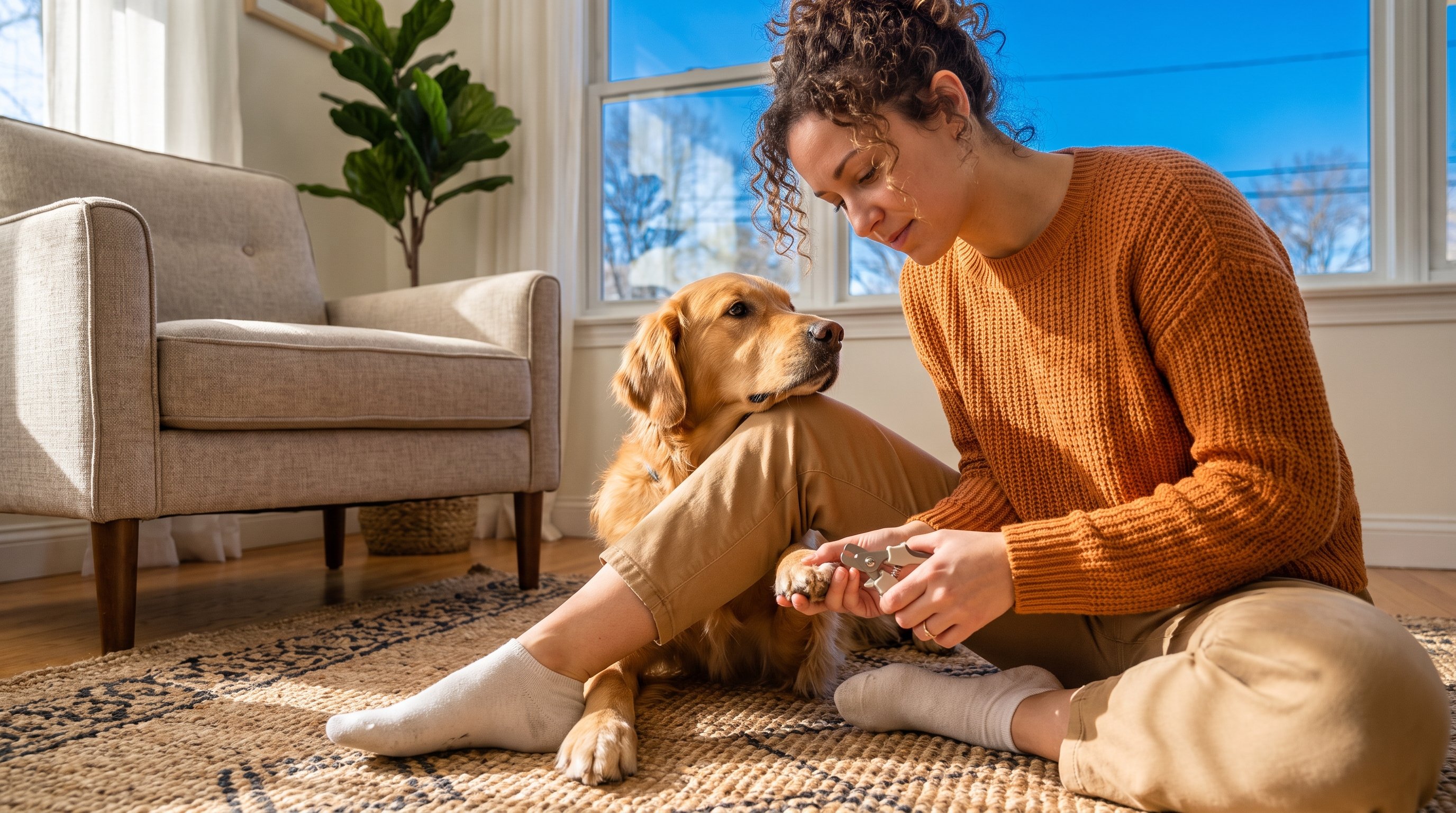
Set up somewhere calm with good light, a handful of small treats, your clippers or grinder, and a pot of styptic powder within reach. Then work through it like this:
Key Points
- Settle your dog first. Pick a time after a walk or a meal, when your dog is already relaxed, lying on their side or sitting beside you.
- Hold the paw gently but securely. Press lightly on the pad with your thumb to extend the nail, and push back any fur so you can see the whole nail.
- Find your cut line. On clear nails, spot the pink quick and aim in front of it. On dark nails, plan to take thin slices and check the cut surface each time.
- Cut at a slight angle. Angle the clippers so the cut runs roughly parallel to the floor when your dog stands, and snip only the tip, below the quick.
- Take less than you think. A thin slice at a time is safer than one big cut, especially on dark nails. You can always take more tomorrow.
- Reward after every nail. A treat after each nail, not after each paw, keeps the whole experience positive for your dog.
- Stop while it is going well. If your dog starts pulling away, finish on an easy nail and call it a day. The next paw can wait until tomorrow.
If you clipped, a few passes with a nail file or grinder smooths any sharp edges so they do not catch on carpets or skin.
Clippers or a Grinder: Which Tool Fits Your Dog
Both tools get the job done - pick the one your dog stays relaxed for and you feel steady holding.
Clippers are fast and silent, but a rushed cut can catch the quick. A grinder files the nail down gradually, which gives you more control on dark nails, though the buzzing sound takes some getting used to.
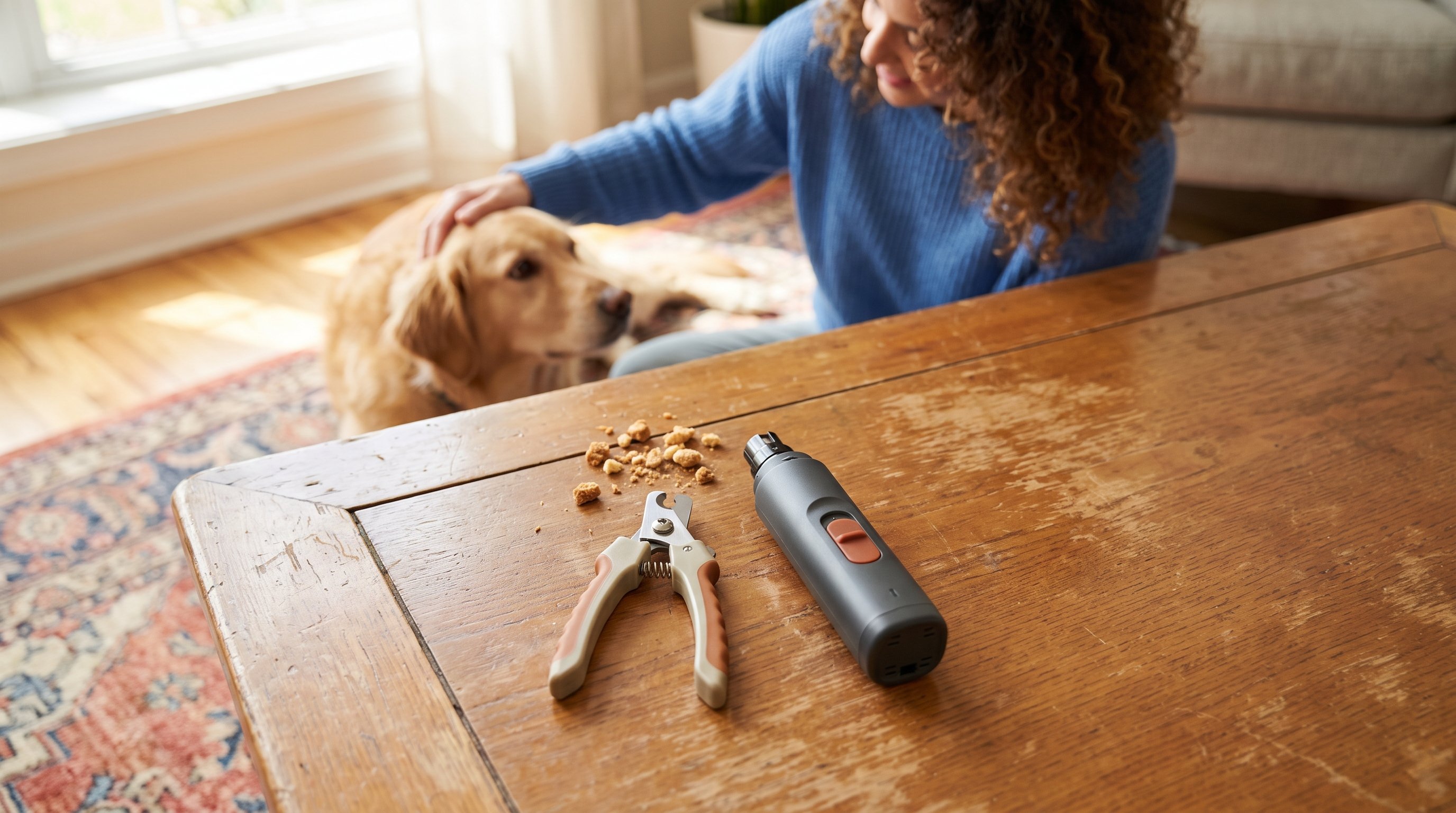
| Factor | Clippers | Grinder |
|---|---|---|
| Speed | Fast, one snip | Slower, gradual filing |
| Risk of cutting quick | Higher if rushed | Lower, more control |
| Noise | Silent | Buzzing sound |
| Best for | Calm, practiced dogs | Dark nails, nervous dogs |
| Learning curve | Quick to learn | Takes more patience |
If you choose a grinder, introduce the sound first: switch it on near your dog, reward, switch it off. Touch it to a nail for a second only once the sound is boring, and keep long fur well clear of it.
What to Do If You Nick the Quick
It happens to careful owners too, so stay calm - your calm helps your dog stay calm. The nail may bleed more than you expect for such a small cut.
Key Points
- Press styptic powder onto the tip. Take a pinch and press it firmly against the end of the nail for several seconds. Cornstarch or plain flour works if you have nothing else.
- Apply gentle pressure. Hold a clean cloth or paper towel against the nail for a few minutes until the bleeding stops.
- Keep your dog quiet for a while. Skip the walk for a little while so the clot can set.
- End on a good note. Offer a treat and stop for the day, then trim the rest another time.
Ask your vet if the bleeding does not stop after several minutes of steady pressure, or if the toe looks swollen or sore in the days after.
Myth: "A Well-Behaved Dog Sits Still for a Full Trim"
There is a common idea that a well-trained dog should sit still for every nail, no fuss, no breaks. Expecting your dog to sit through a full trim in one go sets you both up for frustration.
Paw handling is a learned skill like any other. Your dog learns from what each experience predicts: if handling has led to treats and a quick finish, your dog relaxes into it, and if the last trim was a long struggle, your dog braces before you even pick up the clippers.
So two nails tonight and two tomorrow is not a compromise. It is how your dog learns that trims are no big deal, and a dog that accepts a few nails today and a few more next week is making real progress.
Adjusting Nail Trimming for Different Dogs
Puppies New to Handling
Start with just touching and holding paws, no tools, a few seconds at a time, with a treat each time. Once that is easy, touch the clippers to a nail without cutting, then trim a single tip.

Nervous Dogs
If your dog startles easily, a grinder's steady filing can feel less alarming than the snap of clippers. Go at your dog's pace, even if that means one nail per session.
Older Dogs With Stiff Joints
Holding a paw up for long can be uncomfortable, so let your dog lie on their side and lift each paw only a little. Shorter sessions with more breaks are kinder on stiff joints.
Busy Households
A nail trim does not need a free afternoon. A paw or two during a quiet evening on the sofa, spread across a few days, still gets all four done.
Making Nail Trimming Part of Raising Dog's Routine
Nail trimming is really a handling skill wrapped up in a grooming task, and it works best with the same approach as any other behavior your dog learns at their own pace: mark the calm moment, reward it, keep it short.
That is the reward-based approach Raising Dog uses for every skill. Your Raising Dog plan is built from a quiz about your dog's age, breed, coat and habits, with sessions sized to the minutes you said you have, so a minute of paw handling slots in easily next to the rest of the day's practice.
The Raising Dog companion app helps here too: jot down how many nails you trimmed and how your dog reacted in your session notes, and you can see the trend - calmer paws, more nails per session - instead of guessing.
Raise A Happy Dog
Train Your Dog Right
Getting the First Trim Done This Week
Pick one paw, find the quick on one nail, take a thin slice and reward your dog. That single calm nail matters more than any tool choice.
Then do the same tomorrow. If you want the rest of your dog's training organized the same way - short, rewarded and in the right order - Raising Dog can build that plan around your dog.
FAQ
Check every two weeks and trim whenever the nails touch the floor or click on hard surfaces. If you walk your dog daily on pavement, a trim about once a month may be enough.
Take thin slices and look at the cut surface after each one. When a small dark dot appears in the center, stop, because the quick is just behind it.
Press styptic powder, cornstarch or flour onto the nail, then hold a clean cloth against it for a few minutes. Ask your vet if the bleeding does not stop or the toe looks sore afterward.
Go back to touching the paw without any tools, rewarding each calm second, until that feels ordinary again. Then bring the clippers back one nail at a time.
Slow progress is still progress, and some dogs need more repetitions before paw handling feels ordinary. If a few weeks of short sessions bring no change, ask your vet or a groomer to do the next trim while you keep practicing paw handling at home.
Share this post