Dog Training Mistakes to Avoid: A Clear Fix-It Guide
By:Author:Raising Dog Editorial
Updated on:October 29, 2026
- Why Small Mistakes Undo Good Progress
- The Mistakes That Stall Most Dogs
- Common Mistakes and Their Fixes
- Why Slowing Down Beats Pushing Through a Stuck Skill
- Adjusting the Fixes for Your Dog
- Myth: "One Firm Correction Fixes a Habit"
- Fitting These Fixes Into a Busy Week
- Avoiding These Mistakes With Raising Dog's Lesson Plans
- Getting a Stalled Routine Back on Track
The most common dog training mistakes come down to timing, consistency and expecting too much too fast - not a lack of effort. Fix the mechanics and your dog will usually pick things up without any extra pressure.
Dogs learn by association. If your reward or correction lands even a second or two late, your dog links it to whatever they are doing at that moment, not to what they did before.
Why Small Mistakes Undo Good Progress
A mistake does not erase what your dog has learned, but it does blur it.
Say you reward your dog for sitting, but one time the treat arrives a few seconds late, after they have already stood back up. Your dog starts linking the treat to standing, not sitting, and the behavior gets muddier instead of clearer.
Repeat that a few times a day for a week and your dog has had plenty of confusing repetitions before you notice progress has flattened. Training has not failed - inconsistent timing has added noise your dog has to filter out before the real lesson lands.
The Mistakes That Stall Most Dogs
Rewarding Late
Your dog only knows what earned the treat by what they were doing when it arrived. Use a marker - a clicker or one short word like "yes" - at the exact moment your dog gets it right, then deliver the treat a second later.
Changing the Cue Word
"Down" on Monday, "lie down" on Tuesday and "get down" on Wednesday are three different sounds to your dog. Pick one word per behavior, write it down, and make sure everyone in the house uses it.
Repeating the Cue
If you say "sit" five times before your dog sits, the cue becomes "sit sit sit sit sit." Say it once, wait a few seconds, and if nothing happens, help your dog with a lure and make the next rep easier.
Teaching Too Much at Once
Three new skills in one session means none of them gets enough clean repetitions. Work on one skill per session, and move on only when it works almost every time.
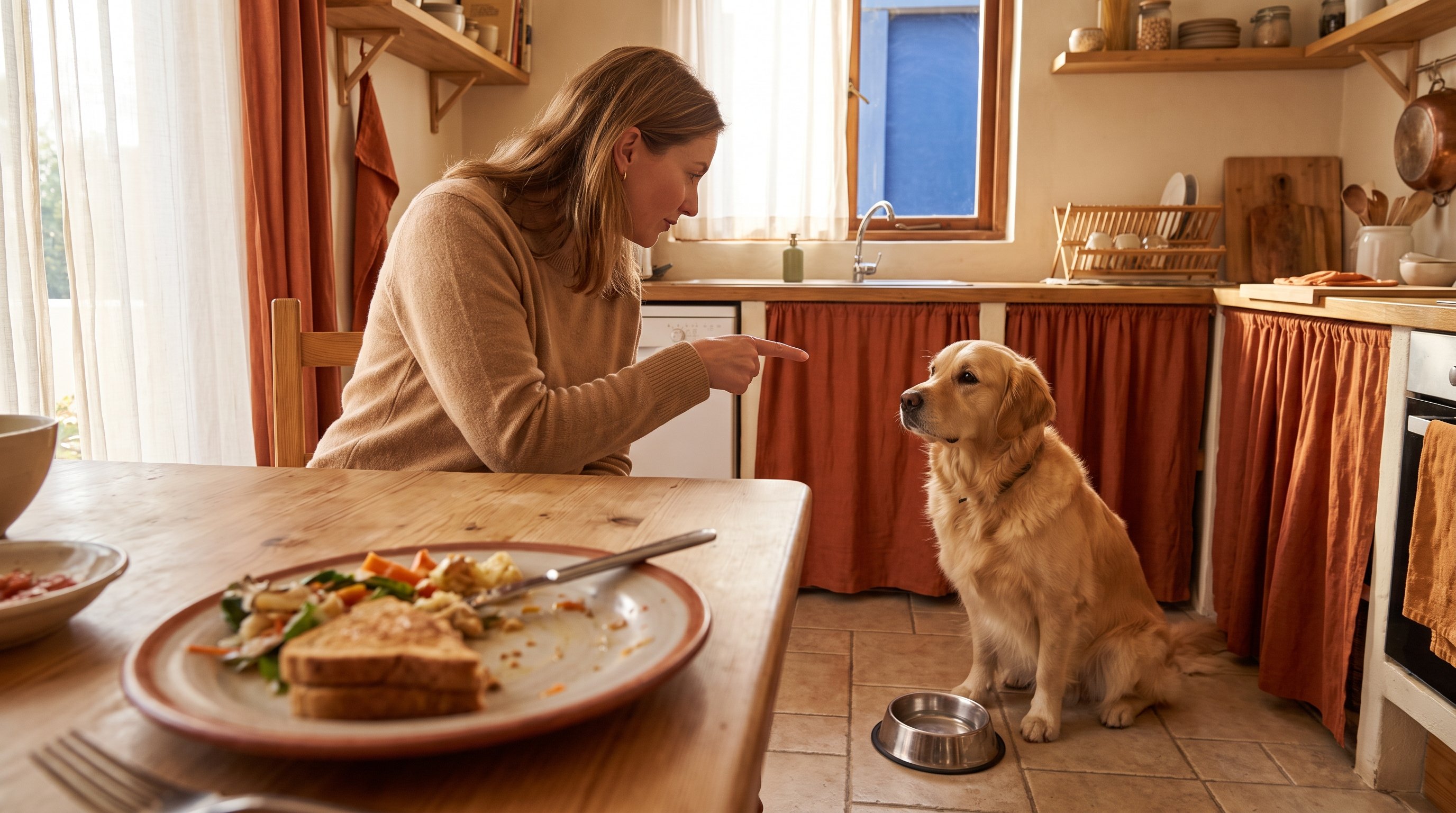
Punishing After the Fact
Scolding your dog for a chewed shoe you found an hour later teaches nothing about the shoe - your dog only links your anger to you walking in. Interrupt in the moment, redirect to something allowed, and tidy the space so the mistake is harder to repeat.
Sessions That Run Too Long
Attention drifts, mistakes pile up, and your dog starts to associate training with confusion. Stop after a few minutes, while your dog still wants more.
Common Mistakes and Their Fixes
Here is the whole list at a glance, so you can pick the one that sounds most like your sessions.
| Mistake | What it does | The fix |
|---|---|---|
| Late rewards | Rewards the wrong behavior | Mark the instant, pay after |
| Changing cue words | Your dog can't predict the ask | Pick one word, stick with it |
| Repeating the cue | The cue gets longer and weaker | Say it once, then help |
| Too many skills at once | Overload, slow responses | One skill per session |
| Punishing after the fact | Your dog links fear to you | Interrupt in the moment only |
| Long sessions | Frustration on both ends | A few minutes, most days |
If you are not sure where to start, fix timing first - it is the quicker of the two big ones, because a marker word or clicker lets you tag the exact moment your dog gets it right. Inconsistent cues take longer to unwind, because your dog has already built habits around the confusion.
Why Slowing Down Beats Pushing Through a Stuck Skill
When your dog stalls on a skill, the instinct is to repeat the cue louder or more often. That rarely works, because your dog is not being stubborn - they are unclear on what you are asking.
The easier route is to break the skill into a smaller step and rebuild from there. A dog that won't lie down from standing will often lie down from a sit, so the fix is adding a stepping stone, not repeating the failing ask.
Pushing through without adjusting the difficulty tends to produce a dog that avoids the cue altogether. Backing up a step takes a little longer up front but holds up far better once your dog is reliable.
Adjusting the Fixes for Your Dog
New Puppies
Puppies get tripped up most by sessions that run too long, because their attention drifts fast. Keep sessions short and end on something your puppy already does well, rather than fighting for one more rep.
Busy Schedules
The biggest mistake on a full schedule is treating training as an all-or-nothing block of time. A few minutes attached to something already happening - before meals, before walks - keeps skills from fading.
Older Dogs
With an older dog, the common mistake is assuming new habits won't take because old ones are set. Older dogs still learn; they just need the same skill broken into smaller steps and practiced over more sessions.
Multi-Dog Households
Training two dogs at once tends to blur cues, because each dog reacts to the other's cue instead of their own. Train them separately for the first few sessions, then practice together.
Myth: "One Firm Correction Fixes a Habit"
A lot of people expect one firm correction, or one great session, to fix a habit for good. It does not work that way.
A correction can stop a behavior in the moment, but it does not teach your dog what to do instead, and the behavior that paid off before still pays off. A dog that stops jumping for one afternoon after a telling-off will usually be back at it the next day if nothing else changes.
What changes a habit is repetition: reward the four paws on the floor every time, in short sessions spread across days and weeks, until the new behavior pays better than the old one. It is unglamorous, and it wins anyway.
Fitting These Fixes Into a Busy Week
None of this needs a set-aside hour. Most of these fixes are about adjusting what already happens - timing a reward better, using one word, keeping a session to a few minutes.
The harder part is knowing which fix to focus on this week, because it shifts as your dog grows and learns. A written plan helps: it tells you what to work on next, so you are not deciding from scratch every evening.
Avoiding These Mistakes With Raising Dog's Lesson Plans
Generic advice fails on fit, not quality - a tip that works for a six-month-old Labrador does not always suit a nervous rescue or a senior dog with stiff joints.
Raising Dog is built around that gap. Your book is built from a quiz about your dog's age, breed and habits, so it starts with the mistakes your dog is most likely to run into - and tells you which one to fix first.
Add the companion app to log each session, so you catch a late reward or a changed cue word before it turns into a habit.
Raise A Happy Dog
Train Your Dog Right
Getting a Stalled Routine Back on Track
Pick one mistake from this list that sounds familiar, fix just that one thing this week, and notice whether sessions feel less stuck.
A plan matters more than willpower here. Raising Dog gives that plan a shape, with lessons and tracking built around your dog, not an average one.
FAQ
Late or inconsistent reward timing stalls more progress than almost anything else, because your dog ends up learning the wrong thing. A clear marker, like a clicker or one consistent word, closes that gap.
A correction can stop a behavior in the moment, but it does not teach your dog what to do instead. Consistent retraining takes longer to start but holds up far better once it sticks.
Attach short sessions to things that already happen, like meals or walks, so you never need a block of free time. Raising Dog sizes your plan to the minutes a day you said you have, from 5 to 20+.
A stall usually means the step got too big too fast, not that your dog has stopped trying. Go back to the last version that worked and rebuild from there.
Either works, as long as it always means that exact moment earned a reward. A word is always with you, while a clicker sounds identical every time, so pick the one you will use consistently.
Share this post