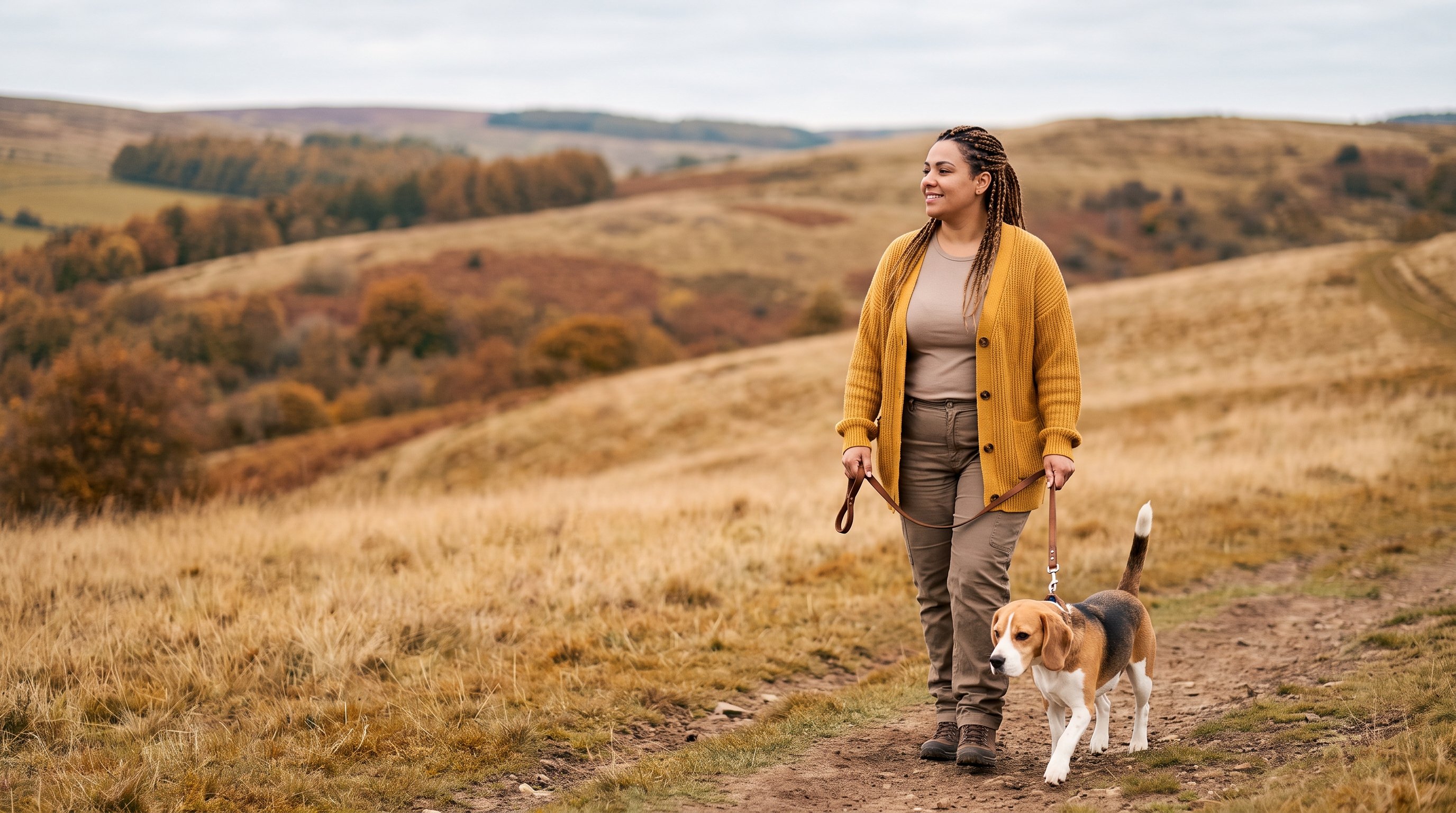
How To Choose A Dog Harness: A Fit-First Buying Guide
By:Author:Raising Dog Editorial
Updated on:October 20, 2026
- A Week of Checking a New Harness Fit
- How to Measure a Dog for Harness Sizing
- Front-Clip Harness or Back-Clip: Picking by Pull Strength
- Fitting Harness Shopping Into a Busy Routine
- Choosing a Harness for Your Dog's Life Stage
- When a New Harness Stops Feeling Like a Fight
- Making Harness Fit Part of Raising Dog's Walk Plan
- Getting the Fit Right Before the Next Walk
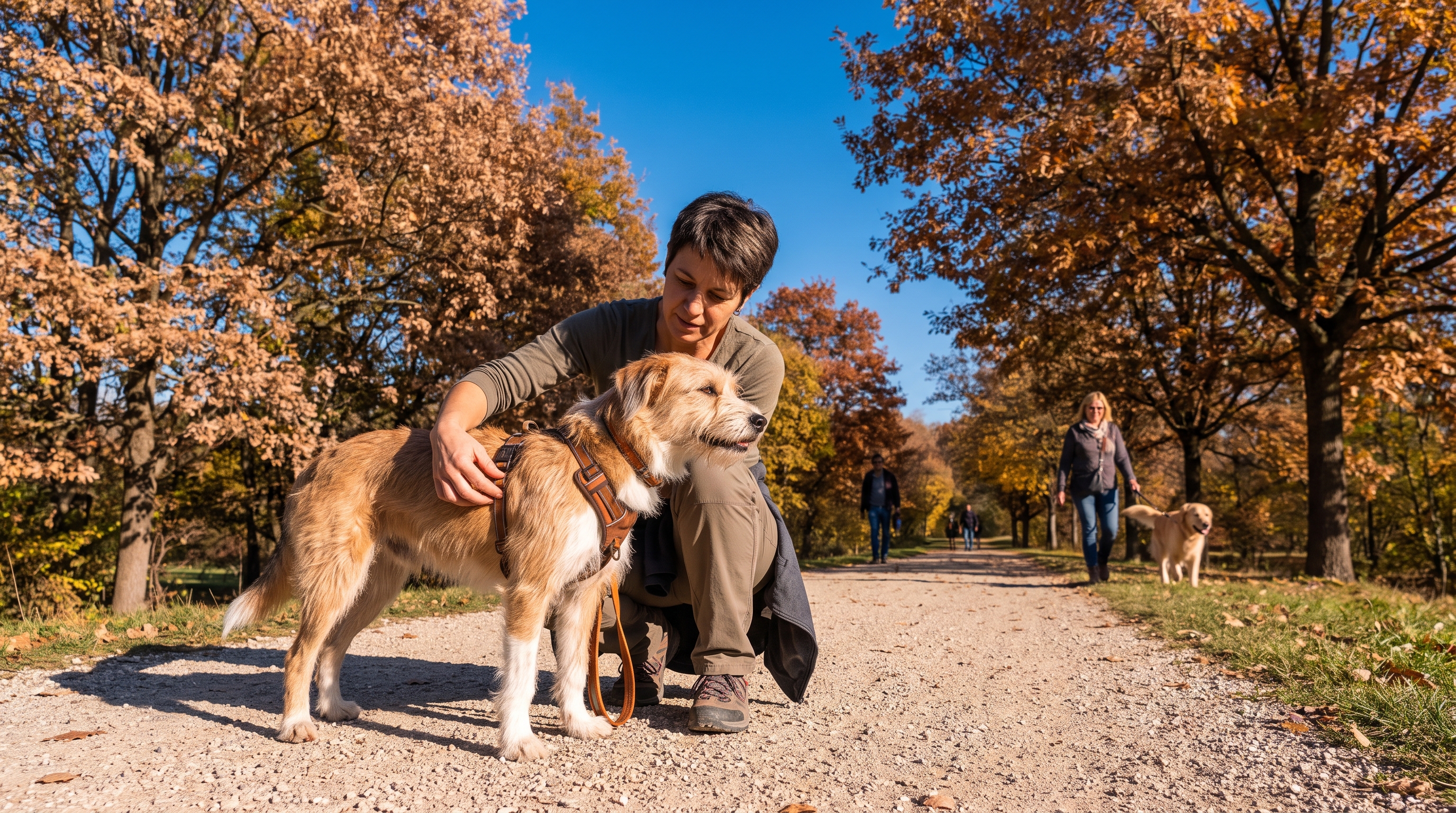
The right dog harness fits snugly without rubbing, lets the front legs move freely, and clips where it actually helps with the pulling you're dealing with - front, back, or both.
Harnesses work by spreading pressure across the chest and body instead of the throat, and where the clip sits changes how much steering control you get on a walk.
This guide covers how to measure, how often to check the fit, why a well-fitted harness beats guessing by size chart alone, and how to adjust the choice for a puppy, a strong puller, or an older dog with joint stiffness.
A Week of Checking a New Harness Fit
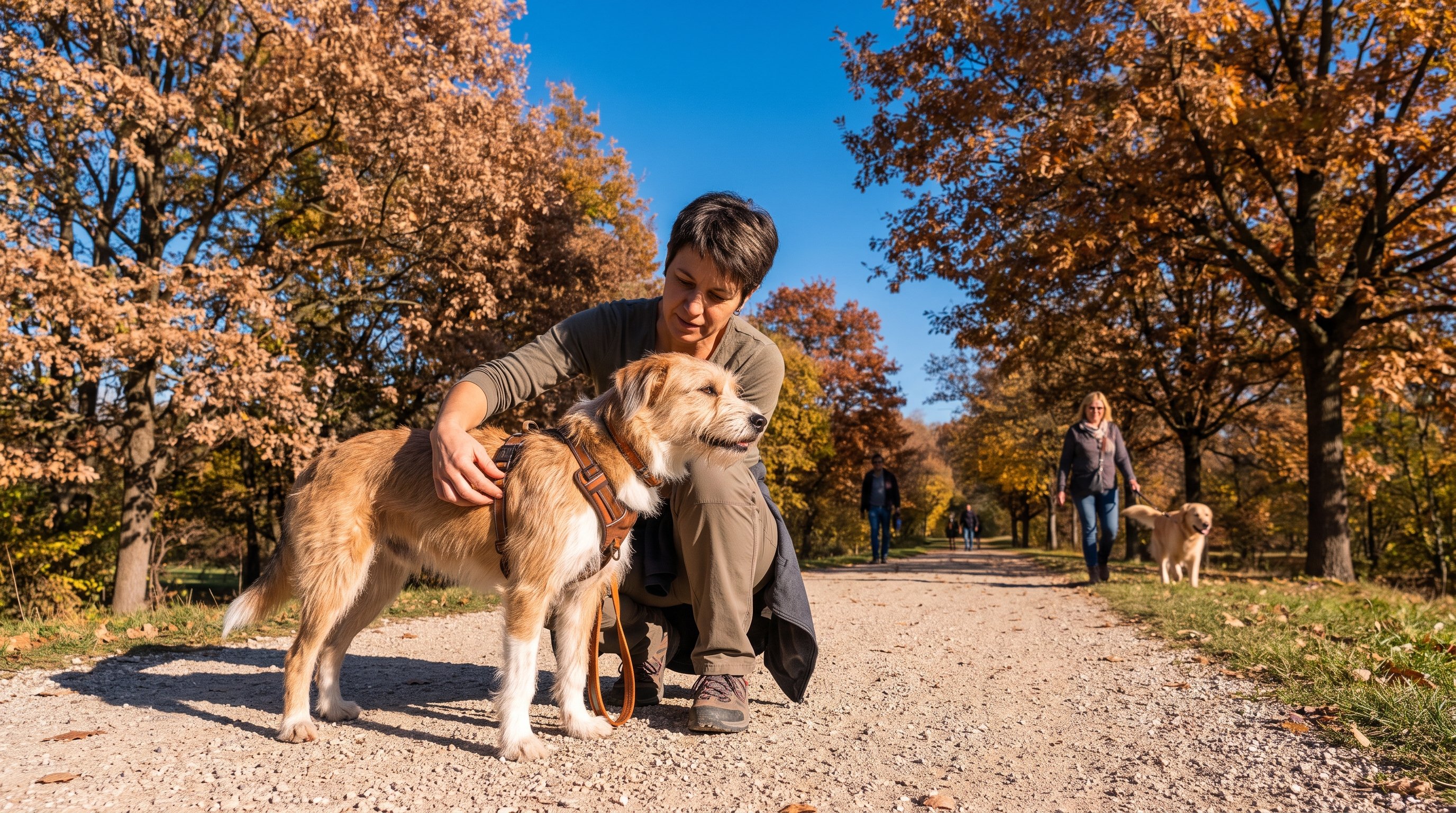
A harness isn't a one-time purchase and forget job, especially in the first few weeks after a new dog arrives or a puppy is still growing.
A Simple Week of Fit Checks
- Day 1 - Fit the harness indoors first and check for two-finger space under every strap.
- Day 2-3 - Watch the front legs on a short walk for any rubbing at the armpits.
- Day 4 - Recheck straps after the dog has shaken it out or rolled, since buckles can slip.
- Day 5-6 - Look for flattened fur or red skin after walks, a sign the fit is too tight.
- Day 7 - Weigh a growing puppy and compare against the size chart again before the next outing.
How to Measure a Dog for Harness Sizing
The Two Measurements That Matter
Most harness sizing comes down to girth, the widest part of the chest just behind the front legs, and neck circumference for styles that have a neck strap.
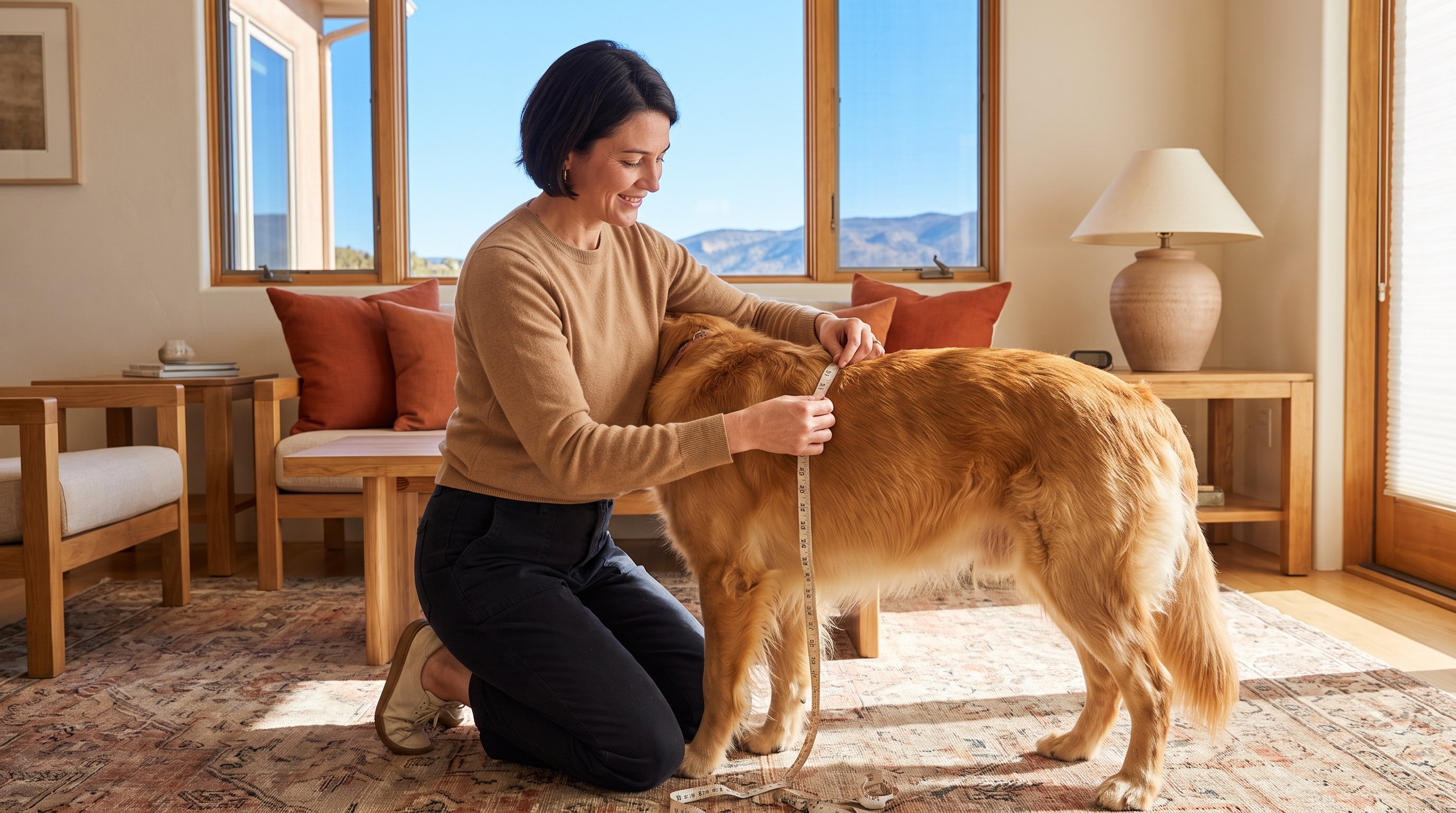
Measure with a soft tape, snug but not pulled tight, and add a small margin since most brands build in some adjustment range already.
| What To Measure | How To Check It | How Often |
|---|---|---|
| Chest girth | Tape behind front legs | Before buying, then monthly for puppies |
| Neck size | Tape at base of neck | Same as chest girth |
| Weight | Home scale or vet visit | Monthly for growing dogs |
| Strap slack | Two fingers under strap | Every few walks |
| Leg openings | Check for rubbing after walk | First two weeks of new harness |
Front-Clip Harness or Back-Clip: Picking by Pull Strength
A back-clip harness is the easier route for a dog that already walks fairly calmly, since there's nothing to adjust to and the dog barely notices it's there.
A front-clip harness takes more getting used to because the leash pressure comes from the chest, which gently turns the dog back toward you instead of letting them lean into a pull.
For a dog that pulls hard, the front-clip option usually wins on adherence, because walks stay manageable enough that the owner keeps doing them, and a walk that doesn't happen teaches nothing.
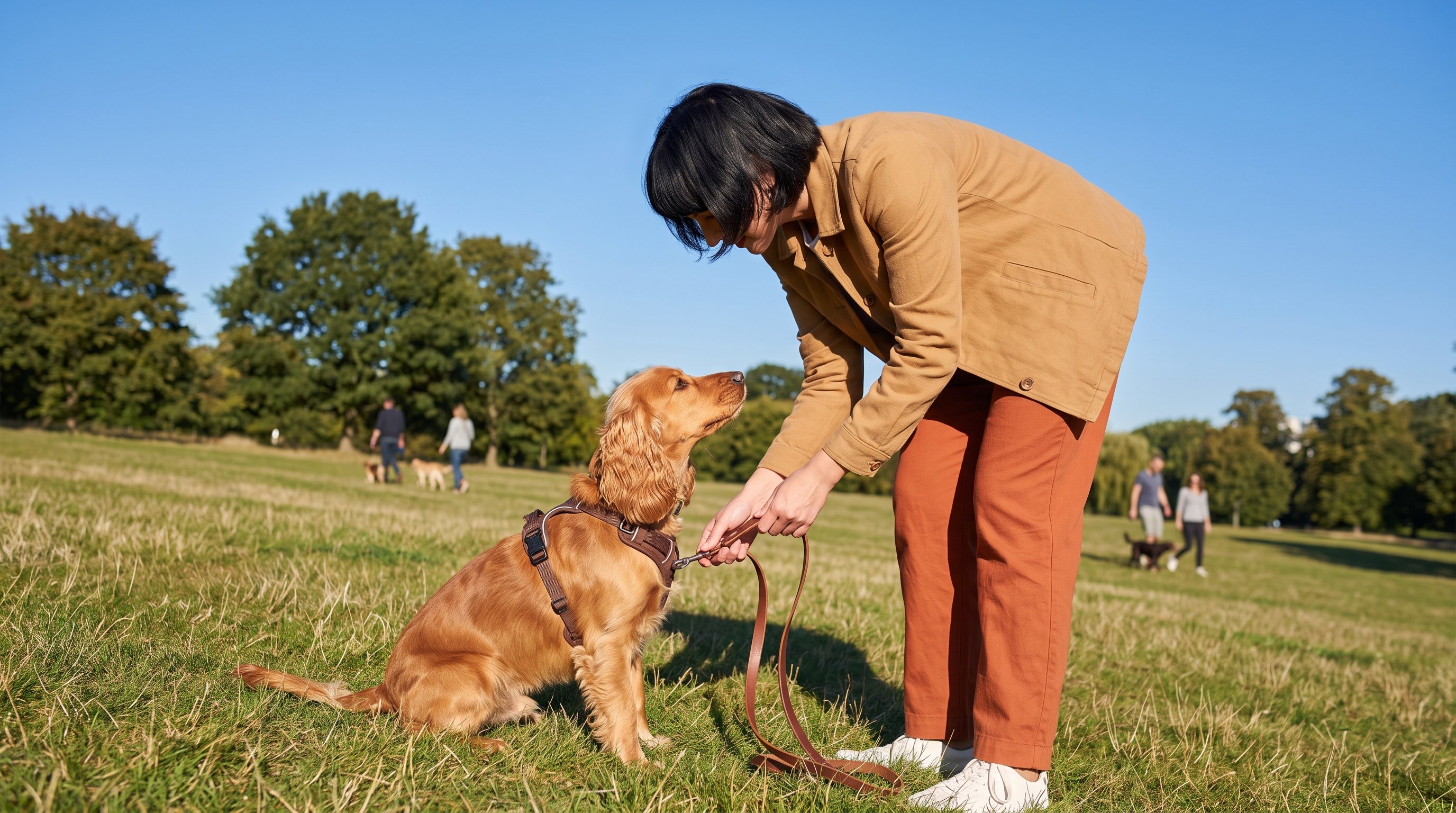
Neither style fixes pulling on its own, but the one that keeps the walk comfortable for both ends of the leash is the one that actually gets used tomorrow.
Fitting Harness Shopping Into a Busy Routine
Buying the wrong size once is normal, and most people end up measuring twice before the fit settles.
A short checklist helps: measure before ordering, try it on indoors for five minutes, then take one short walk before deciding it's a keeper.
If the dog is also mid-way through leash manners or recall work, the harness choice fits into that same routine - Raising Dog's lesson plans cover leash handling alongside the gear decisions, so the two aren't treated as separate problems.
Choosing a Harness for Your Dog's Life Stage
Puppies Still Growing
A puppy harness needs rechecking monthly at minimum, since a snug fit in week one can be tight by week five.
Strong Pullers
A front-clip or dual-clip harness gives more steering without pressure on the throat, which matters most on busy footpaths.
Older Dogs With Stiff Joints
A wider chest panel and padded straps reduce pressure points, and a back-clip style avoids any chest-turning motion that could strain a stiff shoulder.
Busy Households
A step-in harness that doesn't need to go over the head saves time on rushed mornings, as long as the strap slack is still checked regularly.
When a New Harness Stops Feeling Like a Fight
Most dogs settle into wearing a new harness within the first couple of weeks, though some take longer if they're nervous about anything going over the head.
This is also where a lot of people quit, deciding the dog 'hates harnesses' after one awkward fitting session.
A slow introduction, treats during fitting, and a few short practice sessions indoors before the first real walk usually gets past that stage without drama.
Making Harness Fit Part of Raising Dog's Walk Plan
Picking the right harness is one decision among many that shape how a walk actually goes, and gear alone won't fix pulling or nervousness on its own.
Raising Dog pairs the fit side of things with lessons tailored to your dog's age and walking habits, so the harness choice sits inside a wider plan instead of a guess made in isolation.
The app side tracks how walks are going over time, which makes it easier to notice if a harness style stopped working as the dog grew or as pulling habits changed.
Raise A Happy Dog
Train Your Dog Right
Getting the Fit Right Before the Next Walk
A harness that fits well disappears into the background of a walk, and one that doesn't becomes the main event every single time.
Measure the chest girth tonight, do the two-finger check, and take one short test walk before deciding the size is right - and if leash habits need work too, Raising Dog's plans cover that alongside the gear itself.
FAQ
Measure the chest girth just behind the front legs and match it to the brand's size chart, leaving room for a two-finger gap under each strap. Puppies and growing dogs need this rechecked monthly since sizing can change fast.
A collar is simpler to put on, but a harness spreads pressure across the chest instead of the throat, which matters more for dogs that pull or have sensitive necks. The small extra effort of fitting a harness is usually worth it for daily walks.
Short indoor practice sessions with treats, done a few times before the first real walk, usually make fitting less of a struggle. Rushing the first fitting during a real walk is what tends to make dogs wriggle away from it.
A working harness means no rubbing, no slipping straps mid-walk, and a leash clip that gives you enough steering for how your dog currently walks. Raising Dog's app can help track walk habits over time so it's easier to spot if the current harness setup has stopped keeping up with your dog.
Share this post