How to Teach a Dog to Lie Down: A Calm, Clear Method
By:Author:Raising Dog Editorial
Updated on:October 20, 2026
- Steps to Teach a Dog to Lie Down From a Sit
- How Often to Practise Lying Down Each Day
- Fitting Down Training Into a Normal Household
- A Four-Stage Plan for Teaching Down
- When the Down Cue Starts to Feel Reliable
- Common Mistakes When Teaching a Dog to Lie Down
- Teaching Your Dog to Lie Down With Raising Dog
- Practising This Cue Tonight
The fastest way to teach a dog to lie down is to lure the nose toward the floor with a treat until the body follows, then mark and reward the moment the elbows touch the ground.
Dogs do not understand English - they learn by noticing which movement earns a reward, so the lure shapes the body first and the word comes later once the motion is predictable.
This article covers the exact steps, how often to practise, a four-stage starter plan, common mistakes, and what to expect as the cue becomes reliable.
Steps to Teach a Dog to Lie Down From a Sit
Starting from a sit gives the body less distance to travel, which makes the early reps cleaner and faster to reward.
A Reliable Sequence
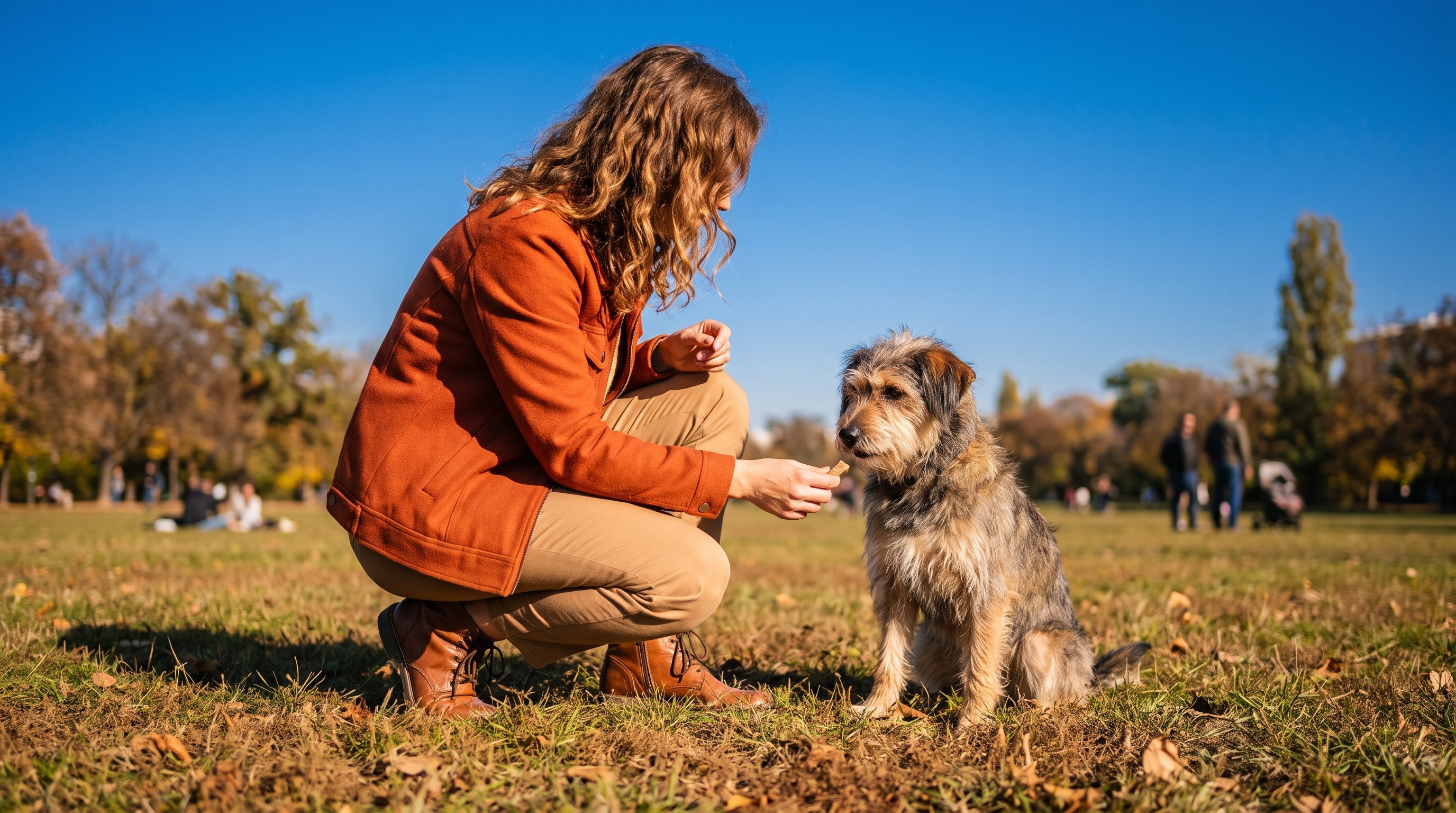
- Ask for a sit first - a settled starting point makes the next movement easier to read.
- Hold a treat at the nose - let the dog sniff it without snatching it away.
- Lower the treat straight down - move it toward the floor between the front paws, slowly.
- Pause when the elbows drop - some dogs slide into position, others fold - either is fine.
- Mark the instant the body is down - a clicker click or a clear word works the same way.
- Reward right where the dog lies - delivering the treat on the floor keeps the position associated with staying low.
- Add the word once the motion is consistent - say 'down' a half-second before the lure, not after.
How Often to Practise Lying Down Each Day
Short, frequent sessions beat one long drilling session - a tired dog stops paying attention, and a bored dog starts guessing instead of thinking.
A Workable Daily Rhythm
Spreading five or six repetitions across a few short sessions gives the behaviour more chances to stick than cramming them into one block.
| Stage | Sessions Per Day | Reps Per Session |
|---|---|---|
| New puppy | 2 short sessions | 3 to 5 reps |
| Learning the cue | 2 to 3 sessions | 5 to 8 reps |
| Cue is familiar | 1 to 2 sessions | 8 to 10 reps |
| Adult dog, maintaining | 1 session most days | 5 reps |
Fitting Down Training Into a Normal Household
This does not need a dedicated training block carved out of the day - it fits into moments that already exist.
Use the Dead Time
Ad breaks, waiting for the kettle to boil, or the few minutes before a meal is served are all enough time for three or four reps.
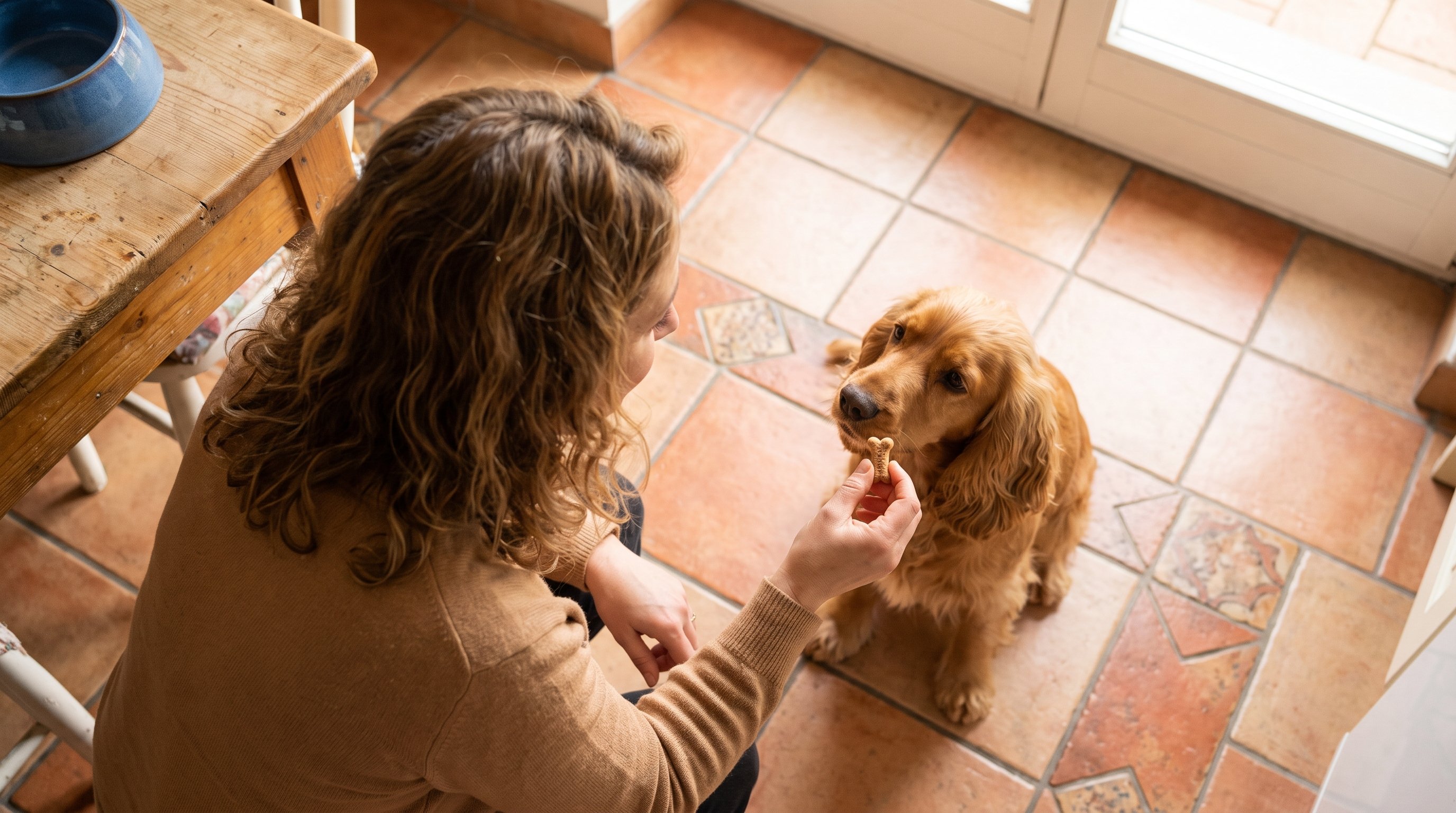
What matters more than the slot you pick is doing it most days rather than saving it all for the weekend.
Raising Dog's lesson plans break this cue into stages matched to a dog's age, so the pace of practice fits a dog that is still a puppy as well as one that is further along.
A Four-Stage Plan for Teaching Down
The order of these stages matters more than how many days each one takes - some dogs move through them quickly, others need longer on one step before the next makes sense.
| Stage | What Changes |
|---|---|
| Stage 1 | Lure down from a sit, mark and reward |
| Stage 2 | Fade the treat lure to an empty hand signal |
| Stage 3 | Add the verbal cue before the hand signal |
| Stage 4 | Practise in new rooms and with mild distractions |
When the Down Cue Starts to Feel Reliable
There is no single day this clicks into place - it shows up gradually as fewer reps need the treat lure to work.
A good early sign is the dog starting to lie down before the hand reaches the floor, which means the body is anticipating the cue rather than just following the lure.
Reliability in a quiet room usually arrives before reliability outdoors or around other dogs, and that gap is normal rather than a sign something has gone wrong.
Common Mistakes When Teaching a Dog to Lie Down
Pushing on the Dog's Back
Physically pressing a dog into position can make some dogs tense up or resist - a lure that the dog chooses to follow builds a cleaner association.
Saying the Word Too Early
If 'down' is repeated before the dog understands the motion, the word becomes noise instead of a cue - wait until the movement is consistent first.
Rewarding a Half-Down
Treating a crouch or a hover near the floor teaches the wrong shape - hold out for elbows actually touching the ground before marking.
Only Practising in One Room
A dog that only lies down on the living room rug may look confused when asked outside - the cue needs practice in a few different locations to generalise.
Teaching Your Dog to Lie Down With Raising Dog
Generic advice about luring and marking is a fine starting point, but it does not account for a stiff older dog, a nervous rescue, or a puppy that is still finding its coordination.
Raising Dog builds this cue into lessons tailored to a dog's age and unique needs, with tips for adjusting the pace if a particular dog struggles to settle into the position.
Raise A Happy Dog
Train Your Dog Right
Practising This Cue Tonight
Pick one quiet spot in the house, grab a handful of small treats, and run through five reps before the next meal.
Raising Dog's step-by-step lessons are there if the lure stops working or the dog seems stuck on one stage - starting small tonight is enough to begin.
FAQ
It varies by dog, but most pick up the basic motion within a handful of short sessions once the lure is consistent. Reliability without a treat in hand tends to take longer than the first successful rep.
That usually means the reward came a beat too early, before the dog fully settled - try rewarding a half-second after the elbows touch the floor instead. Delivering the treat low, right at floor level, also helps keep the dog in position.
Some dogs need the lure moved more slowly, or need to start from a down-adjacent position like lying against a low step. A small pause and a fresh, higher-value treat can also help break the hesitation.
It shouldn't, as long as the treat lure was faded into a hand signal rather than used forever - that fading step is what makes the cue stick. Raising Dog's lesson plans walk through that fading process stage by stage so the cue holds up without constant treats.
Share this post