Dog Training At Home: A Plan That Fits Your House
By:Author:Raising Dog Editorial
Updated on:October 20, 2026
- Does Training a Dog at Home Actually Work?
- Home Sessions or Group Classes: Weighing the Two
- Why Short Daily Reps Beat One Long Weekly Session
- Adapting Home Training to Your Dog and Your Week
- Fitting Dog Training Into an Already Full House
- The Myth of the Dog That's Trained in a Weekend
- Making Dog Training at Home Less of a Guessing Game
- Starting Tonight's Training Session at Home
Dog training at home works when the sessions are short, frequent and matched to what your dog actually needs - not when you follow a one-size plan copied from a stranger's dog.
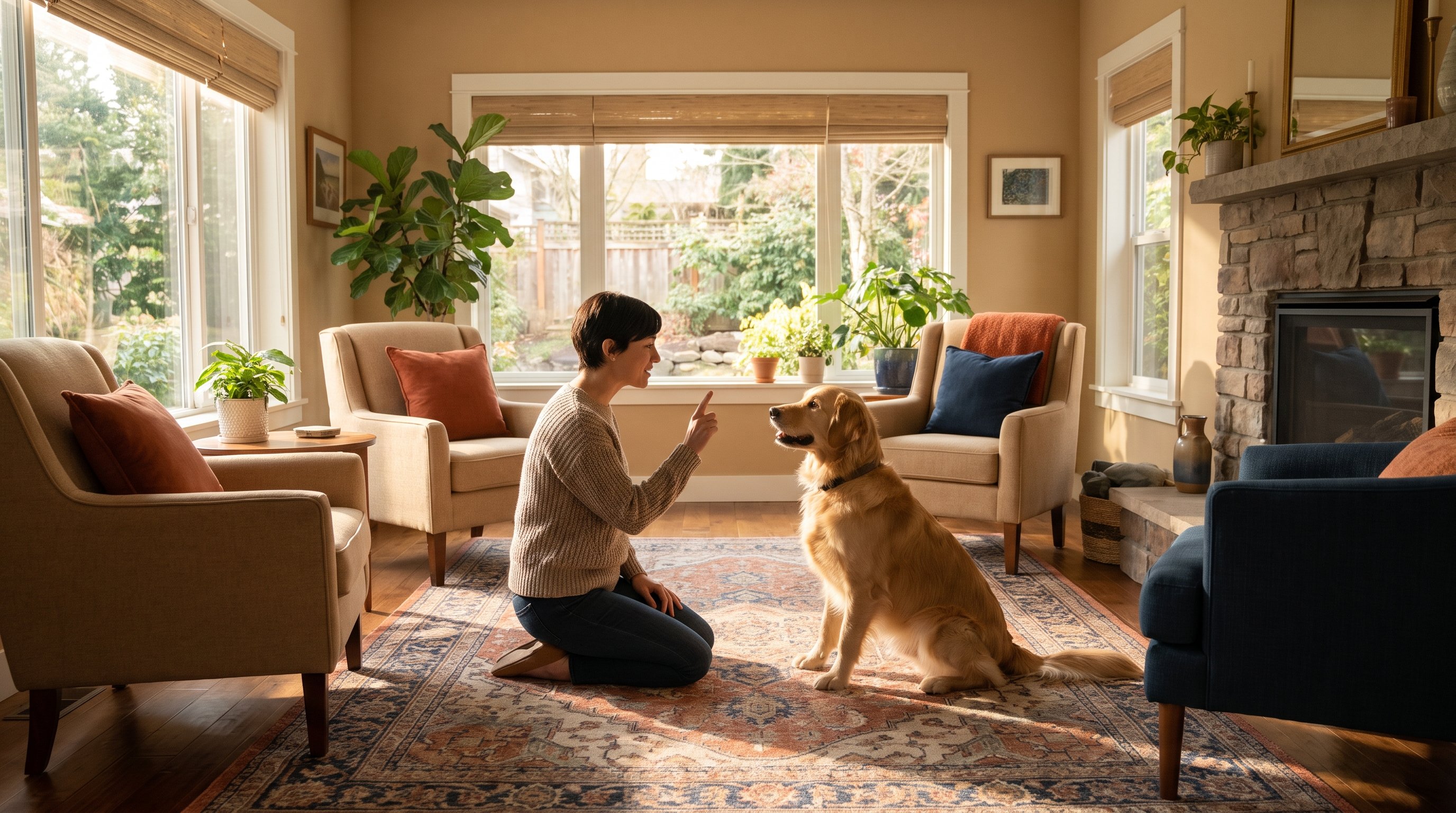
The mechanism is simple: dogs learn through repetition and consistent feedback, and your living room, hallway and kitchen already have everything needed to practise that. Distractions are lower at home, which makes it the easiest place to build a skill before testing it anywhere else.
This article covers whether home training actually works, how it compares to classes, who needs to adapt the approach, and where a structured plan beats scattered advice.
Does Training a Dog at Home Actually Work?
Yes, and the reason is mundane: most commands and manners are built through short repeated reps, and a home has more of those reps available per day than a weekly class ever will.
A once-a-week class gives a dog maybe 45 minutes of guided practice. Five minutes of home training, done twice a day, adds up to 70 minutes across a single week - more total practice time with far less travel and far less waiting around.
That arithmetic is why home sessions tend to move a dog's skills forward faster than occasional outside sessions alone, even though both have a place.
What home training will not do is make a dog understand a command perfectly after one or two tries. Learning still takes repeated, patient reps - the home just gives you more chances to run them.
Home Sessions or Group Classes: Weighing the Two
Most people training a dog end up choosing between daily home sessions and a weekly group class, or some mix of both.
| Factor | Home Training | Group Class |
|---|---|---|
| Session frequency | Daily, short bursts | Once a week |
| Distraction level | Low, familiar space | Higher, other dogs |
| Cost over time | Low, no travel | Ongoing class fees |
| Pace of practice | Set by you | Set by group |
| Best for | Building new skills | Testing skills around dogs |
Neither option is wrong. A dog usually needs the low-distraction reps at home before a group class actually sticks.
Why Short Daily Reps Beat One Long Weekly Session
The harder alternative is treating training like a single big event: one long weekend session, then nothing for days.
That approach fails for an unglamorous reason - a tired, overloaded dog stops absorbing anything useful after the first few minutes, and the owner stops wanting to repeat the slog the next day.
Short daily reps win because they are easy to keep doing. Five minutes before breakfast and five minutes before the evening walk is a routine a person can actually sustain for months, and sustained practice is what turns a command into a habit.
Consistency is unglamorous and it wins anyway. A dog that gets ten short sessions a week will usually outpace one that gets a single long session, simply because there's more total practice and less burnout on both ends of the leash.
Adapting Home Training to Your Dog and Your Week
The Brand-New Puppy
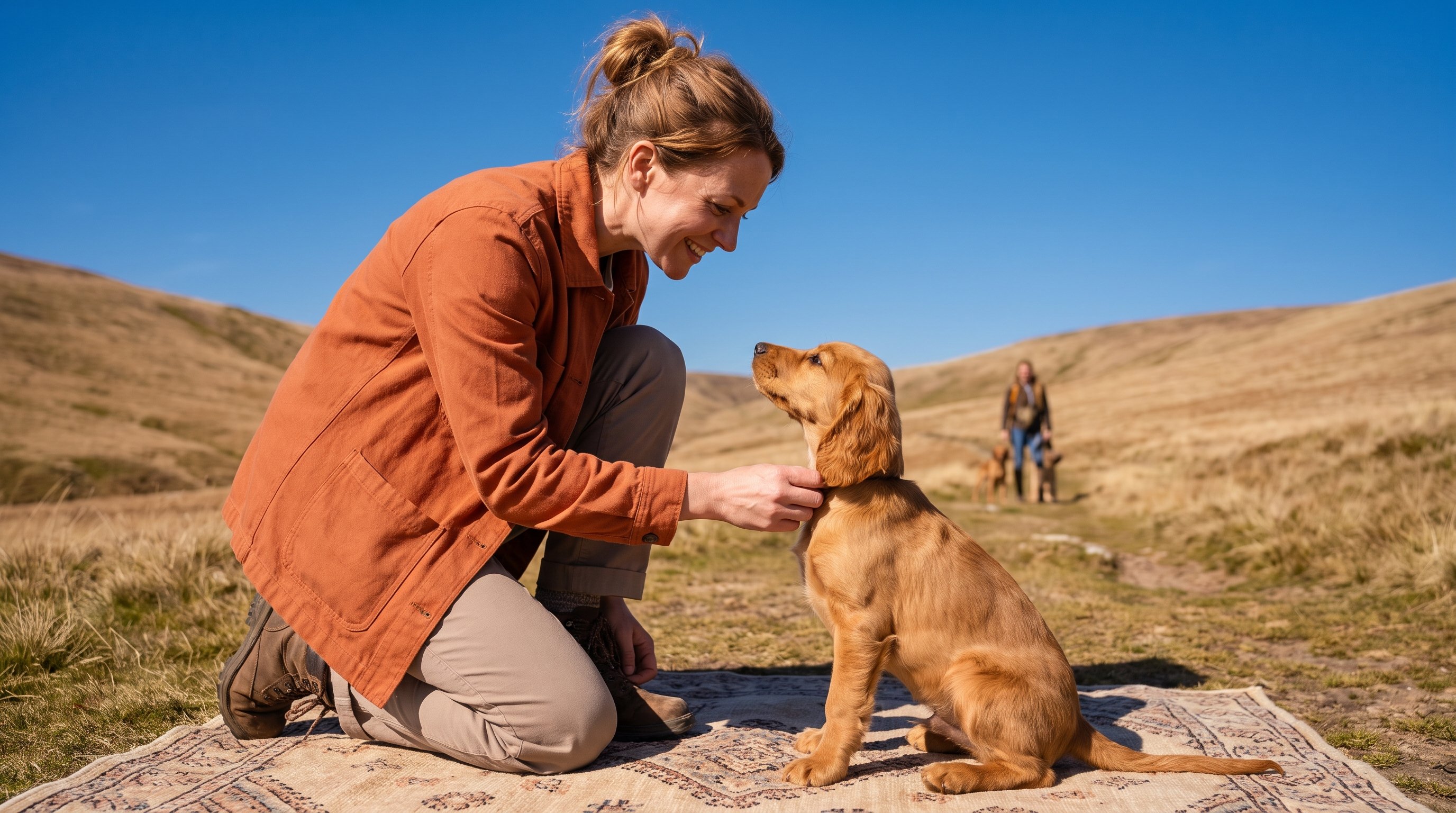
A young puppy has a short attention span, so two or three minutes per session is plenty - focus on one command at a time and end before the puppy loses interest.
The Busy Owner
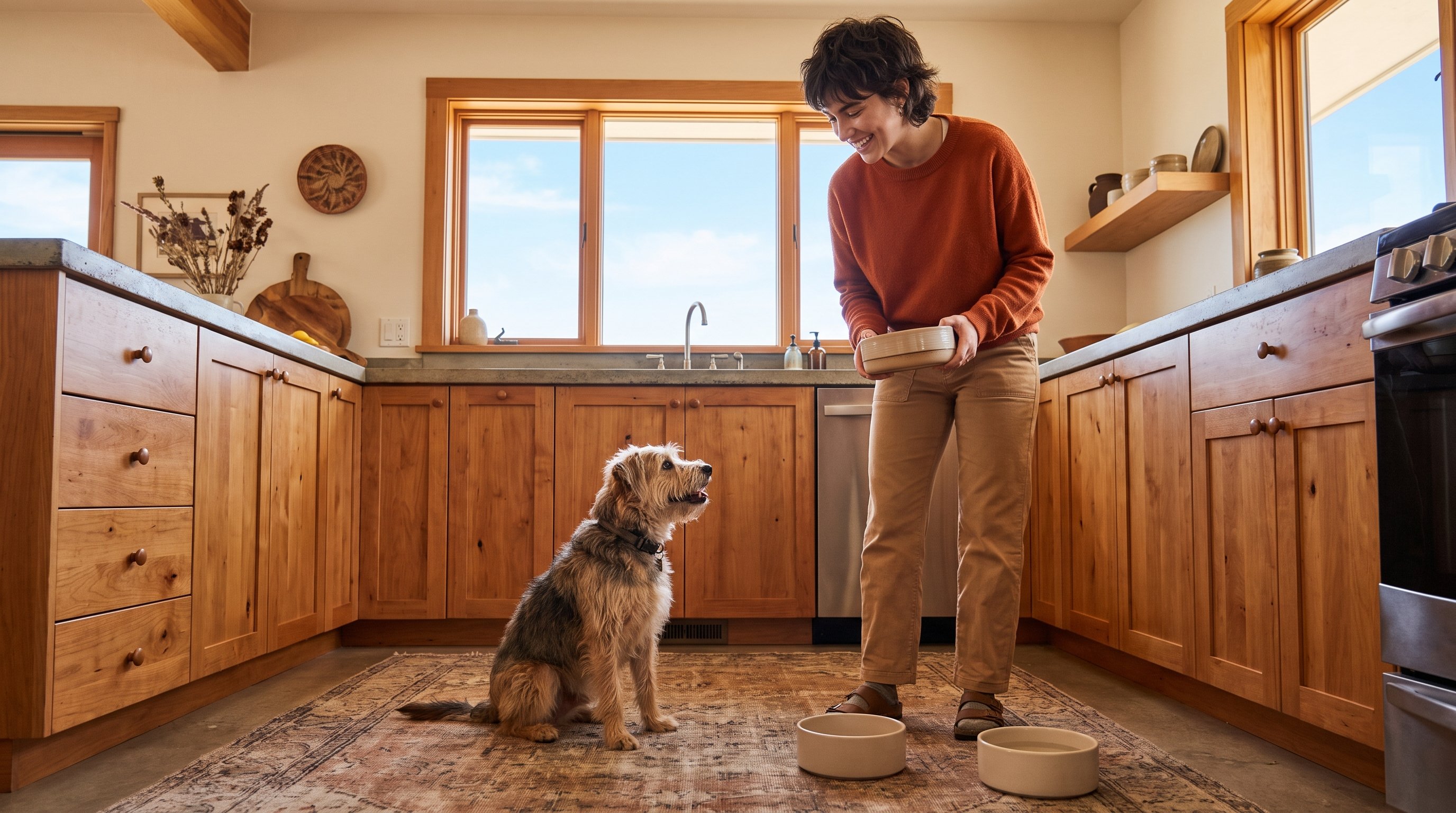
If your day is packed, attach training to something you already do - a sit before the food bowl goes down, a wait before the door opens - so it never needs its own slot on the calendar.
The Older Dog
An older dog can still learn new habits at home - sessions may just need to be shorter and more low-key, with rests built in rather than back-to-back reps.
The Multi-Dog Household
With more than one dog, train them separately at first so neither is guessing which cue applies to them, then bring them together once each dog is solid alone.
Fitting Dog Training Into an Already Full House
A full house with work, kids or other pets doesn't leave much room for a dedicated training hour, and it doesn't need to.
The trick is attaching training to moments that already happen - mealtimes, doorways, getting the leash off the hook - so the dog is practising constantly without anyone carving out extra time.
This is where having a clear, step-by-step plan matters more than willpower. Raising Dog breaks training into lessons built around your dog's age and needs, so instead of guessing what to practise tonight, you open the plan and know exactly what the next five minutes should look like.
The Myth of the Dog That's Trained in a Weekend
A lot of people want a dog that's fully trained after one intense weekend of effort. That's not how learning works, for dogs or anyone else.
A dog can pick up the shape of a command quickly, but reliability - doing it with distractions, doing it every time, doing it when no treat is visible - takes repeated practice spread over weeks, not hours.
The honest version is less exciting but more useful: a dog that practises a little every day, consistently, tends to get there. There's no shortcut that skips the repetition, only ways to make the repetition fit your life better.
Making Dog Training at Home Less of a Guessing Game
Generic advice fails on fit, not quality - a tip written for a six-month-old Labrador doesn't always translate to a nervous rescue or a tiny senior dog, and that mismatch is where most home training stalls.
Specificity is what turns advice into action. Raising Dog is built around lessons tailored to your dog's age and unique needs, with simple strategies for behaviour issues, tricks and games for bonding, and over 100 training and play ideas so you're never stuck wondering what to try next.
There's also guidance on health and nutrition alongside the training content, and the companion app tracks your dog's progress so the plan adjusts as your dog grows rather than staying static. A book is a plan, not a result - but a plan built around your actual dog beats generic advice every time.
Raise A Happy Dog
Train Your Dog Right
Starting Tonight's Training Session at Home
Pick one command or one habit, give it five minutes before dinner, and keep that same slot tomorrow - that's the whole starting point.
Raising Dog can take the guesswork out of what to practise and when, but the habit itself starts the moment you decide tonight's session actually happens instead of getting pushed to tomorrow.
FAQ
It varies by dog and by command, but short daily sessions tend to build reliability faster than occasional long ones. Expect gradual progress rather than a fixed date - consistency matters more than speed.
A class adds value for socialising around distractions, but most of the actual skill-building happens through repetition, and home gives you far more chances to repeat than a weekly session does. The two work well together rather than as a replacement for each other.
Training doesn't need a dedicated quiet room - a hallway, a corner of the kitchen or even a few minutes by the front door works fine. Shorter, more frequent sessions in an imperfect space beat waiting for the perfect one.
Stalling out usually means the sessions are too long, too infrequent, or not matched to what the dog is ready for next. Raising Dog's lessons are built around your dog's age and stage, so when one step stalls, there's a clear next step rather than starting from scratch.
Share this post