How To Clicker Train A Dog: A Timing-Based Plan
By:Author:Raising Dog Editorial
Updated on:October 20, 2026
- The Myth of the Magic Click
- What Makes a Clicker Different From Saying Good Dog
- What Changes How Fast Clicker Training Sticks
- A Realistic Week of Clicker Sessions
- Slotting Clicker Work Into a Busy Household
- When the Click Starts to Mean Something
- Common Mistakes With Clicker Timing
- Using Raising Dog to Build Out a Clicker Plan
- Picking Up the Clicker Tonight
Clicker training works by marking the exact moment a dog does something right, then backing that sound up with a treat every time. The click becomes a promise the dog can trust, which makes it faster and clearer than praise alone.
The mechanism is simple: a dog can't tell which of five things it just did earned a reward unless something marks the precise instant. A click is short, consistent and always followed by payment, so it removes the guesswork that slows down normal verbal praise.
This article covers what the click actually does, how to charge it, a weekly practice routine, where people go wrong and how to fit it around a normal week.
The Myth of the Magic Click
The clicker is not magic and it doesn't train the dog by itself. A click with no treat behind it, used inconsistently, teaches the dog nothing - the sound only means something once it's been paired with a reward dozens of times.
There's also no version of this where a dog learns a behaviour in one session and keeps it forever without practice. What the clicker actually does is speed up communication, not replace repetition.
The real answer: clicker training works as a timing tool inside an ordinary training plan, not as a shortcut around one.
What Makes a Clicker Different From Saying Good Dog
A clicker does one job and does it the same way every time, which is what gives it an edge over spoken praise.
The Click Marks a Single Instant
A word like good dog has a beginning, middle and end, so it blurs across a second or more of movement. A click is one sharp sound that can be timed to the exact second a paw lifts or a bottom hits the floor.
The Treat Follows the Click, Not the Behaviour
Once a click happens, the dog has already earned the reward, which means hands can be slow without confusing the message. That gap between click and treat is what lets a handler mark a behaviour from a distance or mid-movement and still pay accurately.
What Changes How Fast Clicker Training Sticks
Three things decide whether a dog starts connecting the click to its own actions, or just hears background noise.
The Main Factors
- Timing of the click - a click that lands a half-second late marks the wrong moment, so the dog learns the wrong thing.
- Consistency of the payoff - every click needs a treat behind it during the learning phase, or the sound starts to lose meaning.
- Session length - short sessions of a few minutes keep a dog interested, while long ones lead to guessing and frustration.
A Realistic Week of Clicker Sessions
This is one way a normal week could look once the clicker is charged and the dog understands the sound means a treat is coming.
Sample Weekly Plan
- Monday - five minutes clicking and treating for eye contact, twice during the day.
- Tuesday - five minutes shaping a sit, clicking the moment the bottom touches down.
- Wednesday - rest from new skills, short review of sit with the clicker.
- Thursday - introduce a hand target, clicking nose-to-palm contact.
- Friday - combine sit and hand target in one short session.
- Weekend - practise in a new room or the garden to test the behaviour outside the usual spot.
Slotting Clicker Work Into a Busy Household
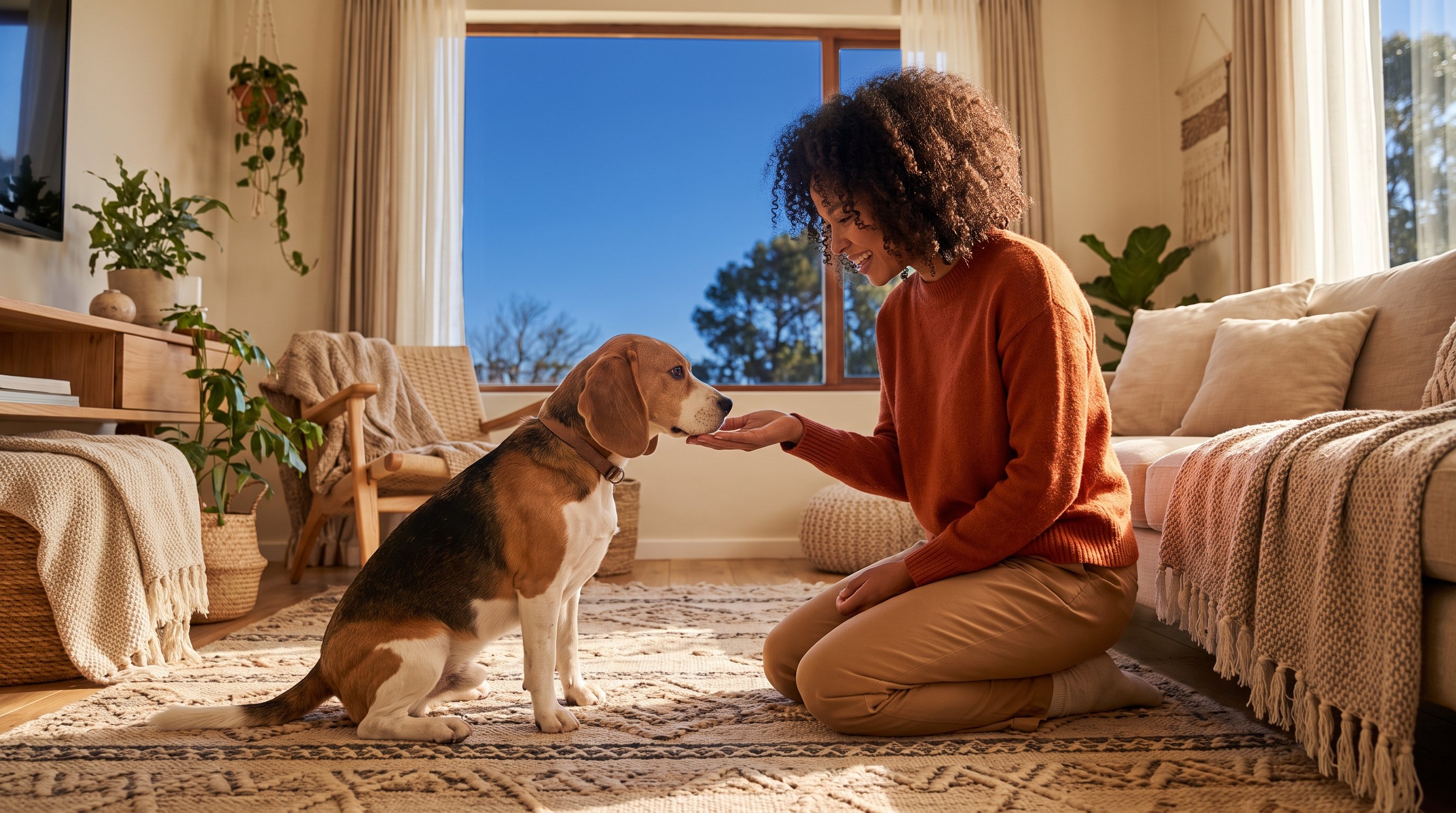
Clicker sessions don't need a set-aside hour - most of them fit into the gaps that already exist in a day, like waiting for the kettle or an ad break.
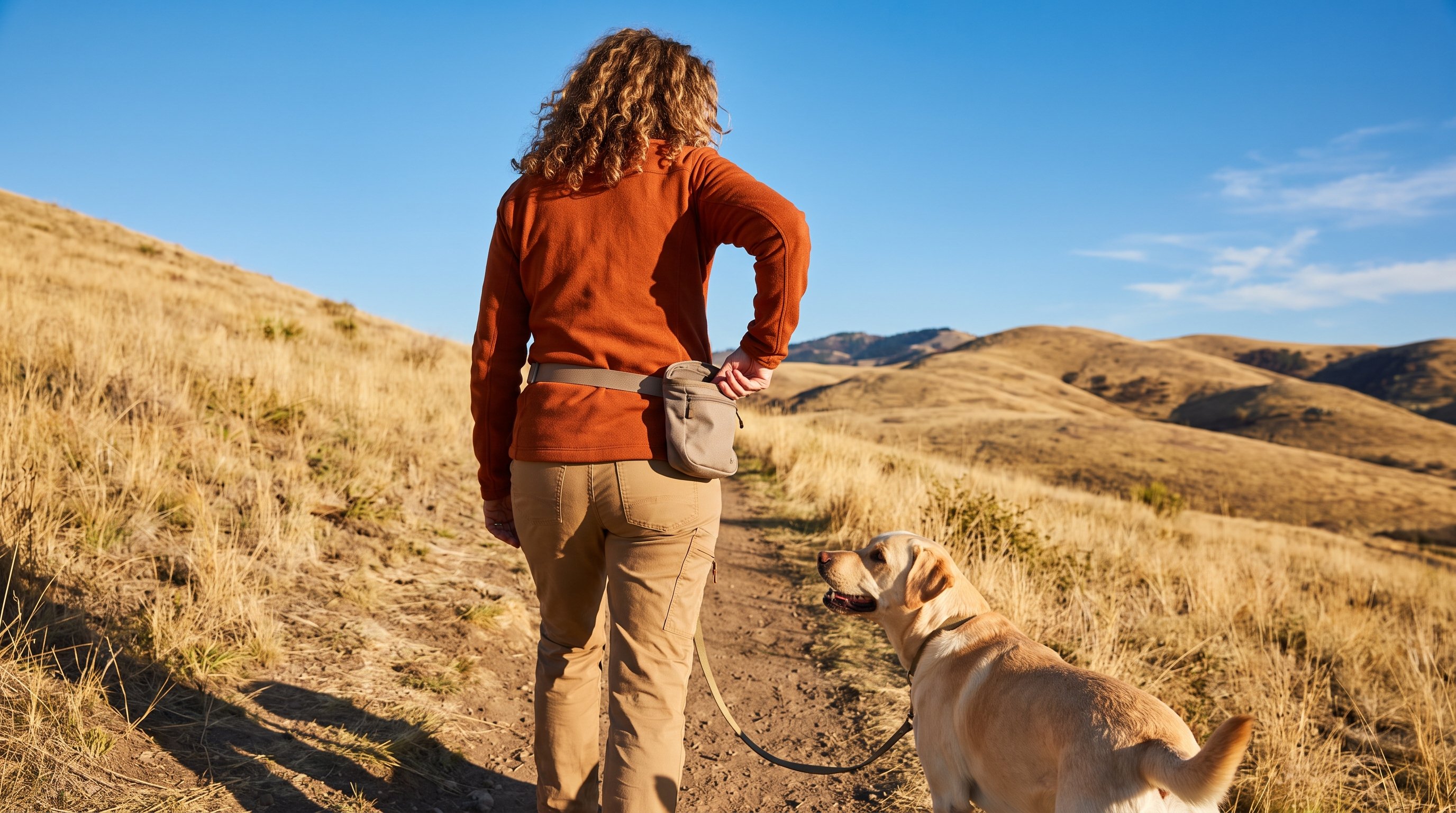
The clicker lives in a pocket or by the door, and a few treats in a small pot mean a session can start in seconds rather than needing setup.
Raising Dog lays out which behaviours suit which stage of a dog's training so sessions can be picked to match the five minutes actually available, rather than guessing what to work on.
When the Click Starts to Mean Something
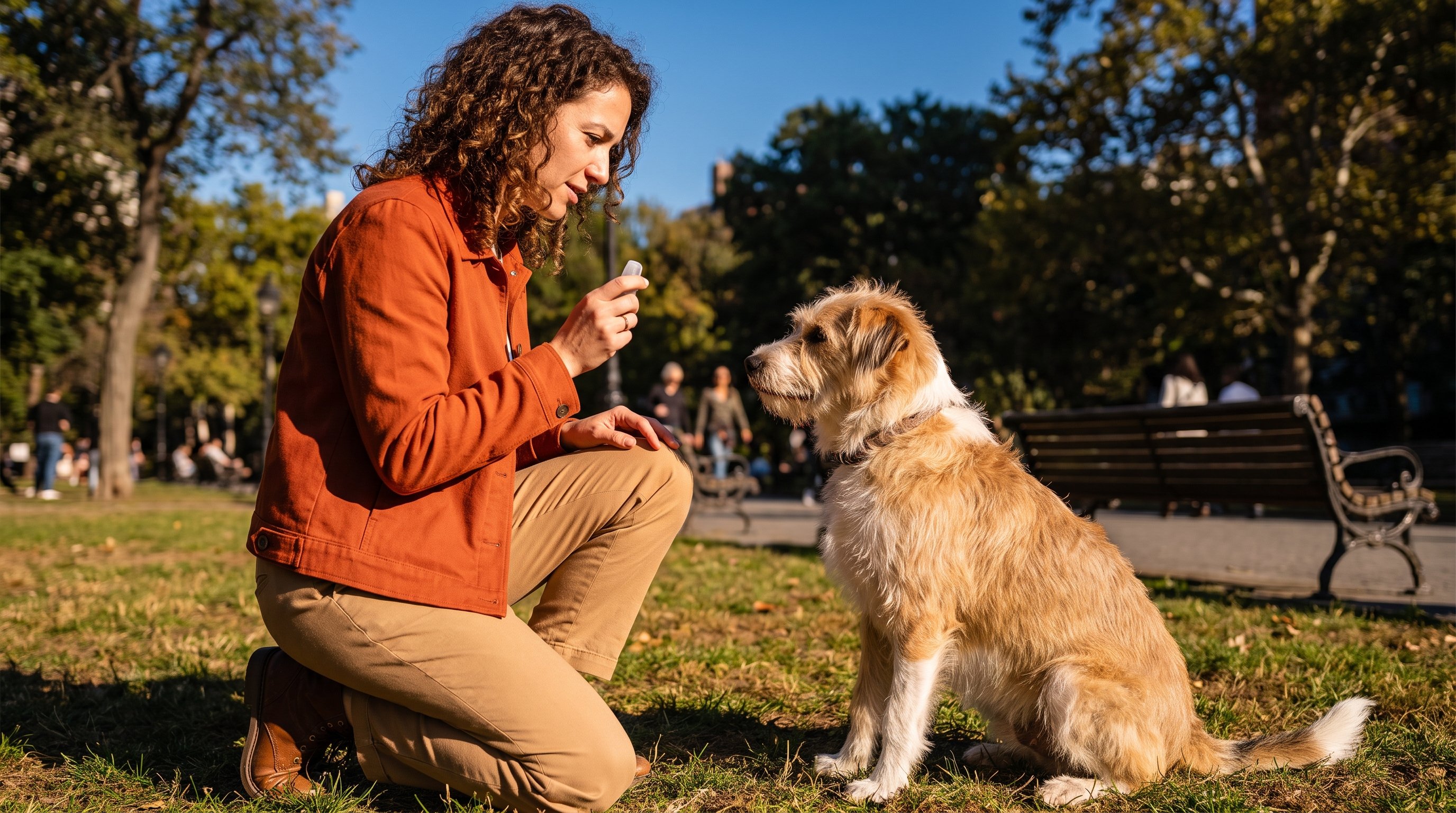
There's a point where the dog's head turns toward the treat pouch the second it hears the click, before any food appears - that's the sign the sound has become a reliable signal.
How many sessions that takes varies by dog, by distraction level and by how consistent the timing has been, so it's worth staying vague on a number of days rather than expecting a fixed point.
Progress often looks slow early on and then speeds up once the dog trusts the pattern, which is normal and not a sign anything's gone wrong.
Common Mistakes With Clicker Timing
Clicking Too Late
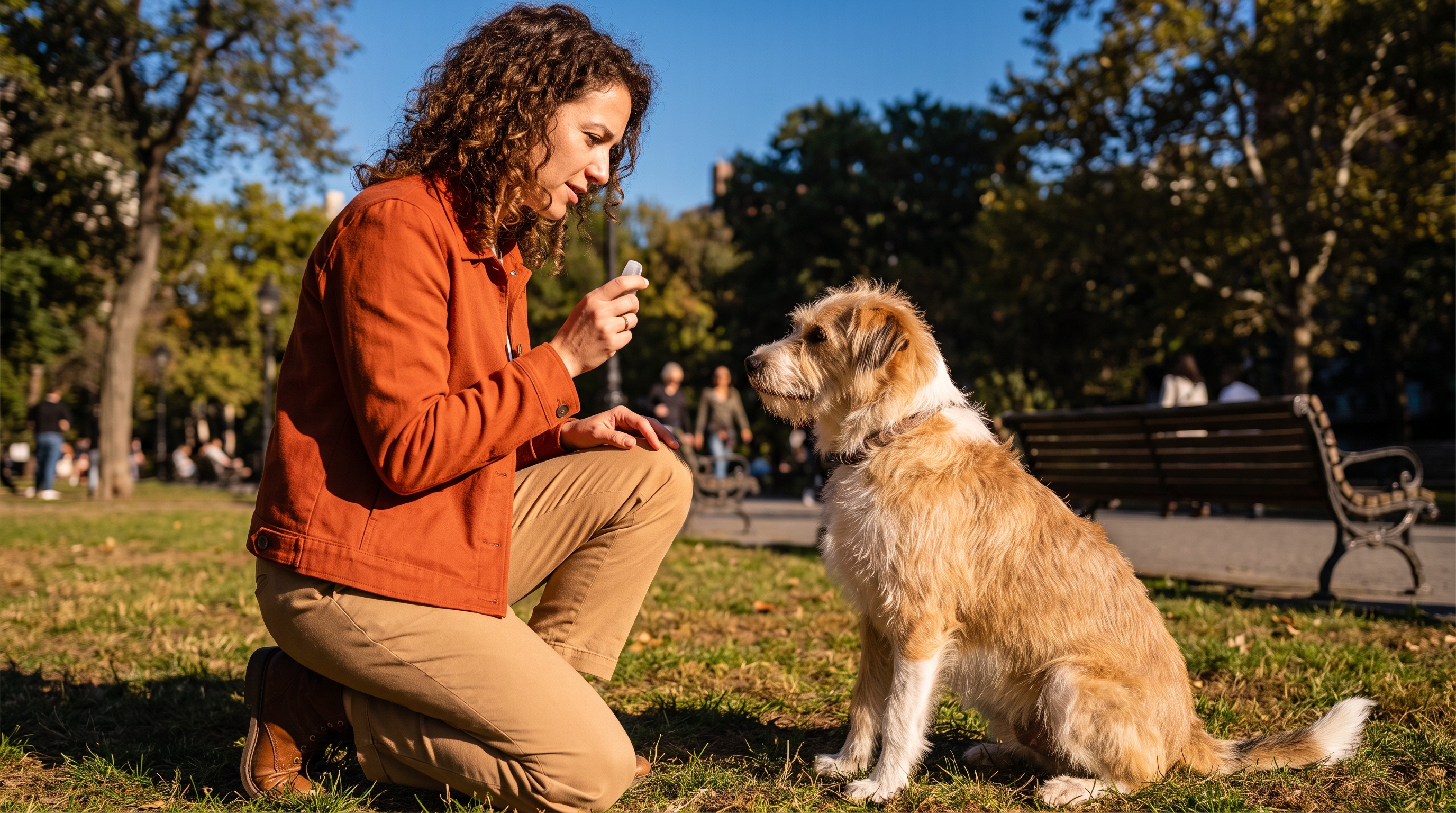
A click that lands after the dog has already moved on marks the wrong action entirely. Slow the exercise down and click smaller pieces of the movement until the timing feels natural.
Forgetting the Treat
Clicking without following through breaks the link the dog has built between the sound and the reward. Keep treats within reach before starting, not after the click.
Clicking Too Many Times
Multiple clicks in one go for a single action confuse the message. One click, one treat, every time.
Running Sessions Too Long
A tired or bored dog starts offering random behaviours instead of thinking. Stop while the dog is still keen, even if that's after two minutes.
Skipping the Charging Stage
Moving straight to shaping behaviours before the dog understands what the click means slows everything down. Spend a few short sessions just clicking and treating with no task attached first.
Using Raising Dog to Build Out a Clicker Plan
Generic clicker advice online tends to assume one type of dog and one type of household, which is why it often stalls after the first week.
Raising Dog builds lessons around a dog's age and unique needs, so the shaping steps and session length match the dog actually in front of the reader rather than an average one.
The book also covers tips to overcome behavior issues and tricks and games for bonding, so the clicker becomes one tool inside a wider plan instead of an isolated trick.
Raise A Happy Dog
Train Your Dog Right
Picking Up the Clicker Tonight
The fastest way to start is the simplest one: click, then treat, ten times in a row with nothing else asked of the dog, just to build the connection.
From there, Raising Dog can help shape that single sound into a full set of skills, built around the dog's own pace rather than a one-size plan.
FAQ
It can speed up communication because the click marks a single instant, while a spoken word often blurs across a second or more. The dog still needs repetition - the clicker changes timing, not the number of reps needed.
It's small enough to clip to a bag or keep by the door, and most sessions only need it for a few minutes at a time. Some people switch to a mouth click or a word once the behaviour is solid, dropping the tool altogether.
Muffling the clicker in a pocket or using a softer marker word solves this for most dogs who startle at the noise. Raising Dog covers alternative marker options for sound-sensitive dogs so the method still works without the sharp click.
Treats stay constant while a behaviour is new, then can fade gradually once it's reliable across different rooms and distractions. There's no fixed week number for this - it depends on how solid the behaviour already is before weaning off starts.
Share this post