Crate Training A Puppy: A Calm, Step-By-Step Approach
By:Author:Raising Dog Editorial
Updated on:October 18, 2026
- A Normal Week of Crate Training Sessions
- How Often to Practice Crate Training: Session Frequency and Length
- Why Gradual Crate Training Beats Forcing It
- Fitting Crate Sessions Into a Working Day
- Adjusting Crate Training to Your Situation
- When Crate Comfort Usually Settles In
- Making Crate Training Less Guesswork
- Getting Started With a Calmer Crate Routine
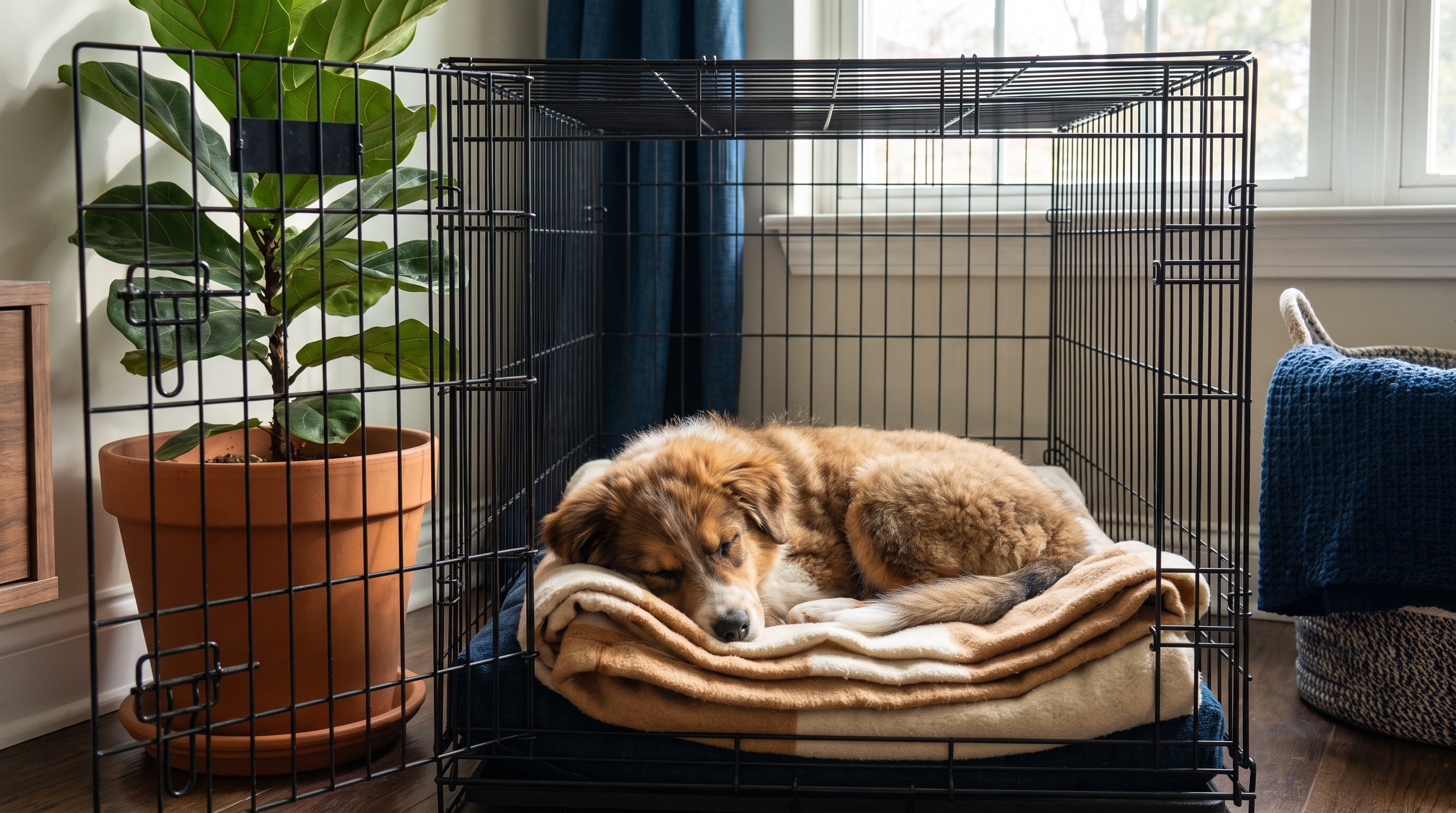
Crate training a puppy means teaching them that a crate is a safe, quiet place to rest - not a punishment and not a cage to tolerate. Done gradually, most puppies settle into it because the crate becomes linked with calm, predictable things: food, sleep, chew toys, nothing scary.
The mechanism is simple association. Every time the crate predicts something good or neutral instead of something stressful, the puppy's opinion of it shifts a little further toward relaxed.
This guide covers what a normal week of crate training looks like, how often to practise, why the gradual approach beats forcing it, and how to adjust the plan for your actual schedule.
A Normal Week of Crate Training Sessions
There's no single right order, but most weeks follow a similar shape: short sessions while you're home, building toward longer stretches and then overnight settling.
A Sample Week
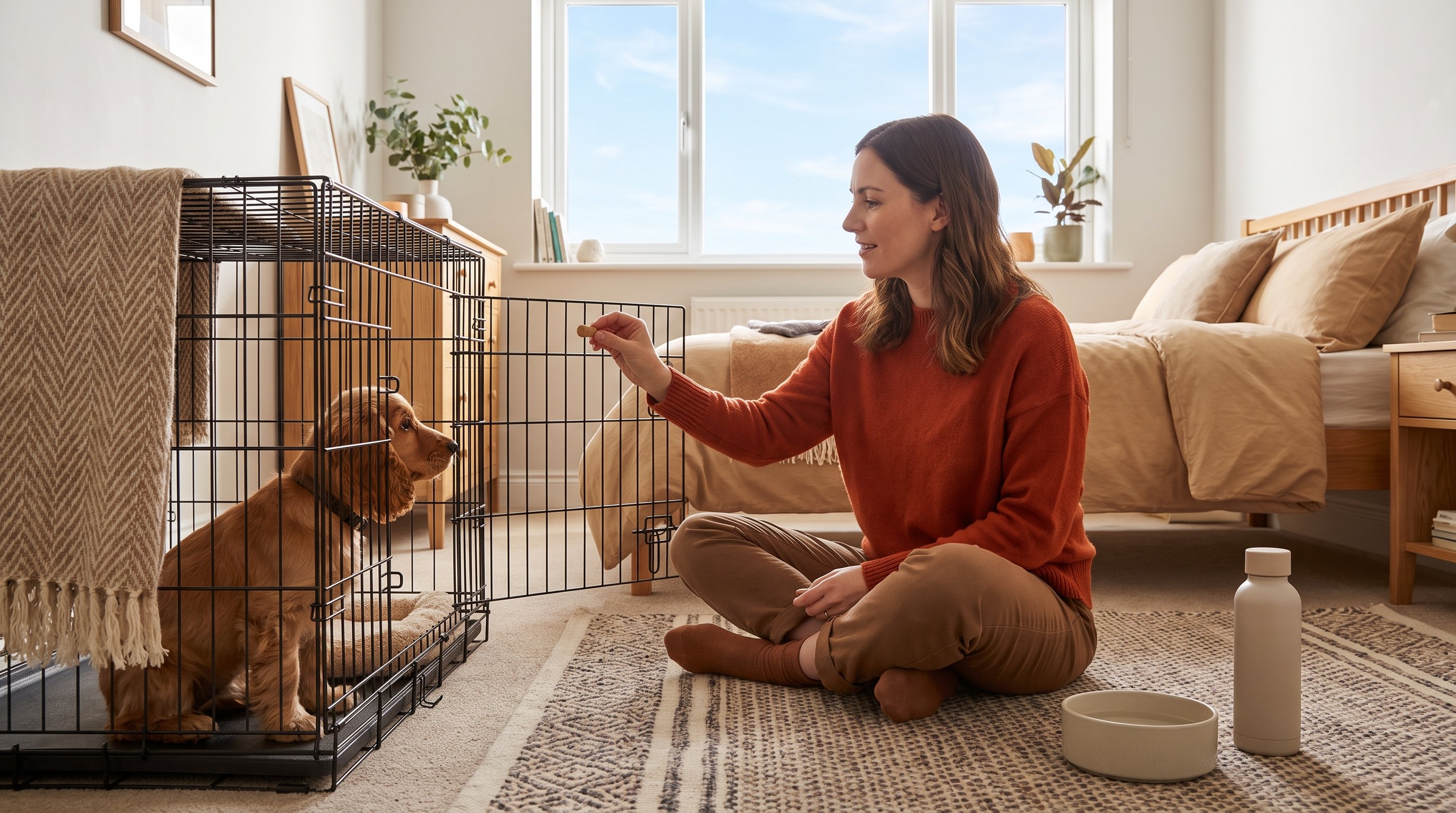
- Days 1-2 - Door open, meals and treats placed inside, puppy comes and goes freely
- Days 3-4 - Door closed for a few minutes while you sit nearby
- Days 5-6 - Door closed for longer, you move to another room briefly
- Day 7 - First short solo stretch while you step outside or run an errand
This isn't a strict rulebook - some puppies move faster, some need an extra few days at each stage before moving on.
How Often to Practice Crate Training: Session Frequency and Length
Short and Frequent Beats Long and Rare
Several short crate sessions spread across the day build comfort faster than one long stretch that leaves the puppy anxious.
| Stage | Session Length | Frequency |
|---|---|---|
| Week 1 | 2-5 minutes | 4-6 times daily |
| Week 2 | 10-20 minutes | 3-4 times daily |
| Week 3 | 30-60 minutes | 2-3 times daily |
| Week 4+ | 1-3 hours | 1-2 times daily, plus overnight |
Treat these numbers as a starting point, not a deadline - a puppy who whines through week two can simply repeat it rather than push ahead.
Why Gradual Crate Training Beats Forcing It
The harder alternative is closing the door and letting the puppy cry it out, hoping they adjust through sheer repetition.
It sometimes produces a puppy who stops crying - but not necessarily one who feels calm, and a puppy who associates the crate with distress is more likely to resist it later, not less.
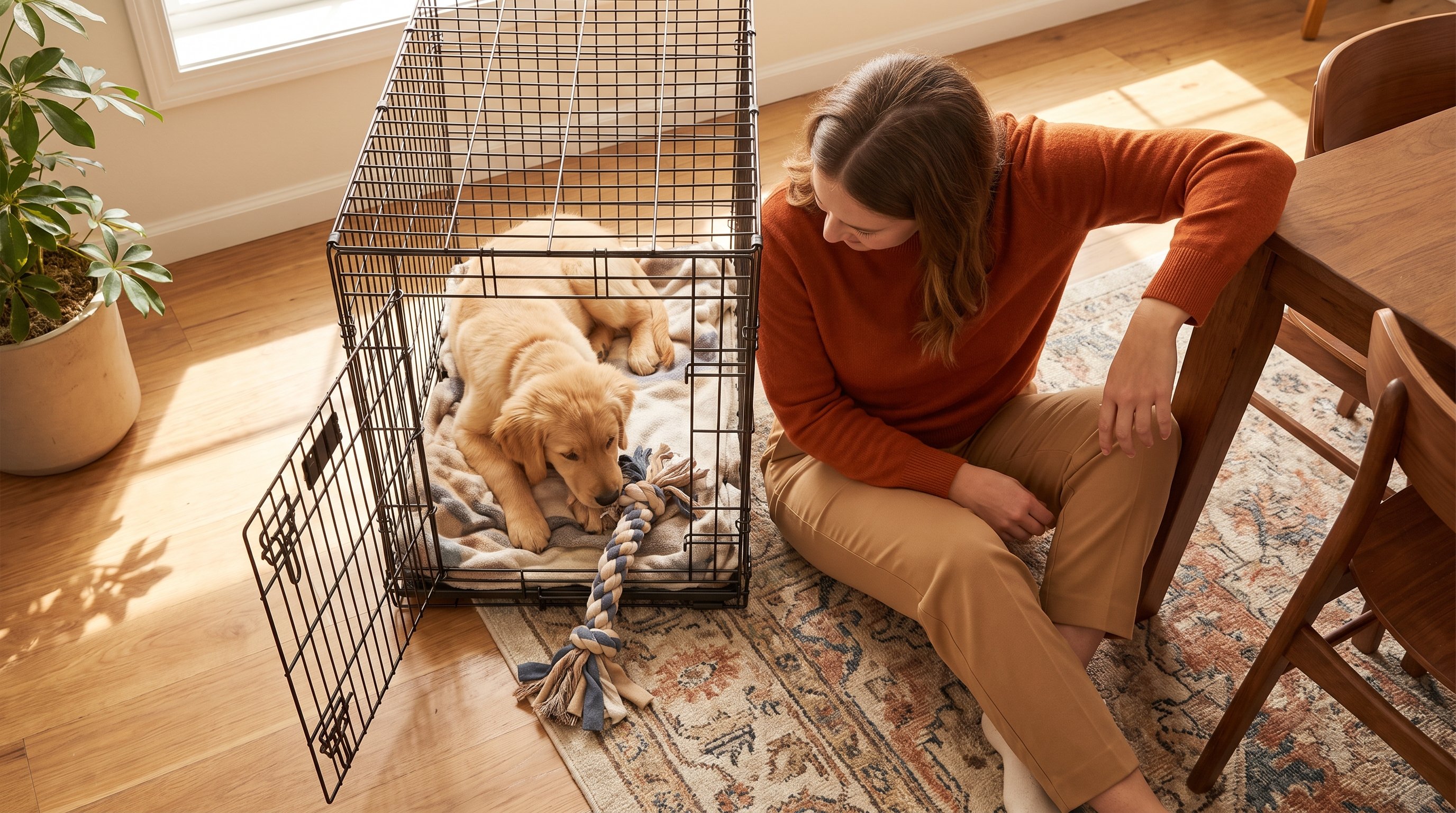
Gradual crate training takes longer to reach the same door-closed, puppy-settled result, but it's the version most people can actually stick with, because it doesn't ask you to ignore distress signals.
Adherence is the whole game here - a method you abandon on night three helps nobody, including the puppy.
Fitting Crate Sessions Into a Working Day
Most households aren't home all day, so crate practice has to slot around work, school runs and everything else on the calendar.
Early mornings and evenings are usually the easiest windows - a short session before you leave, another when you're back, rather than waiting for one long free afternoon that rarely appears.
This is where having a plan that already accounts for your puppy's age and your routine helps - Raising Dog breaks the crate training process into steps sized for the time you actually have, rather than assuming a free weekend to get it done.
Adjusting Crate Training to Your Situation
The Brand-New Puppy
Keep early sessions short and generously rewarded - the goal isn't duration yet, it's building a habit of walking in calmly.
The Busy Household
Fit sessions around existing routines like breakfast or the school run instead of carving out separate training time.
The Older Puppy or Rescue
Some older dogs arrive with no crate history or a negative one, so the early stages may need to move slower, with the door staying open longer than the standard timeline suggests.
The Multi-Pet Home
Crate train one animal at a time where possible, since a second dog nearby can be a distraction or a source of competition over the space.
When Crate Comfort Usually Settles In
Most of the frustration with crate training happens in the first couple of weeks, when sessions still feel effortful and progress looks slow.
There's no fixed point where a puppy is guaranteed to be fully settled - some get there sooner, some take longer, and backward steps after a good run are normal rather than a sign something's wrong.
What tends to hold people back isn't the puppy's pace, it's giving up during a rough night and deciding the crate isn't working, when a slower return to the previous stage would have been enough.
Making Crate Training Less Guesswork
Generic crate schedules assume every puppy and every household are the same, which is exactly where they tend to fall apart.
A plan that accounts for your puppy's age, breed tendencies and your daily routine is far more likely to actually get used than a one-size timeline pulled from somewhere else.
Raising Dog lays out crate training step by step alongside the rest of early training, with the companion app tracking which stage you're on so you're not guessing whether to extend a session or move forward.
Raise A Happy Dog
Train Your Dog Right
Getting Started With a Calmer Crate Routine
Pick one short session today - door open, a few treats scattered inside, no pressure to close it yet.
That single small step is how crate comfort actually builds, and Raising Dog can carry you through the rest of the stages once this one feels easy.
FAQ
It varies by puppy, temperament and how consistently sessions happen, so there's no fixed number of days to expect. Progress usually shows up as shorter settling time rather than a single finish line.
A crate used well is a resting spot the puppy chooses to enter, built through repeated positive association rather than confinement for its own sake. The difference is in how it's introduced, not the object itself.
Crying usually means the stage moved too fast, so going back to a shorter duration or an open door for a few more days is the practical fix. Pushing through the crying rarely speeds things up and can make the crate feel worse, not better.
Most drop-off happens after a bad night or two, when it feels like nothing is working even though the plan just needs a slower pace. Raising Dog's step-by-step structure helps you see which stage to repeat instead of abandoning the process altogether.
Share this post