Dog Tricks: A Practical Guide To Teaching Them Well
By:Author:Raising Dog Editorial
Updated on:October 20, 2026
- The Myth of the One-Session Trick
- How Shaping and Luring Actually Build a Trick
- What Changes How Fast a Trick Sticks
- A Week of Trick Practice That Actually Fits
- Fitting Trick Training Around a Busy Household
- When a New Trick Starts to Click
- Common Mistakes When Teaching Dog Tricks
- Teaching Dog Tricks With Raising Dog's Step-By-Step Plan
- Starting Your Dog's First Trick Today
Dog tricks are taught through small, repeated reps that reward the right choice the moment it happens - not through one long session or a single magic cue.
The mechanism is simple: a dog repeats behaviour that gets rewarded, so breaking a trick into tiny steps and marking each one builds the full move over time.
This guide covers what actually works, how to structure practice, what a normal week looks like, and where most people get stuck along the way.
The Myth of the One-Session Trick
No, a dog is not going to learn a solid trick in one sitting, no matter how good the treats are.
A dog does not generalise a new behaviour from a handful of reps - it needs the pattern repeated across different moments, rooms and distractions before it sticks.
The honest version: tricks build in layers, and the early sessions often look messy because the dog is still guessing what earns the reward.
That messiness is normal and it is not a sign the dog cannot learn - it is just the first layer forming.
How Shaping and Luring Actually Build a Trick
Both luring and shaping get a dog to a finished trick, but they work through different routes.
Luring Guides the Body Into Position
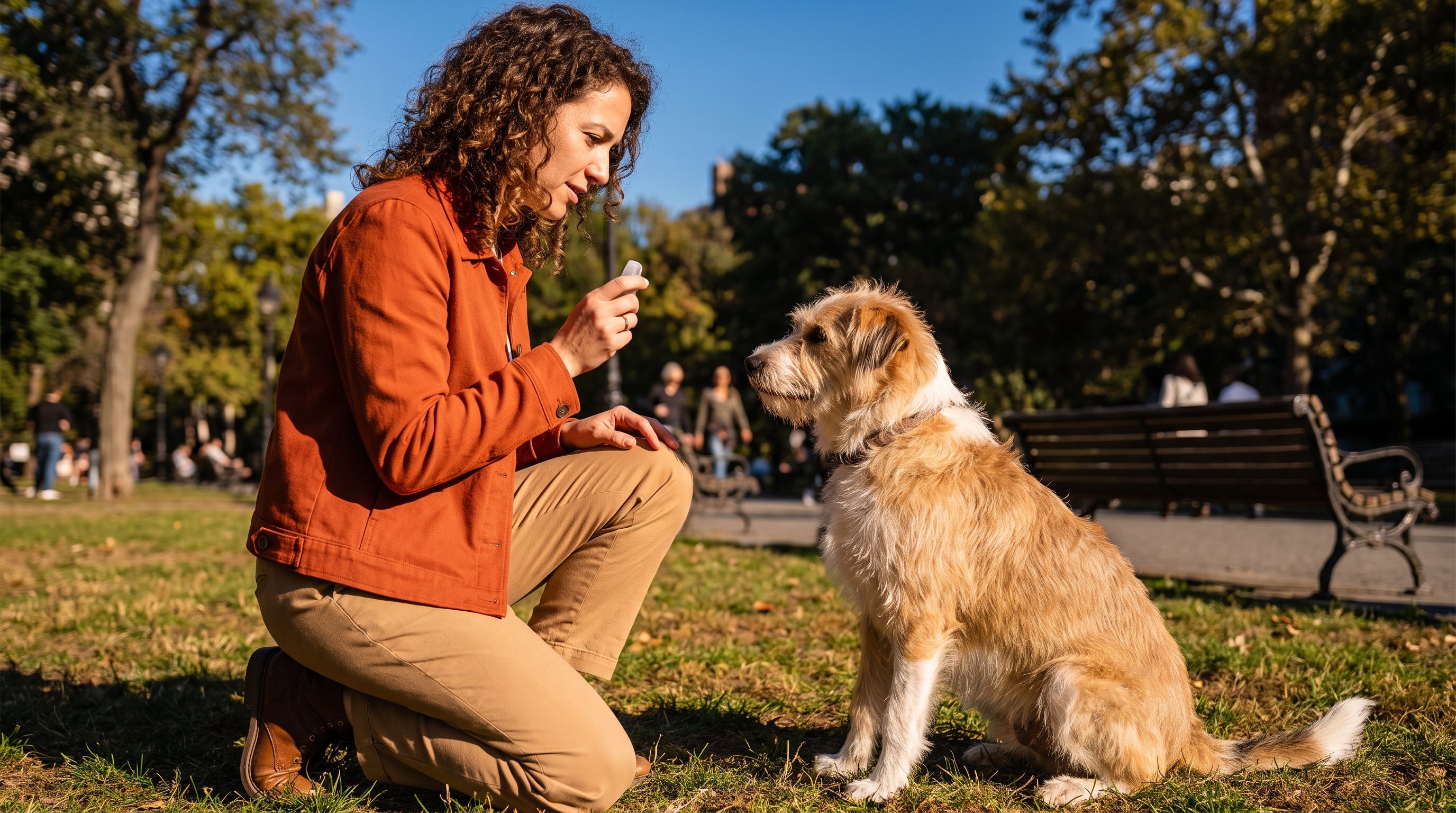
A treat held near the nose draws the dog's head and body into the shape you want, like dropping into a sit or following a hand into a spin.
Once the dog moves into position reliably with the lure, the hand motion turns into a hand signal and the treat stops being part of the movement itself.
Shaping Rewards Small Steps Toward the Goal
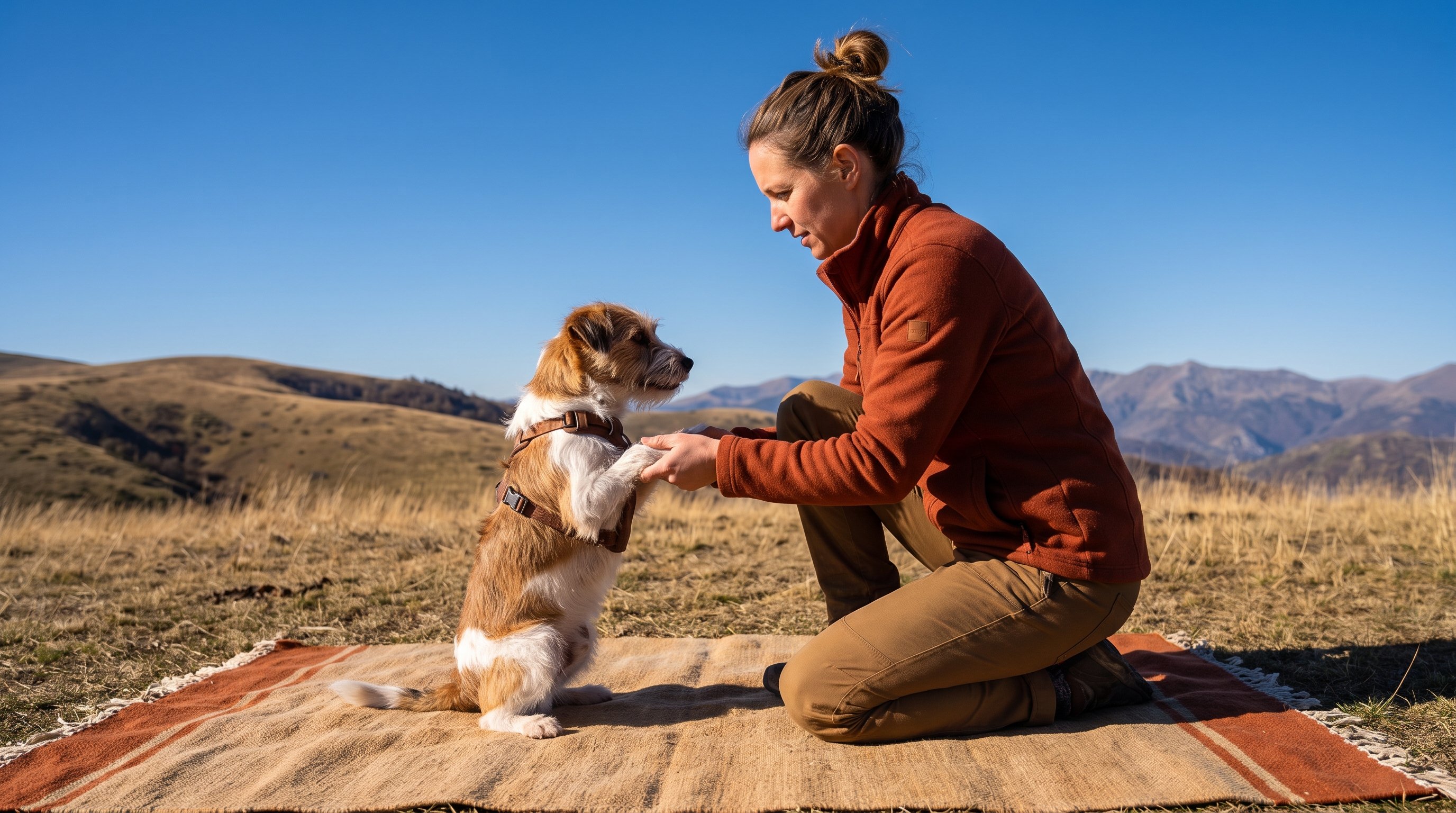
Instead of guiding the dog, shaping rewards any small movement that is closer to the final trick, like a paw lift before it becomes a full wave.
This takes more patience because the dog has to offer behaviour on its own, but it tends to produce a dog that thinks more and waits for cues less.
What Changes How Fast a Trick Sticks
Not every household sees the same pace, and three factors explain most of the difference.
Factors That Move the Needle
- Session length - short sessions of a few minutes keep a dog focused; long sessions invite guessing and frustration.
- Reward timing - marking the exact right moment, with a word or a click, tells the dog precisely what earned the treat.
- Consistency of the cue - using the same word and hand signal every time avoids confusing the dog about what is actually being asked.
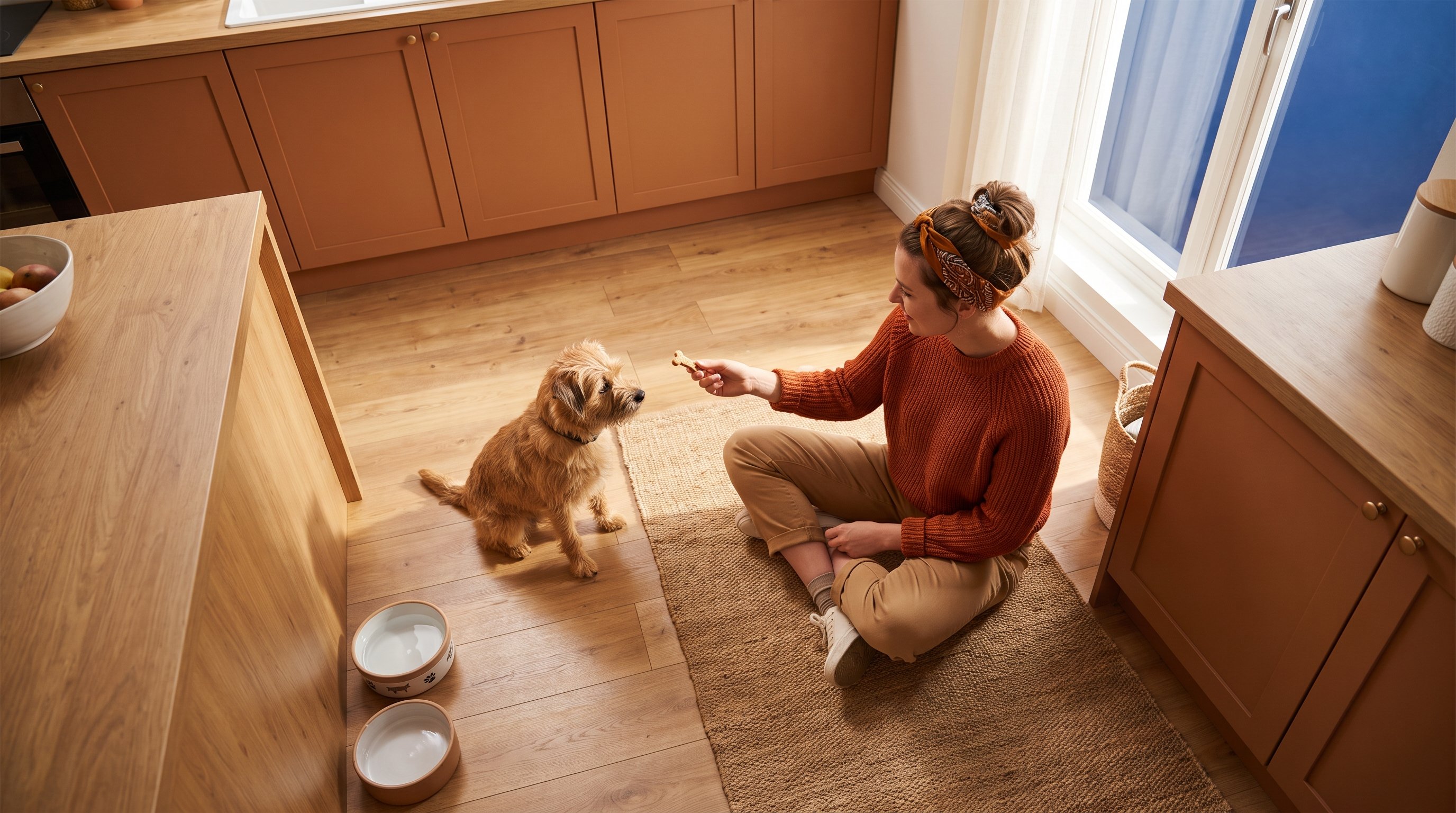
Get those three right and most tricks move forward steadily, even in short bursts between other parts of the day.
A Week of Trick Practice That Actually Fits
There is no need to block out an hour a day - a trick can build in the gaps that already exist.
A Realistic Weekly Rhythm
- Monday and Tuesday - two or three minute sessions, morning and evening, working the first step of a new trick.
- Wednesday - a lighter day, just reviewing a trick the dog already half-knows to keep it fresh.
- Thursday and Friday - back to short sessions, adding the next layer once the first step is reliable.
- Weekend - a slightly longer session in a new room or the garden, testing whether the trick holds outside the usual spot.
That is five to seven short touches a week, which is enough for most dogs to show visible progress on one trick at a time.
Fitting Trick Training Around a Busy Household
Trick practice does not need a dedicated slot in the calendar - it fits naturally into ad breaks, the wait for the kettle, or the few minutes before dinner.
The trick is remembering which step you left off at, which is where a lot of people lose momentum without meaning to.
Raising Dog's app keeps a record of what was practised and when, so picking the session back up the next day does not mean guessing where you were.
When a New Trick Starts to Click
There is no fixed week where a trick suddenly locks in - some dogs show the first flicker of understanding quickly, others take longer, and both are normal.
What usually happens is a gradual shift: the dog starts offering the behaviour before the cue is even finished, which is the sign the pattern is forming.
This is also the point where people are tempted to add a second trick too soon - it is worth giving the first one a bit more room before stacking on a new challenge.
Common Mistakes When Teaching Dog Tricks
Moving to the Next Step Too Fast
If the dog is only getting a step right half the time, that is the step to keep practising, not the cue to add difficulty.
Changing the Cue Word Midway
Switching between "spin" and "turn around" for the same trick just adds confusion - pick one word early and stick with it.
Training Only in One Room
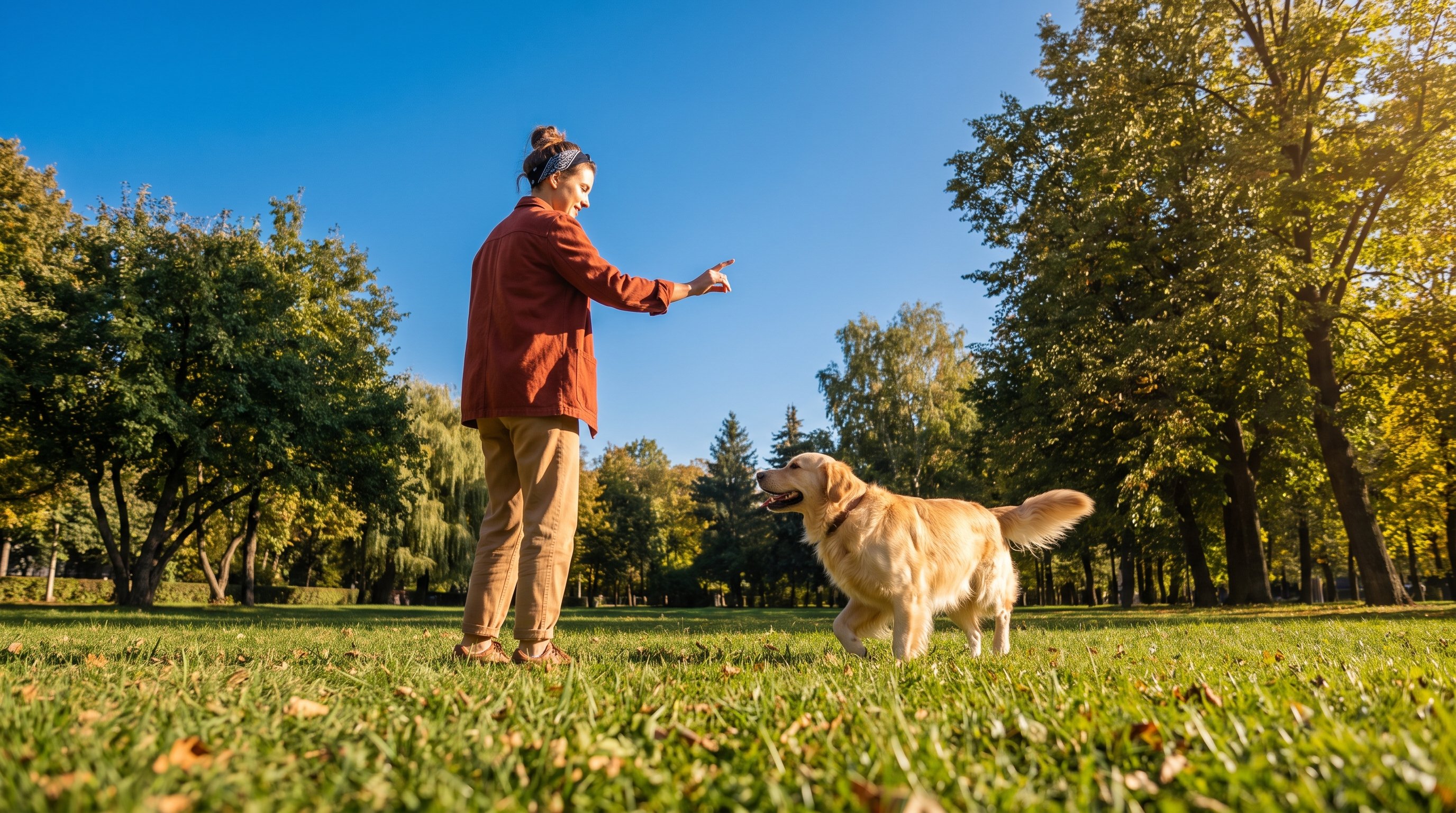
A trick learned only in the kitchen may fall apart outside, so practising in a few different spots helps it generalise.
Rewarding Too Late
A treat delivered several seconds after the behaviour rewards whatever the dog is doing at that later moment, not the trick itself.
Skipping Short Sessions on Busy Days
A single two-minute rep is still worth doing - missing every session on a hectic day slows things down more than a short one ever would.
Teaching Dog Tricks With Raising Dog's Step-By-Step Plan
Generic trick guides assume every dog starts from the same place, but a puppy learning its first sit and an older dog refining a trick need different pacing.
Raising Dog builds trick lessons around your dog's age and existing skills, so the steps match where your dog actually is, not an average dog that does not exist.
The book covers the trick-and-game side alongside behaviour basics, and the app tracks which steps have been practised so the next session always picks up in the right place.
Raise A Happy Dog
Train Your Dog Right
Starting Your Dog's First Trick Today
Pick one simple trick, break it into the smallest possible first step, and give it two minutes before the next meal or walk.
That one small session is the whole method - repeated, timed well, and kept short enough that the dog stays interested rather than checked out.
Raising Dog can hold the plan and the progress notes so tomorrow's session starts exactly where today's left off.
FAQ
Sit and paw tend to be the easiest starting points because they build on movements a dog already makes naturally. Starting with one of these gives the dog an early win before moving to anything more complex.
Breed can affect how naturally certain movements come, but it does not rule out a trick entirely - it mostly changes how the steps get broken down. A tailored plan accounts for this rather than treating every dog the same.
That is usually a sign the session has run too long or the reward has lost its appeal, not a sign the dog cannot learn the trick. Shortening the session or switching to a higher-value treat is enough to fix it most of the time.
Yes, an older dog can still learn new tricks, though sessions may need to stay shorter and steps a little more gradual. Raising Dog adjusts its trick lessons to a dog's age, so the plan does not assume a puppy's pace for an older dog.
Share this post