Dog Body Language: A Clear Guide To What Your Dog Is Telling You
By:Author:Raising Dog Editorial
Updated on:October 20, 2026
- A Normal Day of Noticing What Your Dog Shows You
- How Often to Check in on Dog Body Language
- Why Reading the Whole Dog Beats Guessing From One Signal
- Fitting Body Language Awareness Into a Normal Week
- Adjusting How You Read Signals for Different Dogs
- When Reading a Dog's Signals Starts to Feel Natural
- Making Sense of Dog Body Language With Raising Dog
- Starting to Read Your Dog's Signals Today
Dog body language is the set of physical signals - tail, ears, posture, mouth, eyes - that a dog uses to show how it feels about what's happening around it. Read them together, not one at a time, and most of what looks confusing starts to make sense.
Dogs cannot tell you they're uneasy with words, so the body does the talking. A stiff posture, a tucked tail or a hard stare rarely show up alone - they cluster together, and the cluster is what tells the real story.
This article covers what a normal day of watching for these signals looks like, how often to practise reading them, why context beats guessing from a single cue, and how to fit this skill into ordinary life with a dog.
A Normal Day of Noticing What Your Dog Shows You
You don't need a special session to practise reading body language. It happens alongside everything else a dog already does in a day.
A Day of Body Language Moments to Notice
- Morning greeting - loose wiggly body and soft eyes usually mean relaxed and glad to see you
- Breakfast time - a still body and fixed stare at the bowl often signals focus, not aggression
- Walk past a stranger - ears pinned back and weight shifted backward can mean unsure, not friendly
- Meeting another dog - a curved body and low wagging tail usually reads as polite and open
- Evening settling - a loose flop onto the side with a sigh generally means fully at ease
None of these signals mean much alone. It's the pairing - tail plus ears plus weight distribution - that gives the clearer picture.
How Often to Check in on Dog Body Language
Build It Into Moments You Already Have
Reading body language isn't a separate task to schedule - it's a habit to layer onto walks, meals, greetings and play that already happen every day.
| Moment | What To Watch |
|---|---|
| Greeting a new person | Tail height, ear position, weight shift |
| Meeting another dog | Body curve, tail speed, mouth tension |
| During play | Play bows, pauses, self-interruptions |
| At the vet or groomer | Lip licking, yawning, stillness |
| Settling at home | Muscle looseness, breathing rate |
Checking in at these five moments, a handful of times a day, is enough to start noticing patterns without turning every interaction into an exam.
Why Reading the Whole Dog Beats Guessing From One Signal
It's tempting to fix on one cue - a wagging tail means happy, right? - but a wagging tail with a stiff body and hard eyes tells a different story than a wagging tail with a loose, wiggly body.
Guessing from a single signal is the harder route because it's often wrong, and being wrong about a dog's comfort level can lead to pushing a greeting or interaction the dog didn't want.
Reading the whole dog - tail, ears, mouth, eyes, weight, and what's happening around it - takes a bit more attention upfront but gives a far more reliable read, and that reliability is what keeps both the dog and the people around it comfortable.
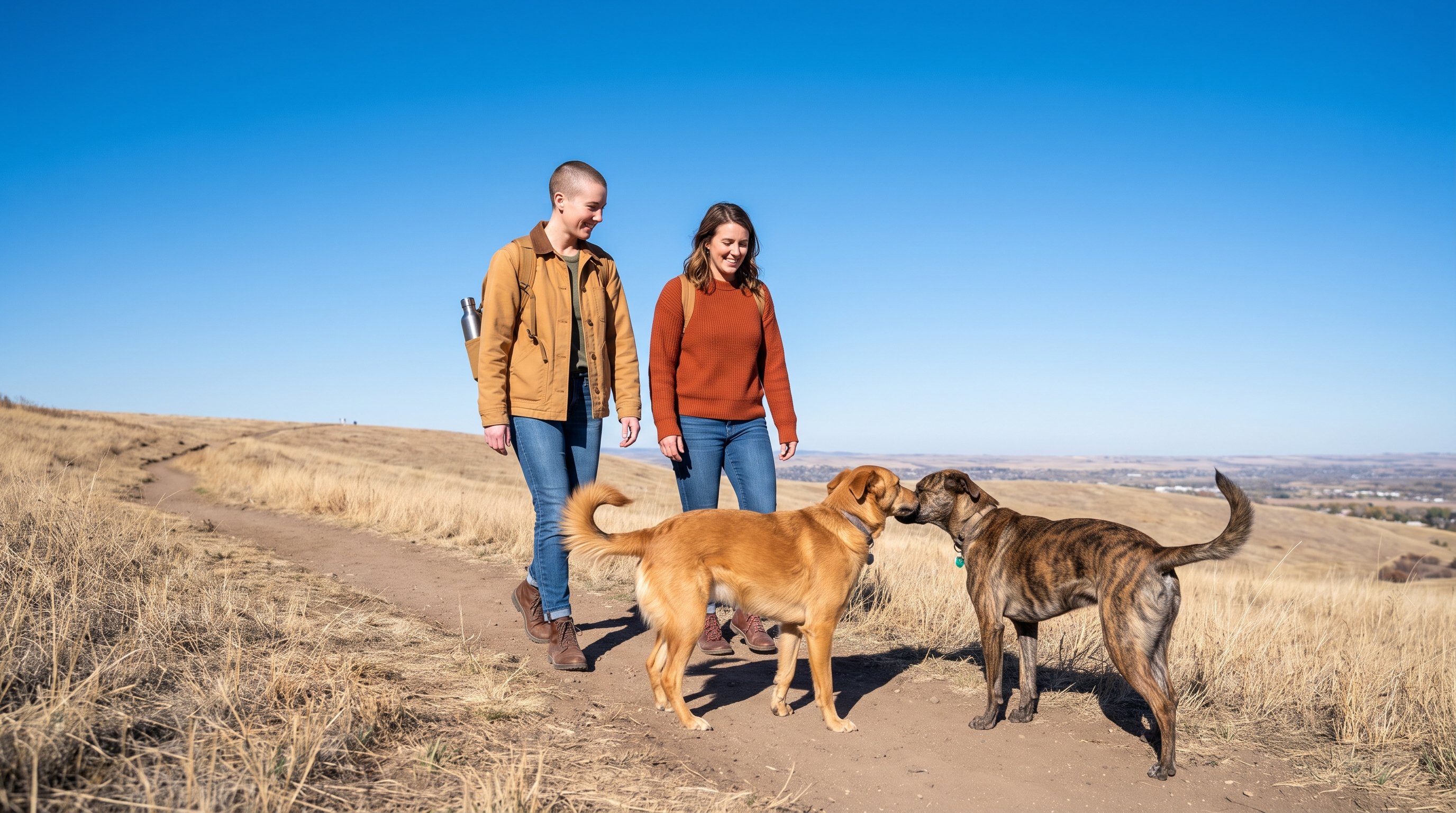
Over time, reading the whole picture becomes automatic, the same way noticing a friend's tone of voice becomes automatic without consciously analysing it.
Fitting Body Language Awareness Into a Normal Week
This isn't a skill that needs a dedicated block of time - it slots into dog walks, visitors at the door, trips to the park and quiet evenings on the sofa.
A few seconds of watching before a greeting or a meeting with another dog is often enough to decide whether to let it happen, slow it down, or step away.
Raising Dog's lessons are built around a dog's actual age and situation, which means the behavior guidance ties directly to what that dog is likely showing at that stage rather than generic advice that could apply to any dog.
Adjusting How You Read Signals for Different Dogs
Puppies Still Learning Their Own Signals
Young puppies haven't fully developed their body language vocabulary yet, so their signals can look exaggerated or inconsistent compared with an adult dog.
Nervous or Reactive Dogs
A dog that startles easily often shows smaller, earlier warning signs - a brief freeze, a lip lick - well before anything more obvious, so catching those small moments matters more here.
Busy Households With Visitors
In a home with regular comings and goings, a quick glance at posture and ear position before letting a new person approach can prevent an uncomfortable moment for the dog.
Older Dogs With Stiffness or Reduced Hearing
An older dog might hold its body differently simply because of physical stiffness, so it helps to separate a sore hip from an anxious posture before reading too much into it.
When Reading a Dog's Signals Starts to Feel Natural
This isn't a skill with a fixed finish line - it keeps sharpening the more a person pays attention, and that happens at a different pace for everyone.
Early on, it can feel like conscious effort to check tail, ears and posture every time. Eventually it becomes background awareness, the kind that flags something off before a person even knows why.
The point where it quits being guesswork tends to follow regular small checks rather than one big effort, so sticking with the habit matters more than speeding it up.
Making Sense of Dog Body Language With Raising Dog
A lot of generic advice treats body language as a fixed glossary - tail up means this, ears back means that - but context, breed, and individual history all shape what a given signal actually means for a specific dog.
Raising Dog ties behavior guidance to a dog's age and unique needs, which means the tips for reading and responding to signals are built around that dog rather than a generic dog.
The tips to overcome behavior issues inside Raising Dog connect directly to what a dog's body is already showing, so spotting a stress signal comes with a next step instead of just a label.
The companion app tracks a dog's progress alongside these lessons, so patterns in behavior become easier to see over time instead of relying on memory alone.
Raise A Happy Dog
Train Your Dog Right
Starting to Read Your Dog's Signals Today
Pick one everyday moment - a greeting, a walk past another dog, dinner time - and watch the whole body for ten seconds before reacting.
That small habit, repeated daily, builds the kind of fluency that no single article can hand over in one read, and Raising Dog can help keep that habit tied to a wider plan for the dog in front of you.
FAQ
Yes - a stiff, high, fast wag paired with a tense body can signal arousal or discomfort rather than friendliness. Tail speed and height matter less than what the rest of the body is doing at the same time.
Some signals are obvious, but subtler ones like lip licking, whale eye or a brief freeze get missed without deliberate attention. Learning to notice the smaller cues takes practice, not just instinct.
Mixed signals - like a loose body but a hard stare - are a sign to slow the interaction down or separate the dogs rather than push through. Watching both dogs the entire time matters more than judging the first few seconds.
Early gains come fast because the obvious signals are easy to spot, then progress slows as the subtler ones take longer to recognise consistently. Raising Dog's lessons keep behavior cues tied to a dog's actual age and stage, which helps keep that progress moving rather than flattening out.
Share this post