Puppy Crying In Crate At Night: A Calm Way Through It
By:Author:Raising Dog Editorial
Updated on:October 18, 2026
- The Myth of the Puppy Who Just Needs to Cry It Out
- What Is Actually Happening at 2am
- What Changes How Fast the Crying Eases
- A Realistic Night-Time Crate Routine
- Making This Work Around a Full House
- When Night-Time Crying Usually Starts to Fade
- Common Mistakes With Crate Crying at Night
- Easing Crate Crying With Raising Dog's Lesson Plans
- Getting Tonight's Crate Routine Started
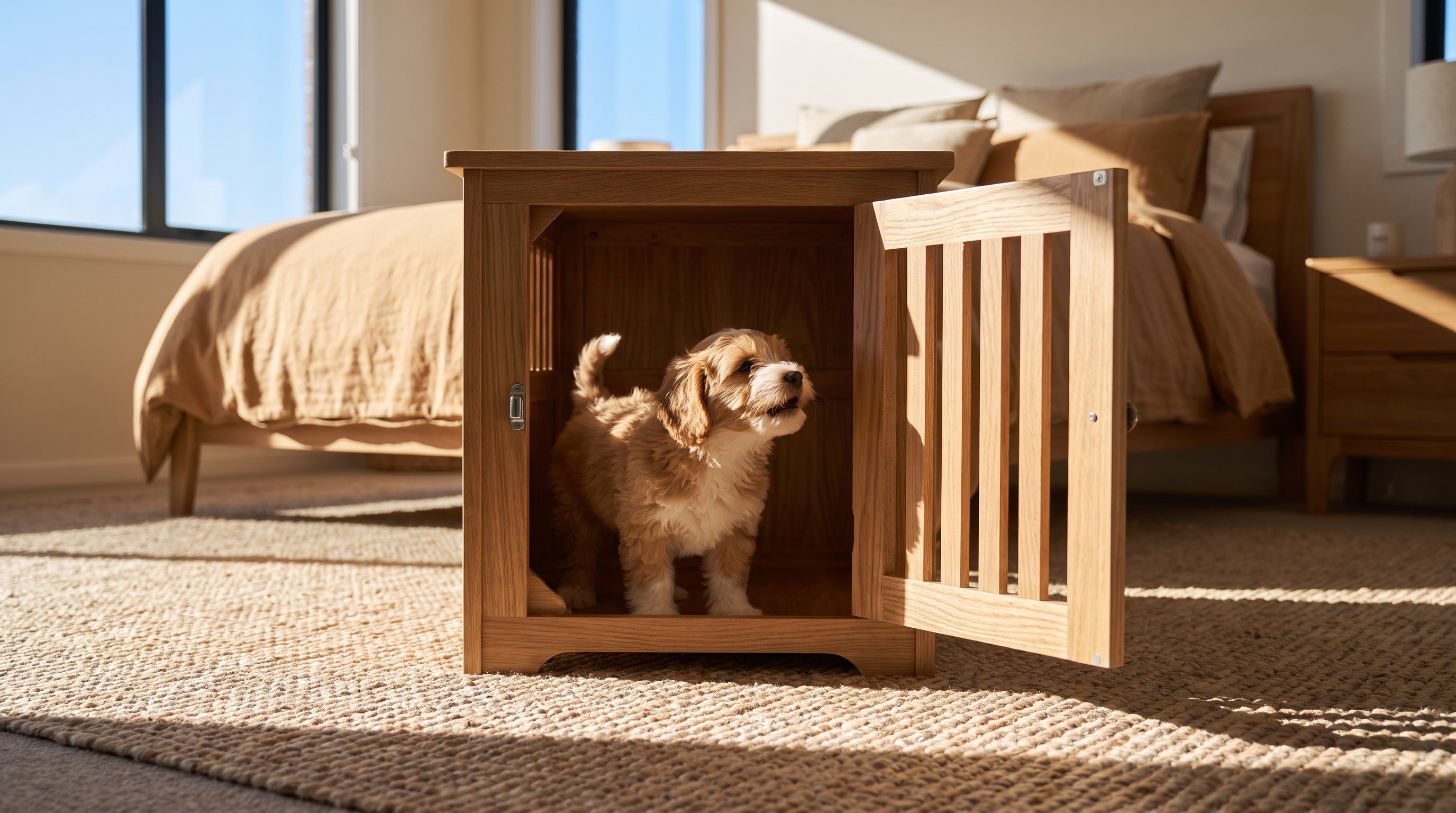
A puppy crying in the crate at night is almost always asking for one of three things: company, a toilet break, or help settling down after a long day. It is not spite and it is not a sign the crate is wrong for your dog.
The crying happens because your puppy has spent its whole short life never sleeping fully alone, and the crate at night is the first time that changes. The crying is a signal, not a problem to punish out of existence.
This guide covers what is actually going on, how to build a routine that reduces the crying over time, what trips people up, and when things usually start to settle.
The Myth of the Puppy Who Just Needs to Cry It Out
A common idea is that if you ignore the crying long enough, the puppy will simply learn to stop and sleep through. That is not how it tends to work.
Ignoring distress crying for long stretches does not teach a puppy that the crate is safe. It teaches the puppy that calling for help does not work, which is a different lesson entirely and not one that makes crate time calmer.
The real answer is slower and less dramatic: build the crate's reputation gradually, respond to genuine needs like a full bladder, and let the crying reduce as a side effect of your puppy actually feeling safe in there.
What Is Actually Happening at 2am
Night crying has two separate drivers, and mixing them up is where most households get stuck.
A Genuine Physical Need
A young puppy's bladder is small, so a cry in the middle of the night can simply mean it needs to go out. Taking the cry seriously at this stage is not giving in - it is responding to biology.
Separation Distress From Being Alone
Once the toilet need is ruled out, crying is often about being alone in a small space after a full day of company. This fades as the crate becomes a familiar, predictable place rather than an unfamiliar box that appears only at bedtime.
What Changes How Fast the Crying Eases
Three things shape how quickly a puppy settles into quieter nights.
Factors That Matter Most
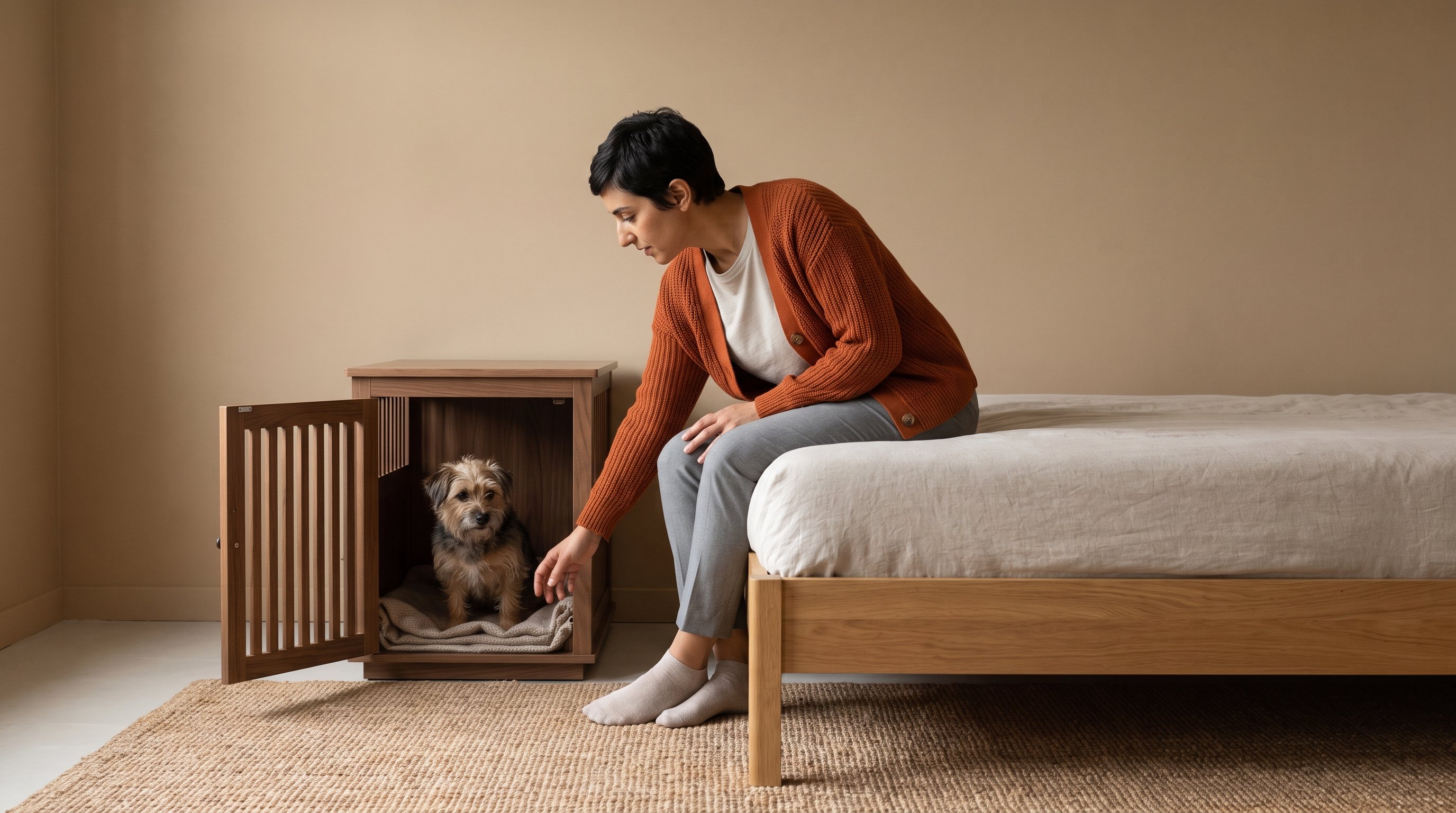
- Crate location - a crate near your bed for the first stretch means your puppy can hear and smell you, which cuts down on distress crying far more than a crate in another room.
- Daytime crate familiarity - a puppy that naps in the crate during the day with the door open sees it as a normal spot, not a nighttime punishment.
- Consistent last toilet break - a short, boring trip outside right before bed reduces the odds that the 1am cry is a genuine bathroom need.
A Realistic Night-Time Crate Routine
Here is a routine you can copy for the evening and overnight stretch.
An Evening-To-Morning Routine
- Wind down with a quiet activity about 30 minutes before bed, no rough play right before crate time.
- Take a short, calm toilet trip outside with no games or chatting, straight back in after.
- Settle your puppy in the crate with a worn t-shirt or familiar blanket nearby.
- If crying starts, pause and listen - a sharp, urgent cry gets a quiet toilet trip, a grumbling cry gets a calm word and nothing else.
- Keep the first morning let-out at a consistent time so your puppy's body clock has something to work with.
Making This Work Around a Full House
Night routines rarely survive contact with a household that has early alarms, shared bedrooms, or other pets already asleep.
If the crate has to be downstairs rather than beside your bed, a baby monitor or phone propped nearby lets you hear a genuine need without needing to be in the room.
This is where generic advice runs out of road, because what works in a quiet house with no other pets does not automatically work in a flat with thin walls and two other dogs.
Raising Dog builds its crate guidance around your actual household, so the plan accounts for the layout and routine you already have rather than asking you to rebuild your home around the crate.
When Night-Time Crying Usually Starts to Fade
There is no fixed night this resolves on, and any claim otherwise should be treated with suspicion.
What tends to happen is a gradual thinning out: fewer wake-ups, shorter cries, and a puppy that settles back down faster after a toilet break. Some puppies get there quickly, others take longer, and both are normal.
Progress is usually visible as a trend across a couple of weeks rather than a single night where everything changes.
Common Mistakes With Crate Crying at Night
Rushing in at the First Sound
Bursting in the second your puppy whimpers teaches that any noise gets instant attention, which can increase crying rather than reduce it. Pause for a few seconds to hear whether it is settling itself before you respond.
Moving the Crate Around Constantly
Switching the crate's location from room to room removes the predictability that helps a puppy settle. Pick one spot for the first stretch and keep it there.
Feeding or Playing Right Before Bed
A full belly or a wound-up puppy both make for a harder settle. Keep the last hour before crate time calm and the last meal a bit earlier in the evening.
Letting Your Puppy Out Only Once Crying Stops
If you wait for silence that happens to land right after a loud cry, you can accidentally reward the louder crying. Aim to let your puppy out during a calm pause instead, even a short one.
Skipping the Last Toilet Break to Save Time
Cutting the final trip outside short increases the odds of a genuine need waking your puppy later. A few extra minutes before bed usually pays for itself overnight.
Easing Crate Crying With Raising Dog's Lesson Plans
Generic crate advice treats every puppy the same, but a ten-week-old toy breed and a five-month-old working dog do not settle into a crate the same way.
Raising Dog builds lessons around your puppy's age and household, so the crate routine you follow matches what your puppy is actually ready for, not a one-size guess.
The companion app tracks how each night goes, so you can see whether the crying is actually reducing week to week instead of guessing from memory.
Raise A Happy Dog
Train Your Dog Right
Getting Tonight's Crate Routine Started
Pick one thing from tonight's routine and commit to it for the next week: the toilet trip right before bed, the crate near your bed, or the pause before you respond to a cry.
Small, consistent choices like that do more over a couple of weeks than any single perfect night, and Raising Dog's lesson plans can help you build on whichever one you start with.
FAQ
Not entirely - a sharp, urgent cry can mean a genuine toilet need and is worth a quick, calm check. A low grumble that settles on its own after a minute or two is usually safe to let pass.
It depends on timing: letting your puppy out mid-cry can reinforce the crying, but letting it out during a calm pause does not. The goal is to respond to the need, not to the noise itself.
Check the basics first - crate location, last toilet break, and daytime familiarity with the crate - since one of these is often the sticking point. Raising Dog's tracking in the app can help you spot a pattern you might be missing from memory alone.
Yes, some puppies take longer than others, and breed, personality and daytime routine all play a part. Consistency in the routine matters more than the exact age the crying stops.
Share this post