Puppy Chewing: A Calm Way To Redirect It
By:Author:Raising Dog Editorial
Updated on:October 20, 2026
- Does Redirecting Puppy Chewing Actually Work?
- How Redirection Actually Changes Chewing Habits
- How Often to Offer Chew Toys Each Day
- Why Redirecting Beats Scolding Every Time
- Fitting Chew Management Into a Busy House
- The Myth of the Puppy That Just Stops Chewing
- What Changes How Fast Chewing Habits Shift
- Common Mistakes With Puppy Chewing
- Working Through Puppy Chewing With Raising Dog
- Getting Through the Chewing Weeks With Less Mess
Puppy chewing eases up when you swap what's being chewed, not when you try to stop the chewing itself. A puppy's mouth is how it explores the world, so the goal is redirection, not suppression.
The mechanism is simple: give the jaw something it's allowed to work on, and the habit shifts toward that object over repeated encounters with household items.
This article covers whether redirection actually works, how often to practise it, what slows progress down, and a few mistakes worth skipping entirely.
Does Redirecting Puppy Chewing Actually Work?
Yes, and the reason is straightforward: a puppy chews because its mouth needs something to do, so giving it an approved outlet meets that need without a fight.
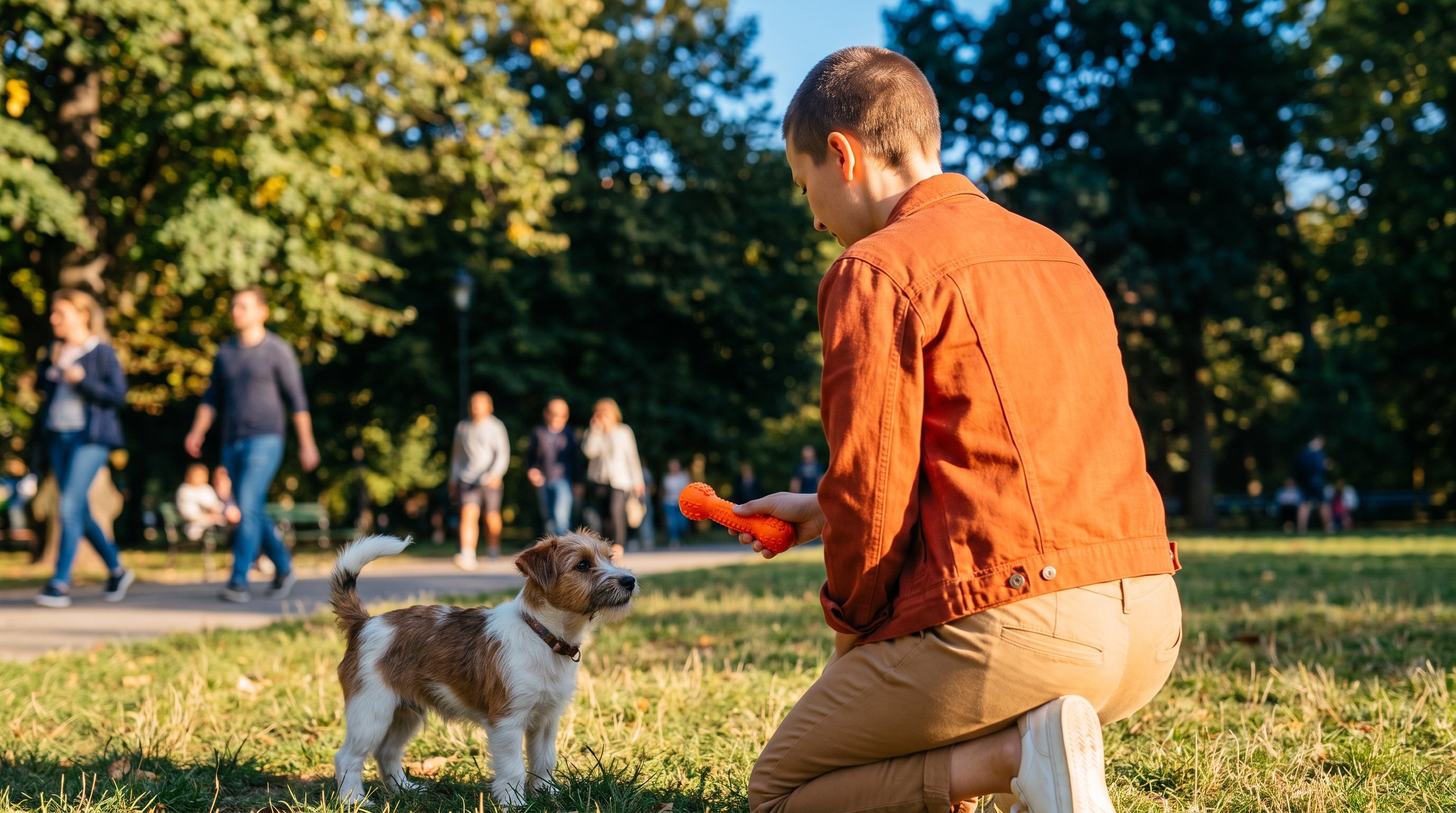
Say a puppy chews on a shoe for two minutes before someone notices. If a chew toy is offered at the first sign of mouthing, that two minutes of shoe damage becomes two minutes of toy use instead - the drive doesn't vanish, it just gets pointed somewhere else.
Over weeks of consistent swaps, the puppy starts reaching for the toy on its own, because that's the object that's always been there when the urge hit.
How Redirection Actually Changes Chewing Habits
Two things are happening at once when redirection works: the puppy is learning what's available, and it's learning what gets a reaction.
What's Available Shapes the Choice
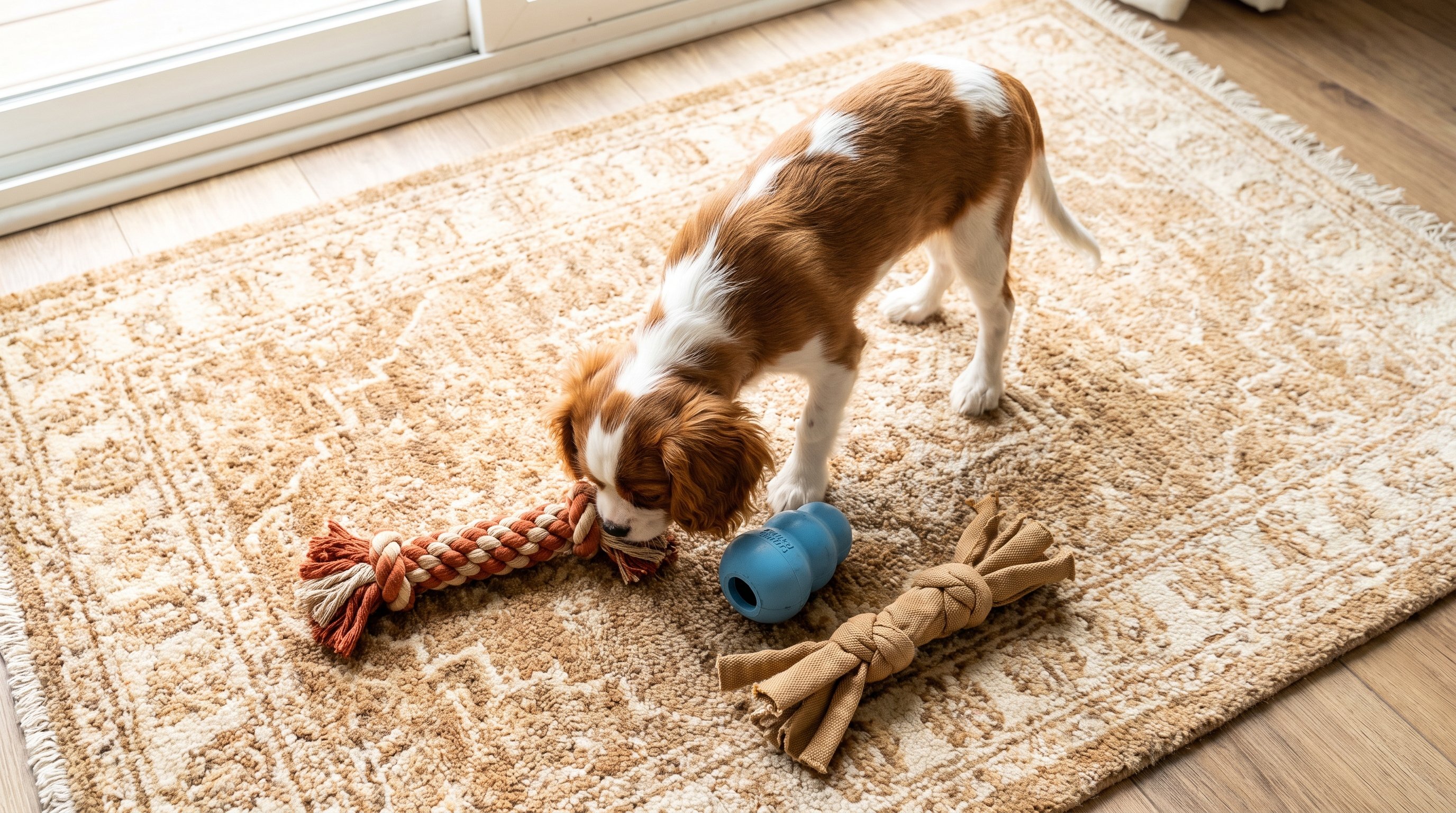
A puppy chews whatever is within reach and interesting enough to hold its attention, so stocking the room with acceptable options changes the odds before a single correction is needed.
Reactions Teach the Puppy What Matters
A loud reaction to a chewed shoe can read as attention to a puppy, which sometimes makes the behaviour more interesting, not less; a calm swap with no fuss removes that payoff.
Put together, those two mechanisms explain why scattering toys around and staying low-key about mistakes tends to outperform scolding.
How Often to Offer Chew Toys Each Day
Chewing isn't a once-a-day lesson - it's a standing need, so toys should be within reach most of the time a puppy is awake and unsupervised.
A Rough Daily Pattern
Most households do well rotating two or three toys through the day so nothing gets boring, with fresh options swapped in after naps and before any alone time.
| Time of Day | What To Do |
|---|---|
| Morning | Offer a fresh chew toy |
| After nap | Swap for a different texture |
| Before alone time | Leave two toy options out |
| Evening | Rotate in a third toy |
| Before bed | Remove toys from the crate area |
Why Redirecting Beats Scolding Every Time
Scolding a puppy mid-chew and swapping its toy for an approved one both stop the chewing in the moment, but only one teaches the puppy what to do instead.
Scolding relies on a puppy connecting a telling-off with an object it chewed minutes or even seconds ago, which is a tough ask for a young brain still learning cause and effect.
Swapping the item is something a puppy can repeat and recognise - it happens every single time, so the pattern sticks faster simply because it's consistent rather than occasional.
Fitting Chew Management Into a Busy House
Most households don't have someone watching a puppy every minute, which is exactly why the environment matters more than constant supervision.
Baby gates, a playpen, or simply closing doors to rooms full of cables and shoes cuts down the number of wrong objects a puppy can even reach.
Raising Dog's lesson plans break this down by age, so the chew-proofing checklist and toy rotation match what a young puppy actually needs versus an older one with different habits.
The Myth of the Puppy That Just Stops Chewing
There's no point in a puppy's development where chewing switches off completely - it's not a phase with a hard end date, and treating it that way sets up disappointment.
Chewing needs shift as teeth settle and puppies mature, but the urge to work things with the mouth doesn't disappear on a schedule.
The realistic goal isn't a puppy that never chews again - it's a puppy that reaches for the toy on the floor instead of the chair leg next to it.
What Changes How Fast Chewing Habits Shift
Not every household sees the same pace of change, and three things tend to explain most of the difference.
The Biggest Factors
- How fast the swap happens - a toy offered the instant mouthing starts teaches the lesson far quicker than one offered after the fact.
- How many toys are actually out - a puppy with one toy in a far corner has less chance of reaching it than one with options nearby.
- How calm the household stays about mistakes - tension around chewing can make a puppy more anxious and more likely to chew for comfort.
Common Mistakes With Puppy Chewing
Leaving Only One Toy Out
A single toy gets boring fast, and a bored puppy looks elsewhere; keeping two or three different textures in rotation keeps the mouth busy with the right things.
Punishing After the Fact
Reacting to a chewed item minutes later teaches confusion, not a lesson; catching the moment it happens is the only version that actually connects for a puppy.
Giving Old Shoes As Chew Toys
A puppy can't tell an old shoe from a new one, so this just teaches that shoes in general are fair game; stick to objects that never look like household items.
Removing Toys Too Soon
Pulling toys away the moment chewing calms down removes the very thing that's keeping the habit on track; let the toy stay available as long as the puppy is awake.
Working Through Puppy Chewing With Raising Dog
A generic chewing checklist can't account for a terrier's jaw strength versus a toy breed's, or a two-month-old's needs versus a six-month-old's - and that mismatch is usually where good advice stops working in practice.
Raising Dog builds its chewing guidance around your puppy's age and breed, so the toy suggestions and redirection timing actually match what's in front of you, not a generic average.
The companion app tracks which swaps are working and logs progress, so the daily routine isn't guesswork from one week to the next.
Raise A Happy Dog
Train Your Dog Right
Getting Through the Chewing Weeks With Less Mess
Chewing isn't a problem to eliminate - it's a need to redirect, and once that shift in thinking happens, the daily routine gets a lot calmer.
Start tonight by scattering two or three toys around the main room before the puppy wakes from its next nap, and keep swaps calm and immediate when mouthing starts on something else; Raising Dog can fill in the rest of the plan as your puppy grows.
FAQ
It eases as a puppy matures and gets used to appropriate toys, but the urge to chew doesn't vanish on a fixed date. Redirection is what shapes it into something manageable, not time alone.
Trying to stop chewing outright usually backfires, because the need behind it doesn't go away just because the behaviour is blocked. Redirecting toward an approved object works with that need instead of against it.
Try rotating textures and shapes rather than offering the same toy every time, since variety is often what keeps interest up. A puppy that's just woken from a nap or finished playing is usually more receptive than one that's already settled.
Watch for the puppy reaching for a toy on its own before being prompted, which usually shows up gradually rather than all at once. Raising Dog's tracking tools can help you see that pattern building across the weeks instead of guessing at it.
Share this post