How to Calm a Hyper Dog: A Steady, Practical Approach
By:Author:Raising Dog Editorial
Updated on:October 20, 2026

- The Myth of the Instant Off-Switch
- What Actually Drives Hyper Behaviour
- What Changes How Quickly a Dog Settles
- A Sample Day That Keeps a Dog Settled
- Fitting a Calming Routine Into a Busy House
- When a Hyper Dog Starts Settling Down
- Common Mistakes People Make Calming a Dog Down
- Calming a Hyper Dog With Raising Dog's Daily Lessons
- Giving Today's Energy Somewhere to Go
The fastest way to calm a hyper dog is to give that energy somewhere to go before it builds up, not to suppress it once it's already spilling over.
Hyper behaviour is usually a sign of unmet physical or mental need, not a dog being difficult on purpose. Once the underlying need gets met on a regular basis, the bouncing-off-walls moments naturally thin out.
This article covers why the quick-fix version of calm doesn't hold, what's actually happening in a wound-up dog, what changes the outcome, a sample week to copy, and the mistakes that keep people stuck.
The Myth of the Instant Off-Switch
There's no trick, toy or command that flips a hyper dog into a calm one in a single try. Anyone promising an instant fix is skipping the part where the dog's energy has to go somewhere.
A dog that's been cooped up all day, under-exercised, or short on mental work builds up a kind of pressure. That pressure comes out as zoomies, jumping, nipping at sleeves, or pacing, and no single cue erases it in the moment.
The real answer is less dramatic but it works: consistent outlets for the body and the brain, plus calmer handling around the dog, reduce how often that pressure builds up to begin with.
What Actually Drives Hyper Behaviour
Hyper behaviour isn't random. It traces back to a short list of causes, and most of them are fixable without any special equipment.
Built-Up Physical Energy
A dog that hasn't moved enough that day stores up energy that has to come out somehow, and bouncing around the house is often where it lands. Regular movement earlier in the day gives that energy an outlet before it turns into indoor chaos.
An Understimulated Brain
Physical tiredness and mental tiredness are different things, and a dog can be walked plenty while still being mentally bored. Sniffing, puzzle-style feeding and short training reps use up mental energy in a way that a straightforward walk doesn't.
Add in excitement triggers like visitors, other dogs or a sudden burst of attention from you, and you get the full picture of why some days feel calmer than others.
What Changes How Quickly a Dog Settles
Three things move the needle more than anything else, and they work together rather than as separate fixes.
The Three Biggest Levers
- Timing of exercise - physical activity earlier in the day uses up energy before it has a chance to build into bouncing or pacing by evening.
- Daily mental work - short sniffing games, puzzle feeders or a few minutes of training tire a dog's brain in a way that walking alone doesn't.
- Your own energy around the dog - a calm, low-key response to excitement teaches a dog that calm gets attention, while a loud or rushed response feeds the cycle.
A Sample Day That Keeps a Dog Settled
Here's a routine you can copy and adjust to fit your dog's age and your own schedule.
A Day Built Around Calm
- Morning walk or sniff session before breakfast, giving the first burst of physical energy an outlet.
- A short training rep or puzzle feeder at breakfast to add mental work before the day gets busy.
- A quiet settle period mid-morning where the dog is encouraged to rest, not entertained constantly.
- A second walk or active play session in the afternoon, timed before the evening excitement window.
- A calm wind-down in the evening with low-key handling, no roughhousing right before bed.
Fitting a Calming Routine Into a Busy House
None of this needs to take over the day. Most households can fit the physical and mental pieces into time that's already set aside for walks and meals, just arranged with more intention.
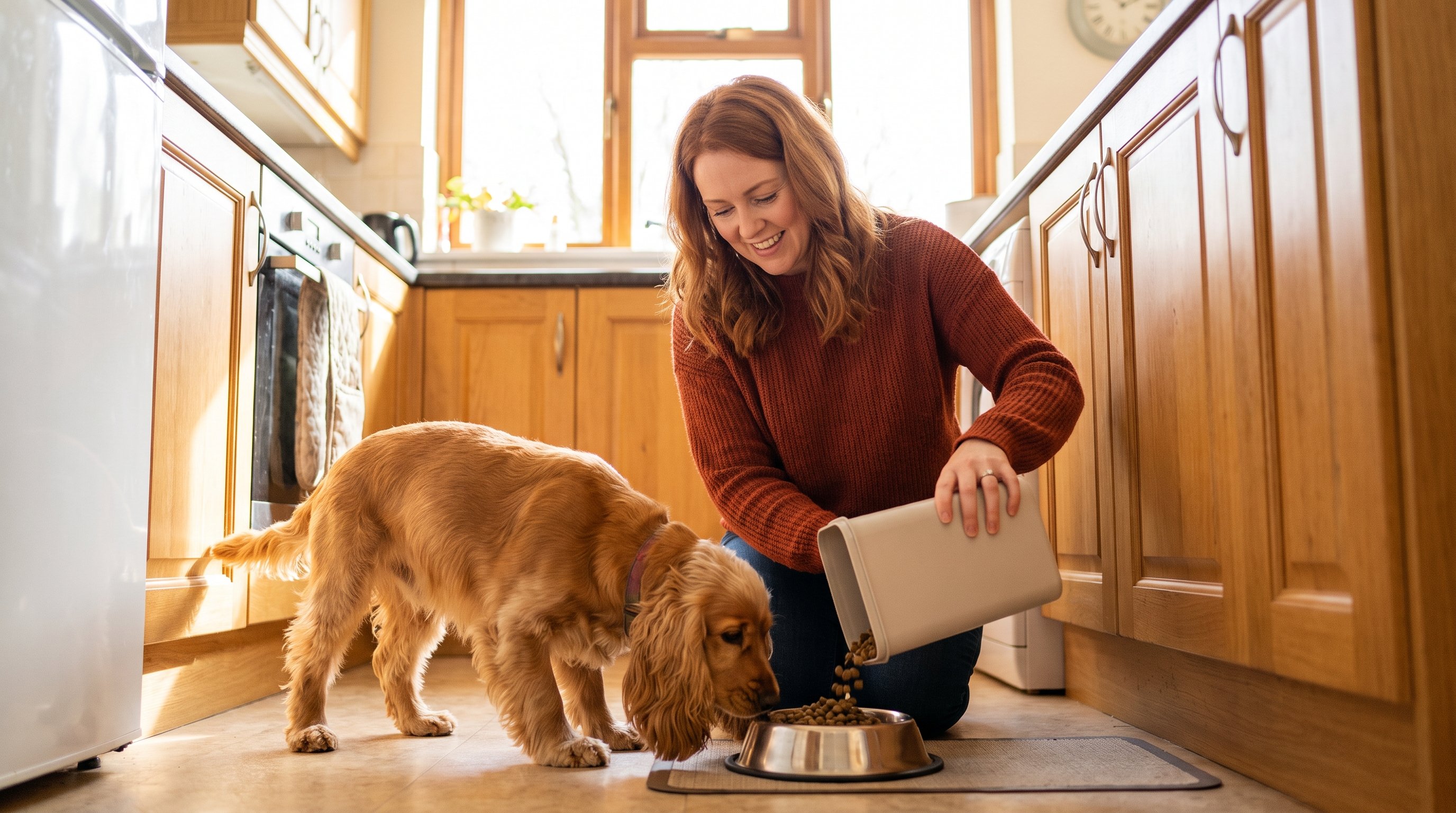
A meal turned into a short puzzle, or a walk that includes five minutes of sniffing time, does more for settling a dog down than squeezing in extra minutes of fast-paced exercise.
Raising Dog's lesson plans are built around a dog's age and energy level, so the mental work and training reps that fit into a normal day are already mapped out rather than guessed at.
When a Hyper Dog Starts Settling Down
There's no fixed point where a dog switches from hyper to calm, and anyone who promises a date is guessing. What tends to happen instead is a gradual drop in how often the bouncing-off-walls moments show up.
Puppies and younger dogs usually take longer simply because they're still building the stamina and training to settle on cue. The households that stick with a consistent routine, rather than ramping it up for a week and dropping it, tend to see the steadiest change.
Common Mistakes People Make Calming a Dog Down
Matching the Dog's Excitement With Your Own
Greeting a wound-up dog with high energy or a loud voice reinforces the very state you're trying to reduce. Keep your own tone and movement low-key, even when the dog isn't.
Relying on Exercise Alone
A tired body without a tired brain still leaves a dog restless. Add short mental tasks like sniffing games or a few training reps alongside the physical activity.
Only Working on Calm After the Dog Is Already Overexcited
Trying to teach settling once a dog is already at full speed is much harder than building the habit during quiet moments. Practise calm behaviour when the dog is already relaxed, so it's familiar before it's needed.
Skipping Consistency Because One Day Went Fine
A single calm day doesn't mean the routine can be dropped. Hyper behaviour tends to creep back in once the regular outlets stop.
Giving Attention the Moment a Dog Starts Pestering
Attention right when a dog jumps or paces for it teaches the behaviour pays off. Wait for a pause or a sit before engaging, so calm is what gets rewarded.
Calming a Hyper Dog With Raising Dog's Daily Lessons
Generic advice about tiring a dog out doesn't account for the fact that a six-month-old puppy and a three-year-old adult need different amounts and types of work.
Raising Dog builds its lessons around your dog's age and needs, pairing training tips to overcome behaviour challenges with tricks and games made for bonding, so the daily routine fits the dog in front of you rather than a generic one. The assistant app tracks progress alongside the book, so you can see which parts of the routine are actually landing.

Raise A Happy Dog
Train Your Dog Right
Giving Today's Energy Somewhere to Go
A hyper dog isn't broken, and the behaviour isn't permanent. It's a signal that something physical or mental needs an outlet, and once that outlet becomes part of the daily rhythm, the wound-up moments start to thin out.
Pick one piece from today's routine, a sniff walk, a short puzzle feeder, or a calm five minutes before bed, and build from there. Raising Dog can help map out the rest once that first step feels steady.
FAQ
A short burst of sniffing or a quick mental task, like a puzzle feeder, tends to settle a dog faster than more running around. It works because mental effort tires a dog's brain in a way pure physical activity doesn't.
More exercise helps, but a dog that's only ever physically tired can still be mentally restless. Pairing movement with short training reps or sniffing time covers both sides of the equation.
The routine doesn't need to be long, it needs to be consistent, and most of it can be folded into walks and mealtimes that already happen. Raising Dog's lesson plans are built to fit into ordinary days rather than demanding extra hours.
Breed plays a role, but under-exercised or under-stimulated dogs of any breed can show the same bouncing, pacing behaviour. Matching the routine to the individual dog's needs matters more than the breed label on its own.
Share this post