Dog Enrichment Ideas: A Simple Plan For Daily Variety
By:Author:Raising Dog Editorial
Updated on:October 20, 2026

- The Myth of the One Big Enrichment Toy
- How Mental Enrichment Actually Tires a Dog Out
- What Changes How Effective Enrichment Is
- A Realistic Week of Enrichment Activities
- Fitting Enrichment Into an Already Busy House
- When a Dog Starts Settling Between Sessions
- Common Mistakes With Dog Enrichment Ideas
- Building Enrichment Habits With Raising Dog's Activity Lists
- Starting Today's Enrichment Session
Dog enrichment ideas work when they give a dog's brain something to do, not just their legs. A sniffing session, a food puzzle or a short training game can tire a dog out in ways a walk alone can't.
The mechanism is simple: dogs are built to search, chew, solve and sniff, and when those outlets are missing, the energy comes out sideways as barking, digging or chewing the sofa.
This article covers what enrichment actually is, how it works, what a realistic week looks like, where people go wrong, and how to fit it into a day that's already full.
The Myth of the One Big Enrichment Toy
Buying one expensive puzzle toy and expecting it to solve boredom on its own doesn't hold up. A dog habituates to the same toy fast, and the novelty that made it interesting wears off within days.
Enrichment isn't a product, it's a rotation of different kinds of mental work across a week - sniffing, chewing, problem-solving and short training reps.
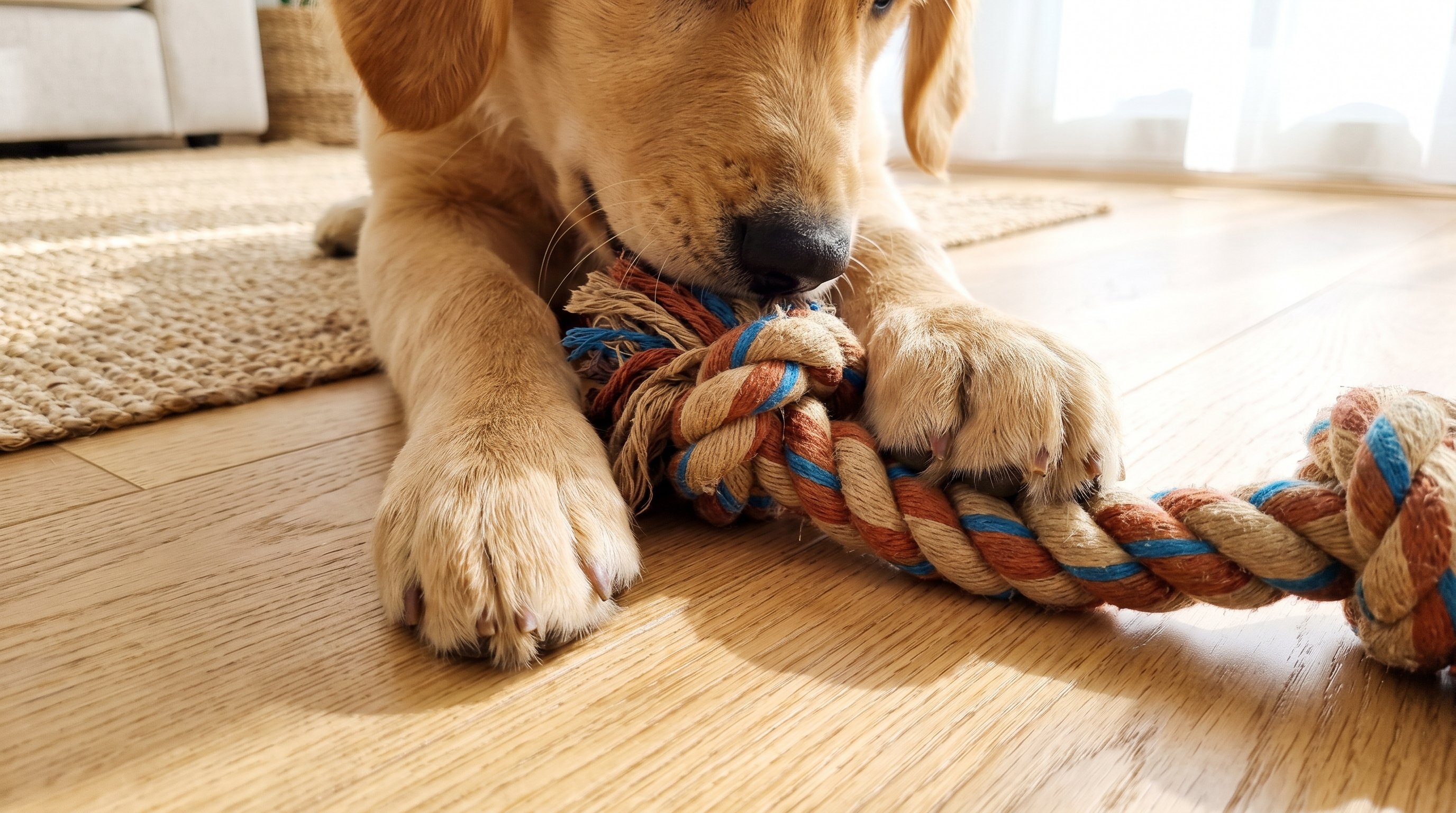
The real answer is variety on a schedule, not a single gadget. A snuffle mat, a frozen stuffed toy and a five-minute training game each work a different part of a dog's brain, and swapping between them is what keeps a dog engaged over time.
How Mental Enrichment Actually Tires a Dog Out
Enrichment works on two separate systems, and both need regular attention for a dog to feel genuinely settled.
The Sniffing and Searching System
A dog's nose is built for constant information-gathering, and letting a dog sniff out hidden treats or follow a scent trail uses concentration in a way a straight-line walk doesn't.
The Problem-Solving System
Working out how to get food from a puzzle feeder or figuring out a new trick asks a dog to try, fail and adjust, which uses more mental effort than repeating a familiar action.
Both systems draw on focus and decision-making, and a dog that's used both tends to settle faster afterwards than one that's just had physical exercise.
What Changes How Effective Enrichment Is
Not every enrichment session has the same impact. These three factors matter more than how much it costs or how long it takes.
Factors That Matter Most
- Variety across the week - rotating sniffing games, puzzles and short training sessions keeps a dog's brain from coasting on a toy it already knows.
- Matching difficulty to the dog - a puzzle that's too easy gets ignored and one that's too hard gets abandoned, so the level needs adjusting as the dog improves.
- Consistency over intensity - a few short sessions spread through the week beat one long session that only happens occasionally.
A Realistic Week of Enrichment Activities
This is one example of how enrichment can be spread across a week without turning into another chore on the list.
| Day | Activity |
|---|---|
| Monday | Snuffle mat with kibble |
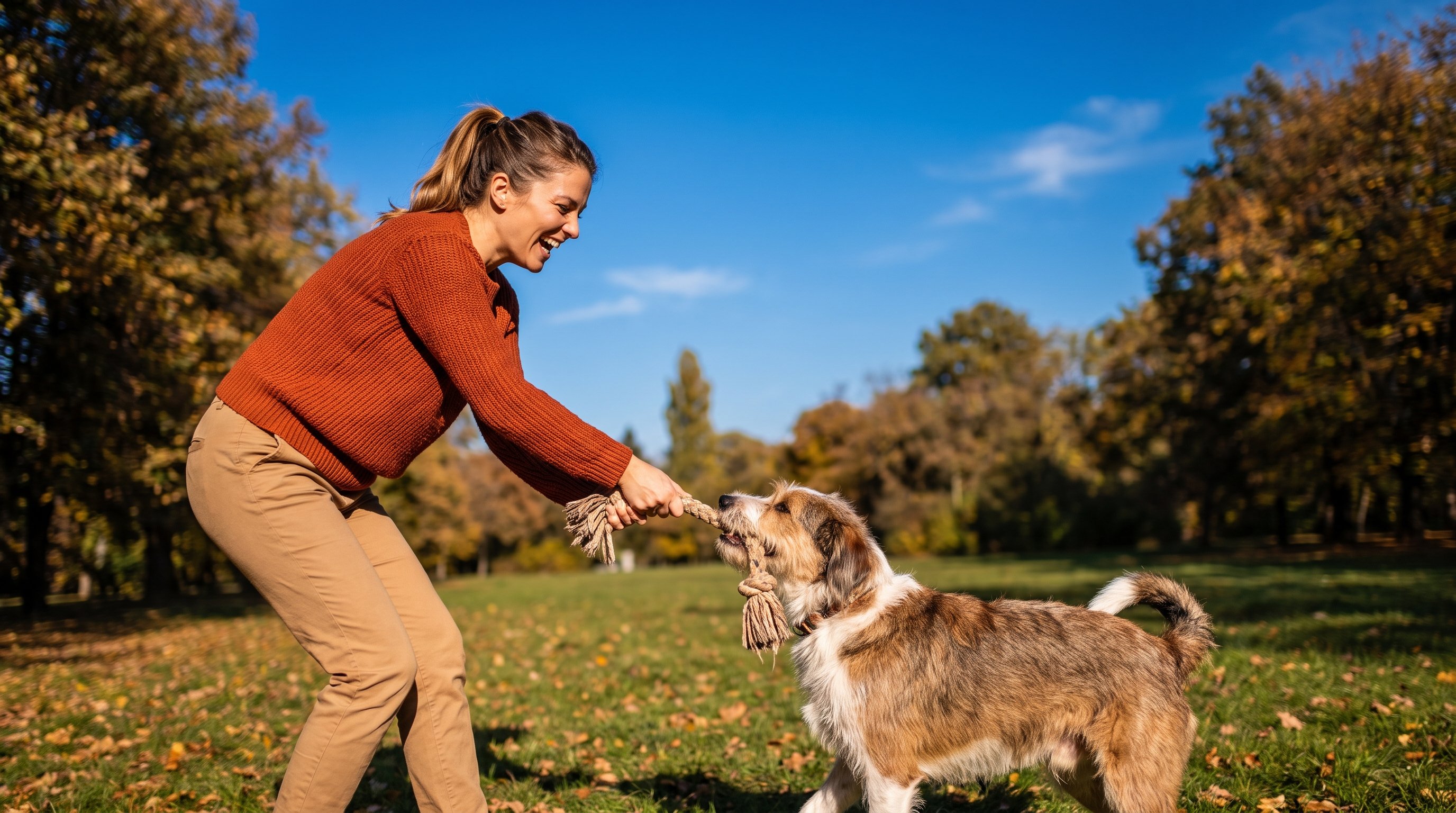
| Tuesday | Five-minute trick practice |
| Wednesday | Frozen stuffed chew toy |
| Thursday | Scatter feeding in garden |
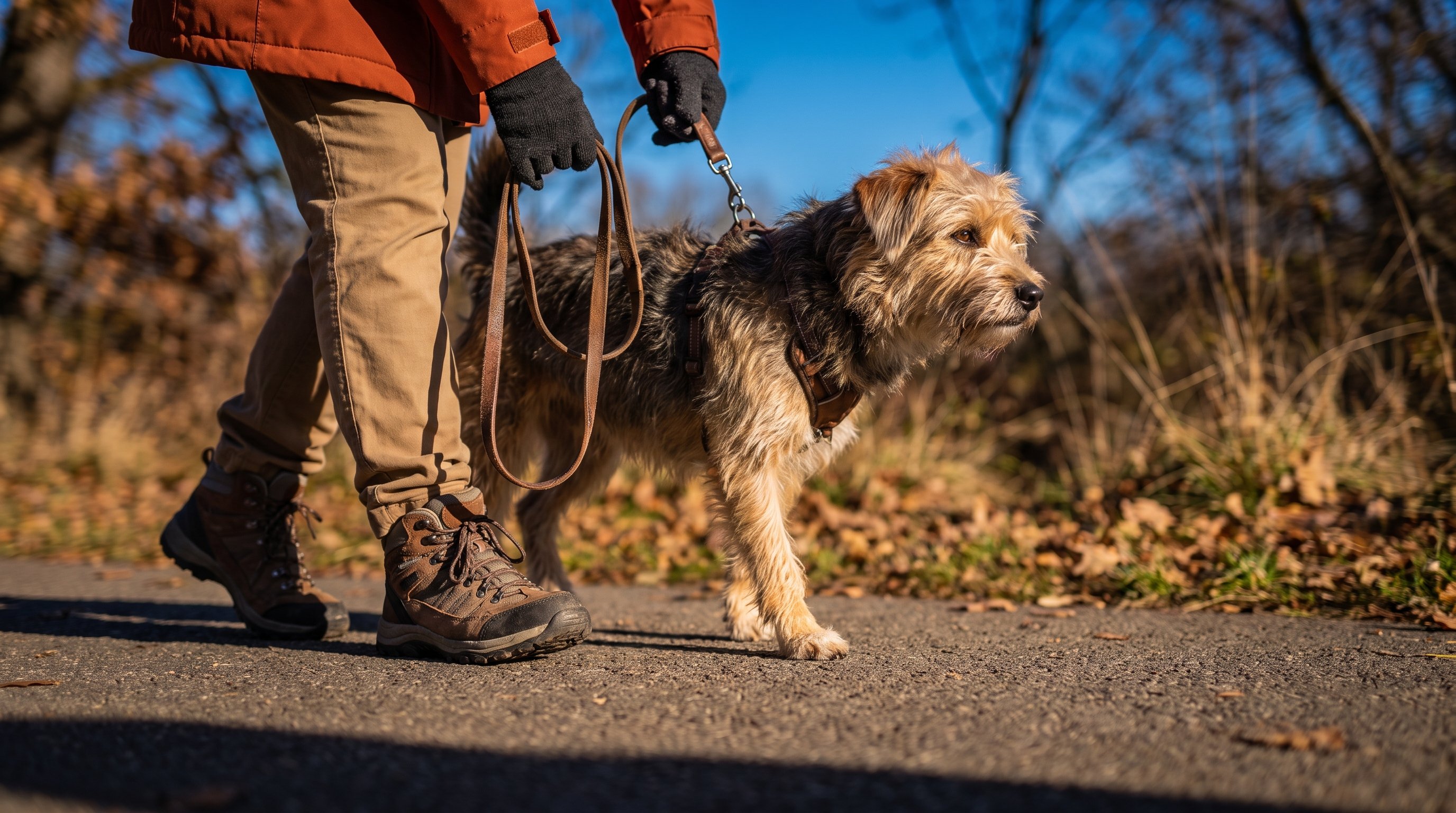
| Friday | New route sniff walk |
| Weekend | Puzzle feeder plus short training game |
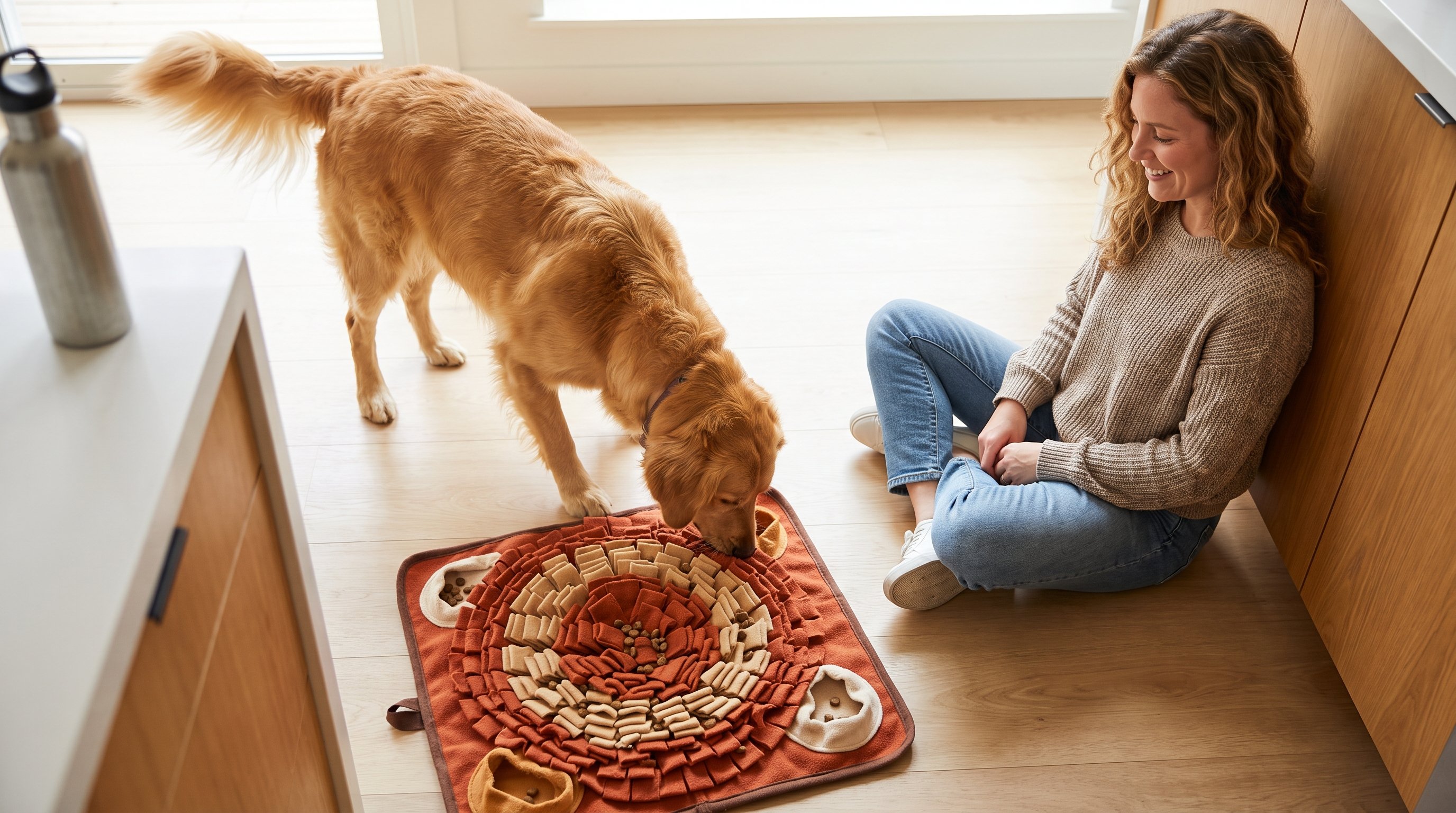
None of these sessions need to run long - most dogs get genuine value out of five to ten focused minutes, especially when the activity is new or slightly tricky.
Fitting Enrichment Into an Already Busy House
Enrichment doesn't need a dedicated block of free time - it slots into moments that already exist, like feeding time or the ten minutes before leaving for work.
Swapping a food bowl for a scatter feed or a puzzle feeder turns a task that was happening anyway into a mental workout, at no extra time cost.
Raising Dog's book lays out age- and breed-appropriate activity ideas so you're not guessing which games suit your dog's stage of life, and the companion app tracks which ones you've tried and how your dog responded.
When a Dog Starts Settling Between Sessions
There's no fixed timeline for when enrichment starts to show in a dog's behaviour, and it varies by dog, age and how much was missing before.
Some dogs seem calmer within a couple of sessions, others take longer to settle into the new rhythm, especially if they're used to constant activity or constant boredom.
The more useful marker isn't a date on a calendar, it's whether the dog is choosing to settle on their own after a session instead of pacing or pestering for more input.
Common Mistakes With Dog Enrichment Ideas
Repeating the Same Toy Every Day
A puzzle that worked last week can turn into background furniture once a dog has solved it a dozen times, so rotate two or three options and bring old ones back after a break.
Making Everything Too Easy
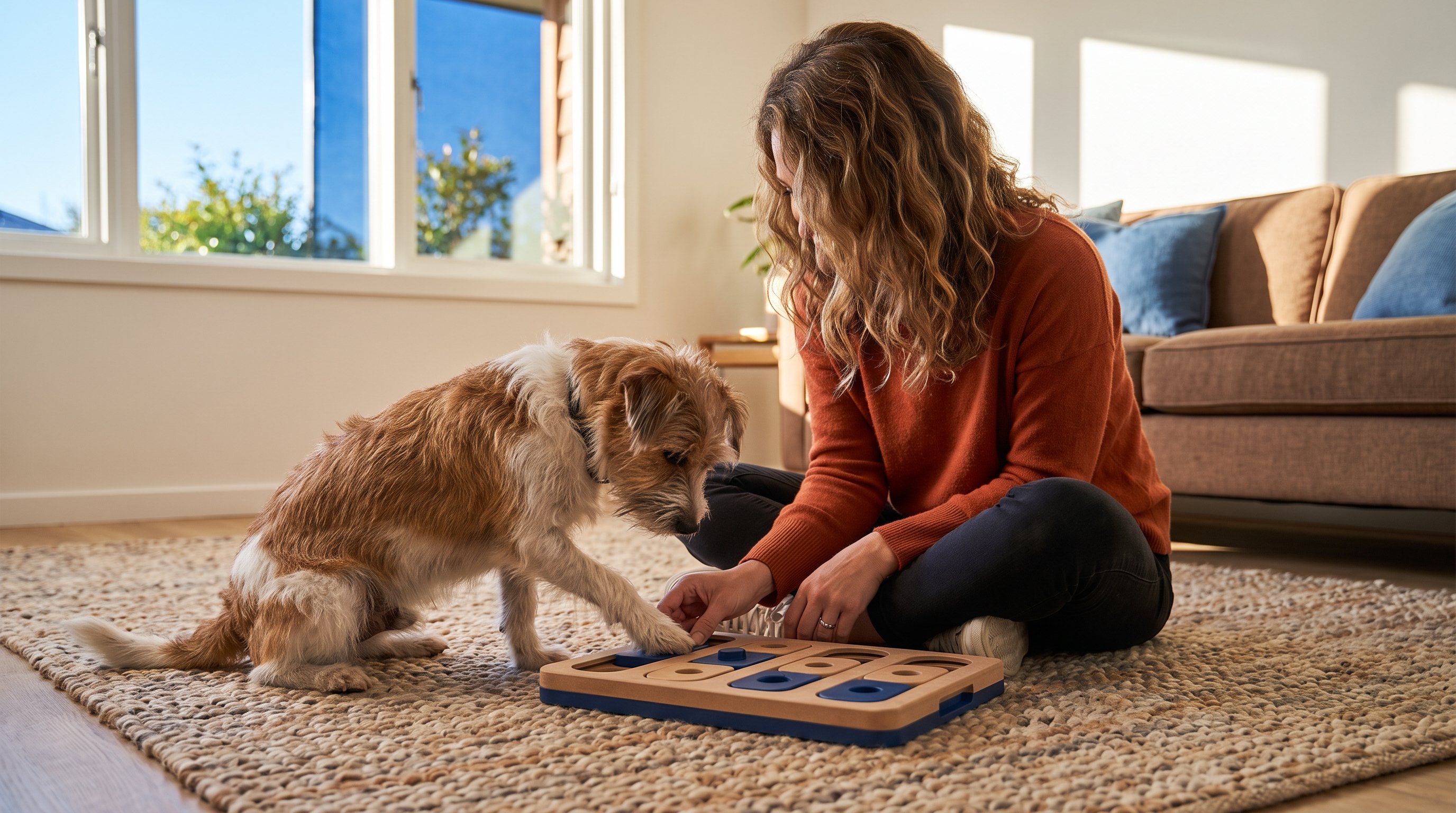
If a dog solves a puzzle in seconds flat, it isn't doing much mental work, so increase the difficulty gradually as the dog gets faster.
Only Doing Physical Exercise
A long walk tires muscles but not the brain, and a dog that's physically tired but mentally understimulated can still end up restless indoors.
Treating Enrichment As a One-Off Event
A single big session on a Sunday doesn't carry a dog through the week, so short, frequent sessions work better than occasional long ones.
Ignoring the Dog's Current Mood
Pushing a problem-solving game on a dog that's already overstimulated usually backfires, so match the activity type to how worked-up or flat the dog already is.
Building Enrichment Habits With Raising Dog's Activity Lists
Generic lists of enrichment ideas are a decent starting point, but a lot of them assume a dog that doesn't match yours - wrong age, wrong energy level, wrong stage of training.
Raising Dog gives you over 100 training and play ideas that are age- and breed-appropriate, so the activities suggested actually fit the dog in front of you instead of a generic average.
The tips for overcoming behaviour issues and the tricks and games section both tie directly into enrichment, since a lot of unwanted behaviour is really a dog asking for more to do.

Raise A Happy Dog
Train Your Dog Right
Starting Today's Enrichment Session
Pick one small thing tonight - a scatter feed instead of a bowl, or a five-minute trick practice before dinner - and see how the dog settles afterwards.
Raising Dog can help turn that one small swap into a routine that grows with your dog instead of staying stuck at the same puzzle toy for months.
FAQ
No, enrichment and physical exercise cover different needs and work best alongside each other, not as a swap for one or the other.
Most enrichment ideas slot into tasks you're already doing, like turning a mealtime into a scatter feed, so it rarely adds extra time to the day.
That's common and usually means the toy needs rotating or the difficulty needs raising, not that enrichment itself isn't working - Raising Dog's activity lists help you swap in something new before interest drops off.
No, calmer dogs benefit just as much since mental engagement isn't tied to how much physical energy a dog has.
Share this post