Games To Play With Your Dog: A Simple Daily Line-Up
By:Author:Raising Dog Editorial
Updated on:October 20, 2026
- Setting Up a Game Session That Actually Works
- How Often Different Games Fit Into a Week
- Making Games Fit a Day That's Already Full
- A Four-Week Way to Build a Play Routine
- When Play Starts Feeling Like a Real Routine
- Why Play Sessions Fizzle Out Fast
- Choosing Games to Play With Your Dog Through Raising Dog
- Picking Tonight's Game and Starting Small
The best games to play with your dog are the ones that mix physical effort with a bit of problem-solving, not just fetch on repeat. A dog that runs for ten minutes gets tired legs. A dog that sniffs, searches, chooses and figures something out gets a tired brain too, and that's the part that actually settles a dog down.
The mechanism is simple: games give a dog a job with a clear start and finish, which is something most dogs rarely get outside of training. That structure is what turns play from noise into something that builds focus and connection.
This guide covers which games to pick, how often to play them, a four-week way to start, and the mistakes that make play feel like a chore instead of a highlight.
Setting Up a Game Session That Actually Works
Good play sessions aren't random. They follow a shape, even if that shape only takes two minutes.
A Simple Way to Run Any Game
- Pick one game, not three - switching toys mid-session scatters a dog's focus instead of building it.
- Set a short time limit - two to five minutes keeps the game sharp and leaves the dog wanting more.
- Start easy - make the first find, tug or fetch almost too simple, so the dog succeeds straight away.
- Raise the difficulty slightly - hide the toy a little further, add one more step, ask for a sit before the throw.
- Stop before the dog gets bored - ending on a win teaches the dog that games are worth showing up for.
- Put the toy away between sessions - a toy that's always out loses its pull; one that appears for games stays exciting.
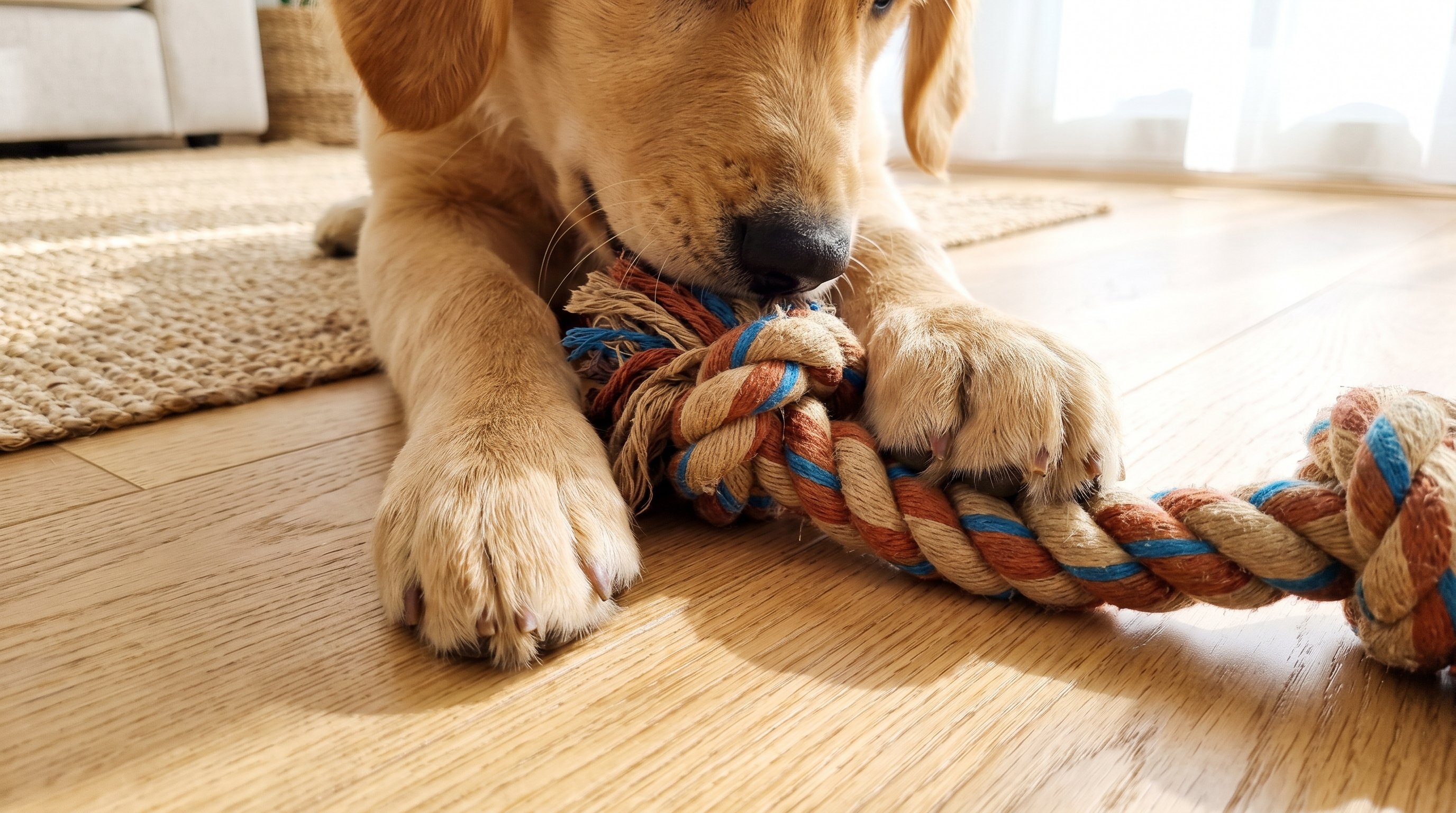
None of this needs special kit. A tennis ball, an old towel knotted into a tug, or a few treats scattered in the grass cover most of it.
How Often Different Games Fit Into a Week
Matching the Game to the Day
Not every game needs daily repeats. Some earn a spot every day, others work better spaced out so the dog doesn't get stale on them.
| Game | How Often | Typical Length |
|---|---|---|
| Fetch | Daily if space allows | 5 to 10 minutes |
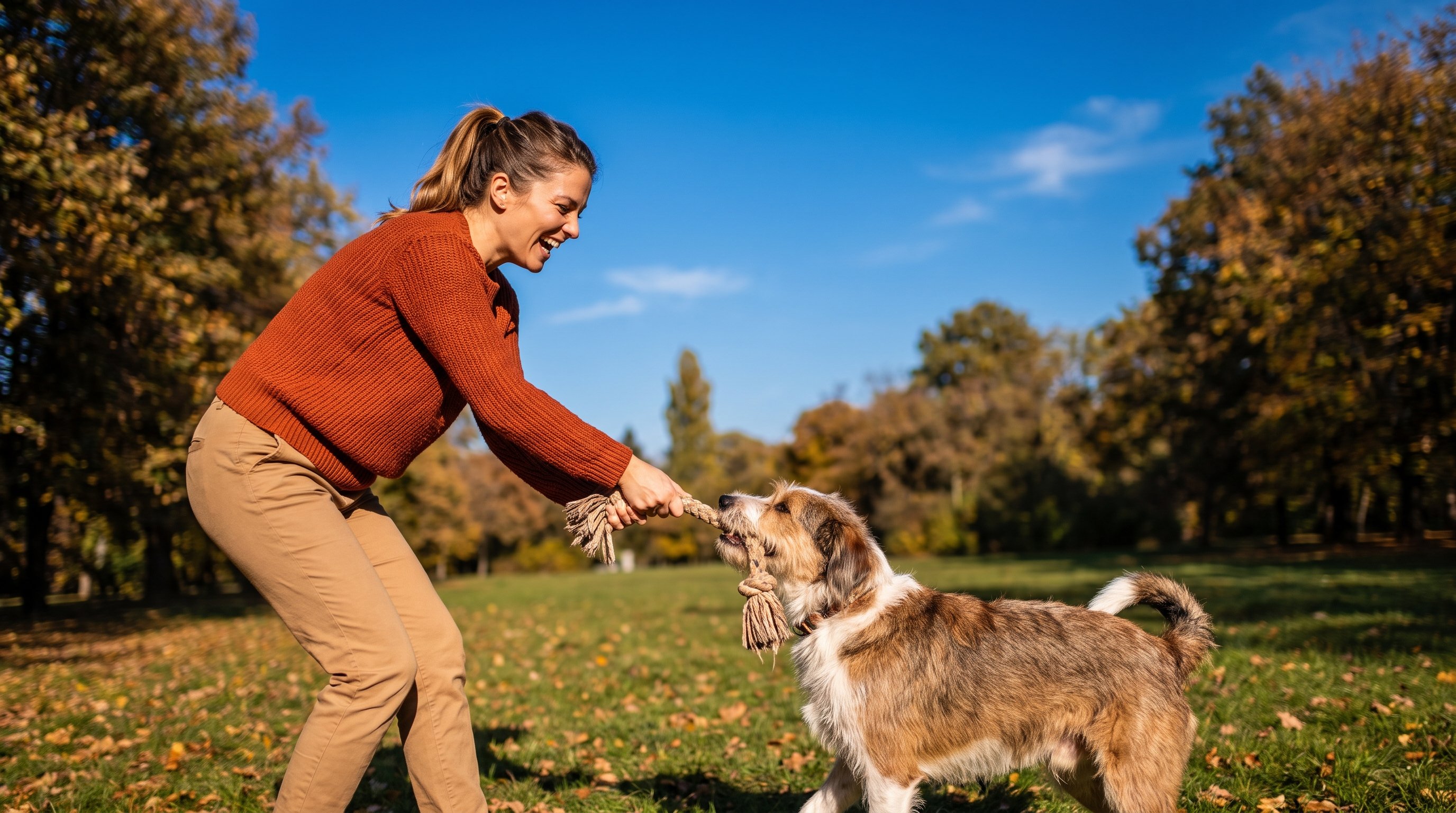
| Tug | 3 to 4 times a week | 2 to 5 minutes |
| Hide and seek treats | Daily | 3 to 5 minutes |
| Find it with toys | 4 to 5 times a week | 5 minutes |
| Puzzle feeders as play | Most meals | As long as it takes |
Treat these as starting numbers, not rules. A dog recovering from an injury, a very young puppy or a senior dog will all need shorter, gentler versions.
Making Games Fit a Day That's Already Full
Most people don't skip play because they don't want to do it. They skip it because it feels like one more thing to schedule on top of everything else.
The fix is to attach games to moments that already exist. A few minutes of tug before dinner, a quick scatter-feed while the kettle boils, a find-it game right after work clothes come off.

Raising Dog's activity lists are built with this in mind, grouping games by how much time and space they actually need so picking one doesn't become its own decision to make.
The goal isn't a long session every day. It's a short one that actually happens, because that's the one that adds up.
A Four-Week Way to Build a Play Routine
Starting with everything at once is how good intentions fizzle out by day five. A staged approach keeps it manageable.
| Stage | Focus | Example |
|---|---|---|
| Week 1 | One simple game, same time daily | Scatter-feed treats after breakfast |
| Week 2 | Add a second game type | Short tug session before dinner |
| Week 3 | Add a light search element | Hide a toy in one room, let the dog find it |
| Week 4 | Mix and rotate games by day | Fetch one day, puzzle feeder the next |
The order matters more than the exact days. Build one habit before adding the next, and the whole routine stays easy to keep up.
When Play Starts Feeling Like a Real Routine
There's no fixed date when games to play with your dog stop feeling like an extra task and start feeling automatic. It depends on the dog's age, energy and how consistent the games have been.
What usually happens first is the dog starts anticipating the game, nudging a toy over or waiting by the usual spot at the usual time.
That small shift is worth noticing. It's a sign the games have become part of the dog's expectations, not just something that happens to them occasionally.
Why Play Sessions Fizzle Out Fast
Playing Until the Dog Loses Interest
Going too long turns a fun game into background noise. Stop while the dog still wants more, and the next session starts with enthusiasm instead of a shrug.
Using the Same Game Every Single Time
Fetch every day with nothing else gets predictable fast. Rotating in a search game or a short tug session keeps the dog's attention sharper.
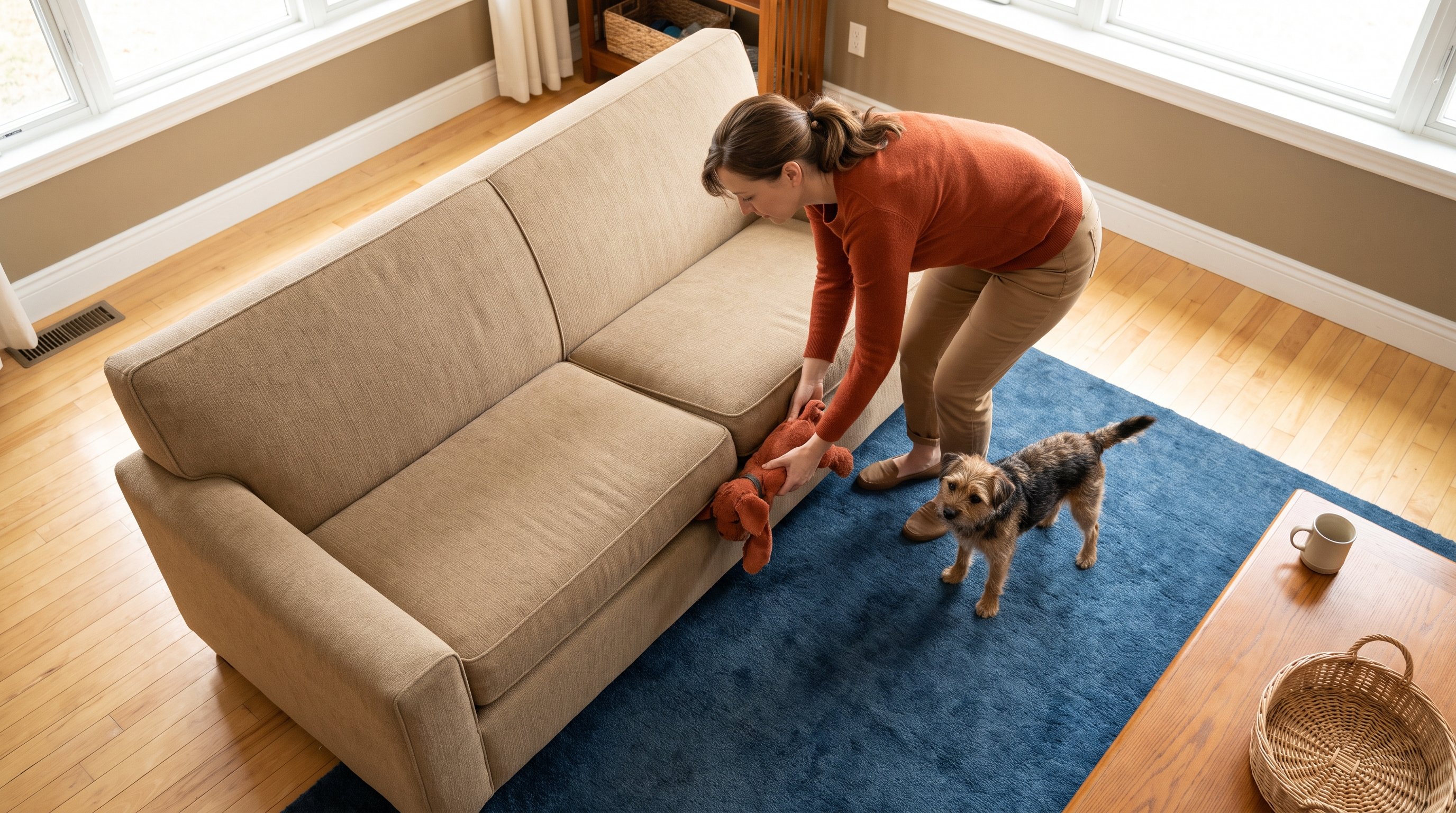
Making the Game Too Hard Too Soon
Hiding a treat somewhere impossible on day one just teaches the dog that searching doesn't pay off. Build difficulty in small steps instead.
Skipping Play on Busy Days
A missed day here and there isn't the problem, but weeks of skipped play let the habit disappear entirely. Even a two-minute version keeps the routine alive.
Treating Games As Separate From Training
Games and basic cues aren't two different worlds. Asking for a sit before a fetch throw blends them, and the dog gets more out of both.
Choosing Games to Play With Your Dog Through Raising Dog
Generic lists of dog games tend to assume every dog is the same age, size and energy level, which is why half the suggestions never get used.
Raising Dog's book groups games and tricks by your dog's age and needs, so the activities on the page actually match the dog in front of you rather than a generic one.
The companion app tracks which games you've tried and what's working, so building a rotation doesn't rely on memory alone.
Raise A Happy Dog
Train Your Dog Right
Picking Tonight's Game and Starting Small
Don't wait for a free afternoon to start. Pick one game from this list, set a two-minute timer, and run it before dinner tonight.
That one short session is the whole routine in miniature, and Raising Dog can help you build it out from there as your dog's needs change.
FAQ
Games that combine movement with a search or decision, like find-it with treats or a short tug-then-fetch combo, tend to use up more energy per minute than fetch alone. That's because the dog is working its nose and brain, not just its legs.
Fetch is a solid game, but relying on it alone misses the mental side of play that search and puzzle games bring. Mixing in one other game type a few times a week rounds things out.
Most games on this list, including tug, hide and seek treats, and puzzle feeders, work fine in a hallway or living room. Space matters less than keeping the session short and focused.
It comes down to age, size and what the dog already enjoys, which is exactly what Raising Dog's tailored lesson plans are built to match. Starting with one easy game and watching how the dog responds is the simplest way to find out.
Share this post