How Much Exercise Does A Dog Need? A Clear Daily Guide
By:Author:Raising Dog Editorial
Updated on:October 20, 2026
- Building a Daily Exercise Routine Step by Step
- How Much Daily Exercise a Dog Actually Needs
- Fitting Daily Exercise Into a Working Household
- A Four-Week Plan for Building Exercise Habits
- When a Dog's Energy Levels Out
- Common Mistakes With Daily Dog Exercise
- Matching Daily Exercise to Raising Dog's Lesson Plans
- Making Exercise Part of Today's Routine
Most dogs need somewhere between 30 minutes and two hours of activity a day, split across walks, play and some kind of mental work. The exact number depends on age, breed and health, but the daily split matters more than hitting one perfect figure.
Exercise works on a simple mechanism: physical movement burns energy, and energy that isn't burned tends to come out sideways, as barking, chewing or restlessness at 9pm. Give a dog an outlet and a lot of that behaviour quietens down on its own.
This guide covers how much exercise a dog actually needs by age and energy level, a simple weekly structure, a four-week starting plan, and the mistakes that usually stall progress.
Building a Daily Exercise Routine Step by Step
A workable routine doesn't need a schedule app. It needs a shape you can repeat without thinking too hard about it.
Steps to Build the Routine
- Start with one walk - pick a time that already exists in the day, like before work or after dinner.
- Add a second short burst - five to fifteen minutes of play or a shorter walk later in the day.
- Mix in off-lead time where it's safe - a fenced garden or quiet field lets a dog move at full speed, which a lead walk doesn't allow.
- Fold in a few minutes of mental work - sniffing games or simple commands tire a dog out without extra distance.
- Watch the dog's recovery, not the clock - a dog that's still wired an hour after exercise probably needs a different mix, not just more minutes.
- Adjust for weather and surface - hot pavement and cold mornings both change how long a session should run.
- Keep one rest-adjacent day - lighter activity now and then lets joints and energy reset without dropping the habit entirely.
How Much Daily Exercise a Dog Actually Needs
A Rough Guide by Age and Energy
Puppies need frequent short bursts rather than long sessions, since growing joints don't handle sustained impact well. Adult dogs with higher energy levels generally need more total minutes than older or lower-energy dogs, but the split across the day matters as much as the total.
| Life Stage | Daily Target | Notes |
|---|---|---|
| Puppy (under 1 year) | Short sessions, several times a day | Five minutes per month of age, roughly, per session |
| Adult, lower energy | 30 to 45 minutes | One walk plus some play |
| Adult, higher energy | 60 to 120 minutes | Split across two or more sessions |
| Senior dog | 20 to 40 minutes | Gentler pace, shorter distance |
| Any age, rest day | 10 to 20 minutes | Light movement only |
Treat these ranges as a starting point, not a rule. A dog that's panting hard, lagging behind or reluctant to keep going has already told you the session is long enough.
Fitting Daily Exercise Into a Working Household
Real days don't leave two clear hours for a dog. Most households end up patching exercise together from small windows: a walk before the commute, a few minutes of fetch at lunch, a short loop after dinner.
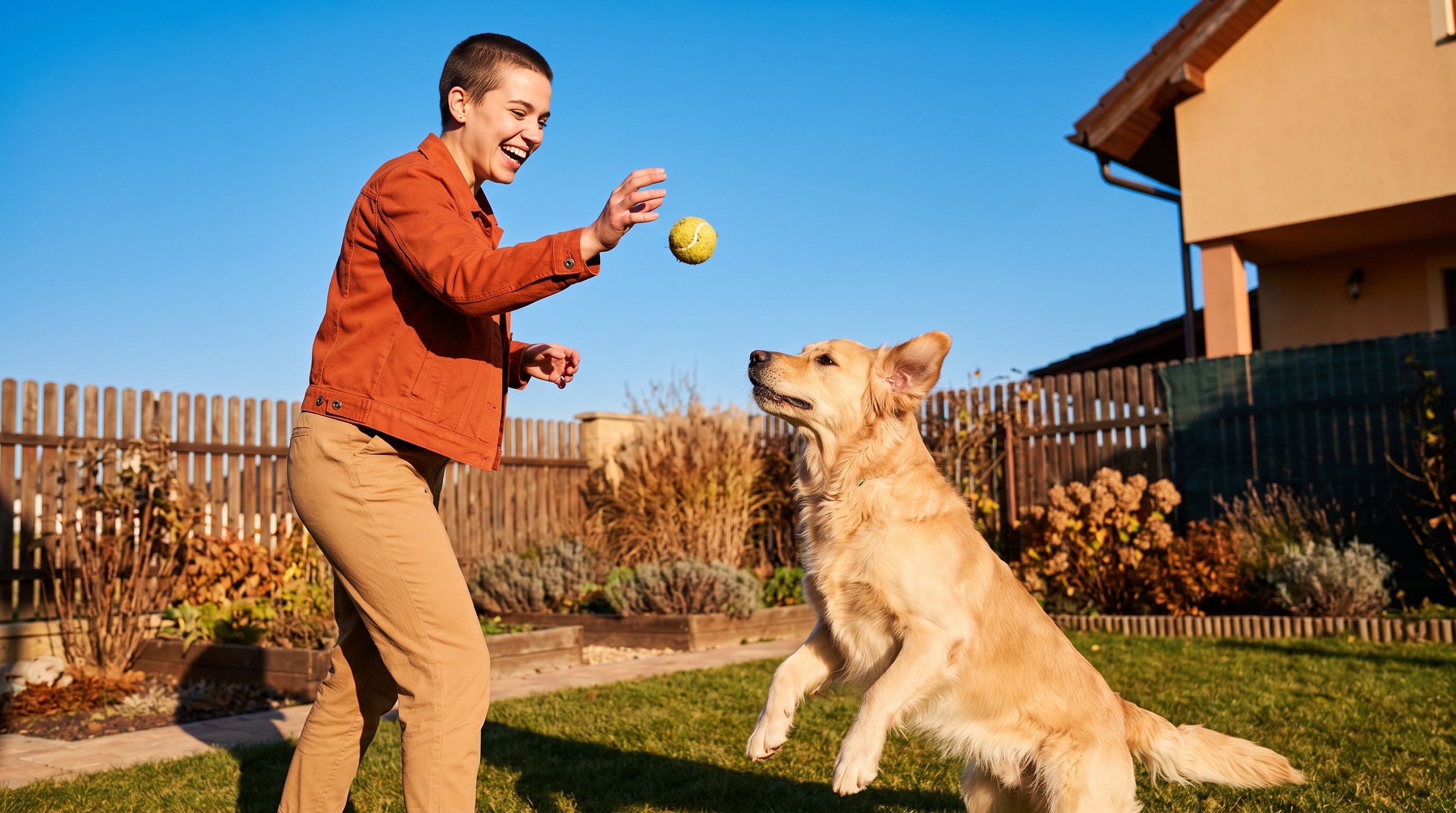
That patchwork approach works fine, as long as the total adds up across the day rather than getting skipped when things get busy. This is where Raising Dog's age- and breed-appropriate activity ideas help, since they're built to slot into short windows rather than assuming a free afternoon.
A ten-minute game before work and a walk after dinner can cover the same ground as one long midday walk, without needing the midday walk to actually happen.
A Four-Week Plan for Building Exercise Habits
Start smaller than feels necessary. The goal in the first few weeks is a routine that survives a bad day, not a peak performance.
| Stage | What To Focus On |
|---|---|
| Week 1 | One reliable walk daily, same rough time |
| Week 2 | Add a short second session, play or a shorter walk |
| Week 3 | Introduce off-lead time somewhere safe |
| Week 4 | Mix in a few minutes of mental games alongside movement |
The order matters more than the exact minutes. Build consistency first, then add variety and intensity once the basic habit is solid.
When a Dog's Energy Levels Out
Don't expect a switch to flip after one good week. A dog that's been under-exercised for a while has built up a backlog of pent-up energy, and that takes time to work through.
Some dogs settle into a calmer evening pattern within a couple of weeks of consistent exercise. Others, especially higher-energy breeds, take longer, and some restlessness may simply be part of who that dog is, not a problem to solve away entirely.
What usually does shift fairly quickly is sleep quality and how quickly a dog settles after a walk, even before the bigger behaviour changes show up.
Common Mistakes With Daily Dog Exercise
Treating One Long Walk As the Whole Answer
A single hour-long walk doesn't cover the same ground as the same hour split across the day. Breaking it up gives a dog more chances to settle and reset between bursts.
Skipping Mental Work Entirely
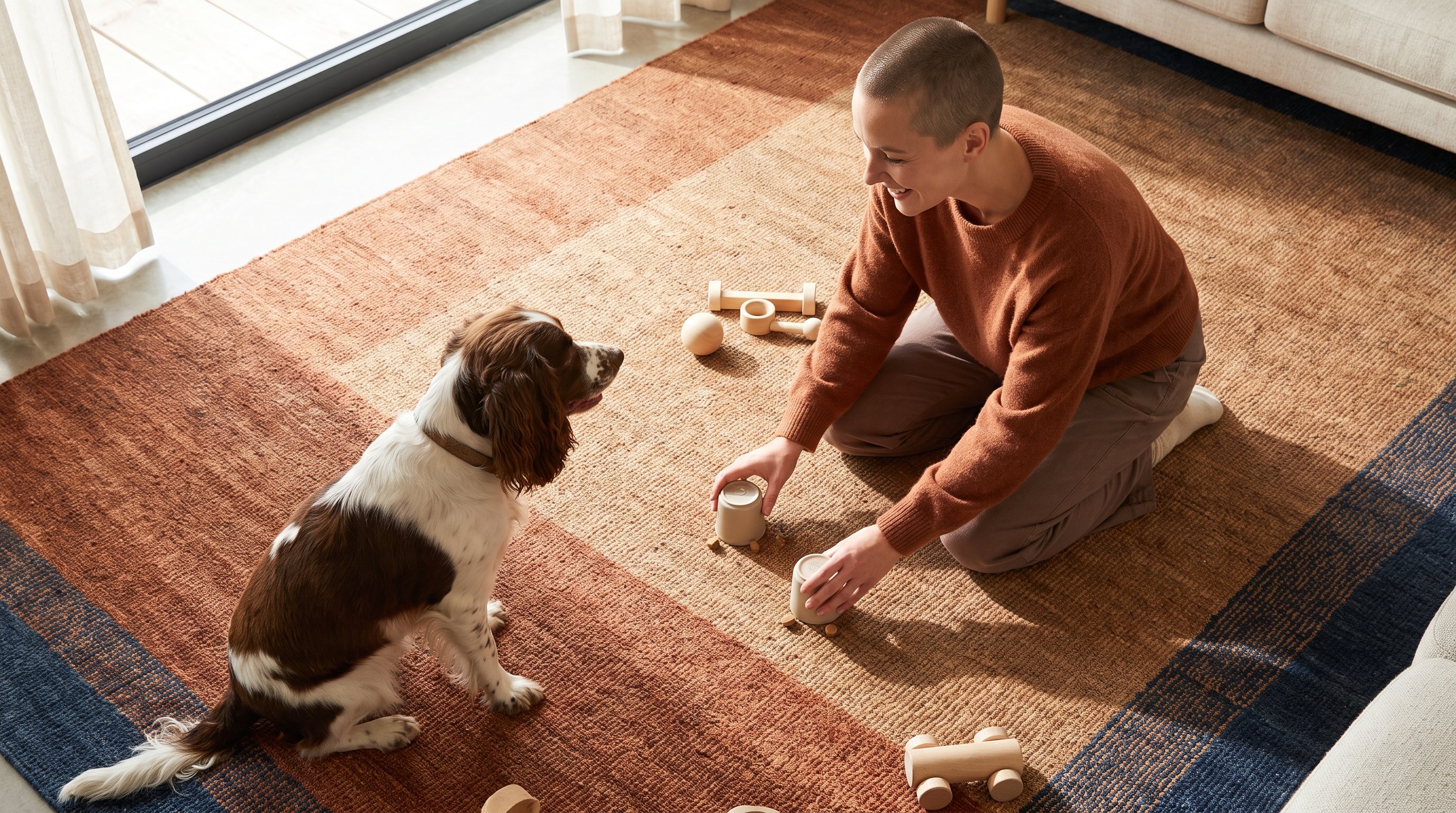
Physical tiredness and mental tiredness aren't the same thing, and a dog can be leg-tired but still mentally wound up. A few minutes of sniffing games or simple commands alongside the walk covers the gap.
Pushing a Puppy Like an Adult Dog
Long runs or repeated stairs put strain on joints that haven't finished developing. Shorter, more frequent sessions get a puppy the same total activity without the extra load.
Ignoring the Dog's Own Signals
Lagging, heavy panting or sudden slowing down are a dog telling you the session's run its course. Following the day's plan past that point does more harm than good.
Expecting Exercise Alone to Fix Every Behaviour Issue
Exercise helps with restlessness, but it doesn't replace training for things like jumping, barking or leash pulling. Both usually need to happen together.
Matching Daily Exercise to Raising Dog's Lesson Plans
Generic exercise advice treats every dog the same, but a working-breed adult and a small senior dog don't need the same minutes or the same kind of movement.
Raising Dog builds its training and play suggestions around your dog's actual age and needs, so the activity ideas line up with what that specific dog can handle rather than a generic average. The app tracks progress alongside the book, so you can see what's actually happening day to day instead of guessing.
Raise A Happy Dog
Train Your Dog Right
Making Exercise Part of Today's Routine
The simplest place to start is the walk that's already on the calendar today. Add five minutes of play or a short sniffing session alongside it and the habit's already begun.
From there, the four-week structure above does most of the work, and Raising Dog's age-based activity ideas can fill in the details as the dog's needs change over time.
FAQ
It depends on age and energy level, but most adult dogs do well with 30 to 120 minutes split across the day. Puppies and seniors generally need shorter, more frequent sessions rather than one long one.
Yes, especially puppies and older dogs, where too much impact or distance can strain developing or ageing joints. Watching for lagging, heavy panting or reluctance to continue is a better guide than sticking to a fixed number.
Short sessions spread through the day can add up to the same total as one long walk, so a ten-minute morning game and a short evening loop both count. Raising Dog's activity ideas are built around short windows like these rather than assuming a free afternoon.
Exercise helps burn off the energy behind a lot of restlessness, but it doesn't replace training for specific habits like jumping or barking. The two work best together, not as substitutes for each other.
Share this post