Resource Guarding: A Calm Plan To Ease It
By:Author:Raising Dog Editorial
Updated on:October 20, 2026
- The Myth of the Dog That Just Needs Discipline
- How Resource Guarding Actually Takes Hold
- What Changes How Fast Guarding Eases
- A Sample Week of Guarding Practice
- Working This Into a House With Kids or Other Pets
- When Guarding Behaviour Usually Starts to Soften
- Common Mistakes People Make With Resource Guarding
- Easing Resource Guarding With Raising Dog's Lesson Plans
- Giving Mealtime a Calmer Starting Point
Resource guarding is when a dog stiffens, growls or snaps to keep something it values - food, a toy, a bed, even a person. The fix isn't punishment and it isn't ignoring it either; it's changing what the dog expects to happen when you or another animal come near that resource.
Guarding is a learned association. The dog has decided that approach means loss, so the behaviour's job is to teach a new association instead - that approach can mean something good arrives, not that the valued thing leaves.
This article covers the myth of the quick fix, how the behaviour actually forms, what changes the outcome, a sample week of practice, common mistakes, and where this kind of training usually stalls.
The Myth of the Dog That Just Needs Discipline
A common idea is that resource guarding is about dominance, and that a firm hand or taking the item away by force will sort it out. That approach usually makes guarding worse, because it confirms the dog's fear - someone did take the thing away.
Guarding is a dog protecting something it's anxious about losing, not a dog trying to run the household. Forcing a confrontation over a bowl or a toy teaches the dog to react faster and harder next time, not to trust the process.
The honest answer is slower and less dramatic: you change the dog's expectation gradually, at a distance it can handle, so the anxious response has less reason to fire at all.
How Resource Guarding Actually Takes Hold
Two things usually combine to build this behaviour: a dog's natural instinct to protect something useful, and a history where approach genuinely meant loss.
The Instinct Behind the Behaviour
Guarding a valuable item isn't unusual or abnormal on its own - it's a basic survival habit that shows up in many animals, including dogs that have never had anything taken from them. What turns the instinct into a problem is how often and how intensely it gets triggered.
The Learning History That Builds It Up
If a dog has had food bowls pulled away, toys snatched mid-chew, or been crowded while eating, it learns that people approaching a resource is a warning sign. Each repetition of that pattern adds weight to the guarding response, which is why consistent, calm counter-examples are what start to unwind it.
What Changes How Fast Guarding Eases
Not every dog responds at the same pace, but three factors consistently matter more than the rest.
The Three Biggest Factors
- Distance at the start - working further from the trigger than feels necessary means the dog can stay calm enough to actually learn.
- Consistency across the household - if one person follows the plan and another still reaches for the bowl, the dog gets mixed signals and the old pattern holds on longer.
- What approach predicts - if a hand near the resource reliably means something good gets added rather than something being taken, the guarding response has less reason to switch on.
A Sample Week of Guarding Practice
Here's a realistic layout for one week of practice around a food bowl, the most common trigger.
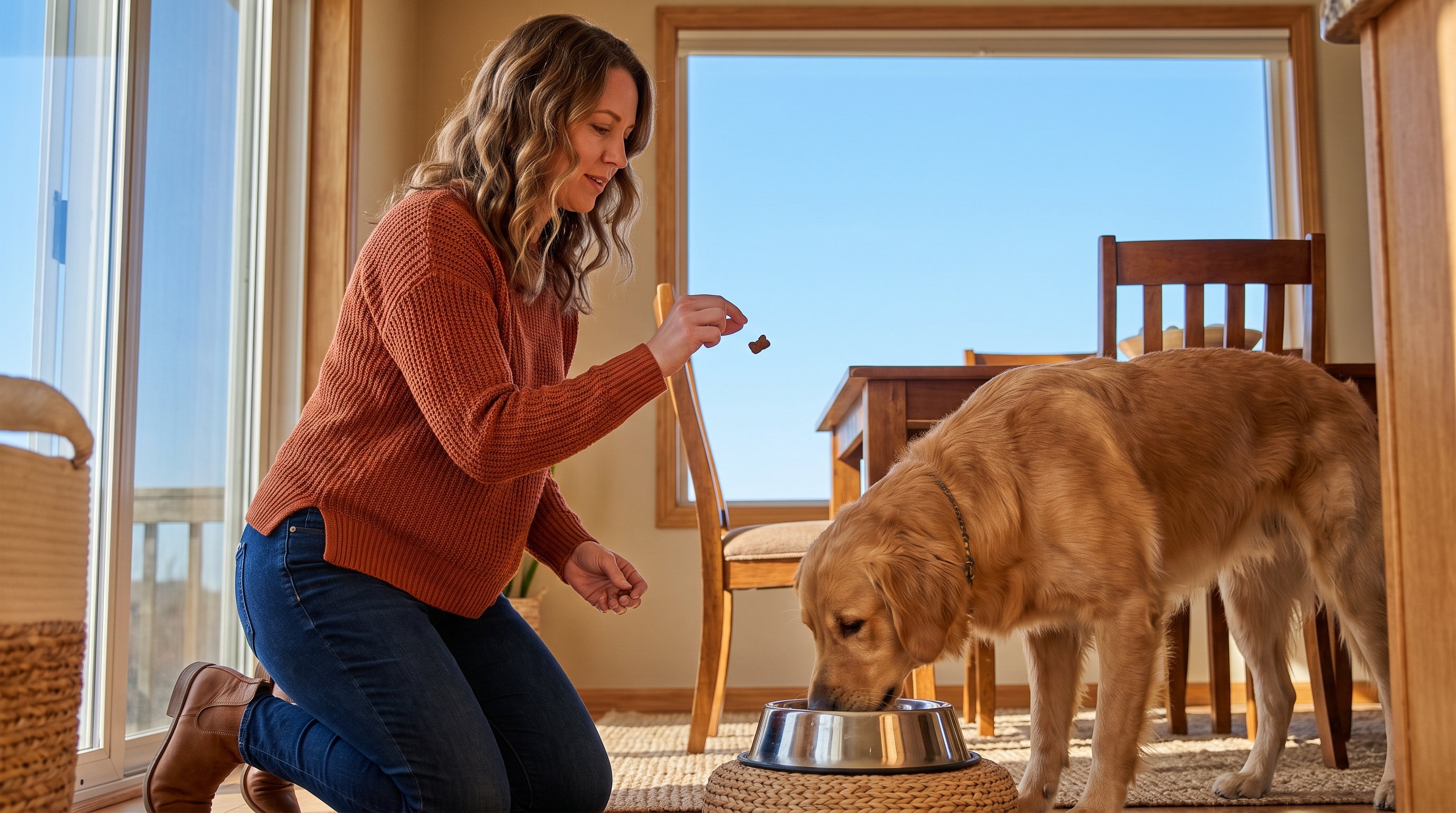
One Week, Short Daily Sessions
- Days 1 to 2 - stand well back from the bowl while the dog eats, toss an extra piece of food toward the bowl from a distance, then walk away.
- Days 3 to 4 - take one small step closer before tossing the extra food, still leaving right after.
- Days 5 to 6 - practise the same pattern with a second, lower-value item like a chew, at whatever distance keeps the dog relaxed.
- Day 7 - repeat day one's distance to confirm the dog is still calm, rather than pushing closer just because the week is ending.
Working This Into a House With Kids or Other Pets
A household with children or multiple animals needs the resource managed, not just the dog trained - that means picking up high-value chews when they're not being worked on and feeding dogs separately until guarding has clearly eased.
Everyone in the home needs to follow the same rule about not approaching the dog's bowl or toy during meals, because one exception can undo several days of calm repetition.
Lessons built around a dog's age and history, like the tailored plans inside Raising Dog, can help a household agree on one consistent approach instead of everyone improvising their own version.
When Guarding Behaviour Usually Starts to Soften
There's no fixed point where this resolves, and that's worth saying plainly rather than promising a date.
What tends to happen first is smaller signs easing - less stiffening, a quicker return to eating after a person walks past - well before the dog looks fully relaxed with someone standing right over the bowl.
Progress is rarely a straight line; a stressful day or a new object worth guarding can bring a flash of the old response back, and that's a normal part of the process, not a sign the practice has failed.
Common Mistakes People Make With Resource Guarding
Testing the Dog by Reaching for the Bowl.
Checking whether the dog 'still does it' by deliberately reaching in undoes the pattern you're building - stick to the planned distance instead of probing for a reaction.
Moving Too Close, Too Soon.
Progress that looks fast in the first few days often means the dog is still under threshold, not cured - if the dog freezes or eats faster, the last step was too big.
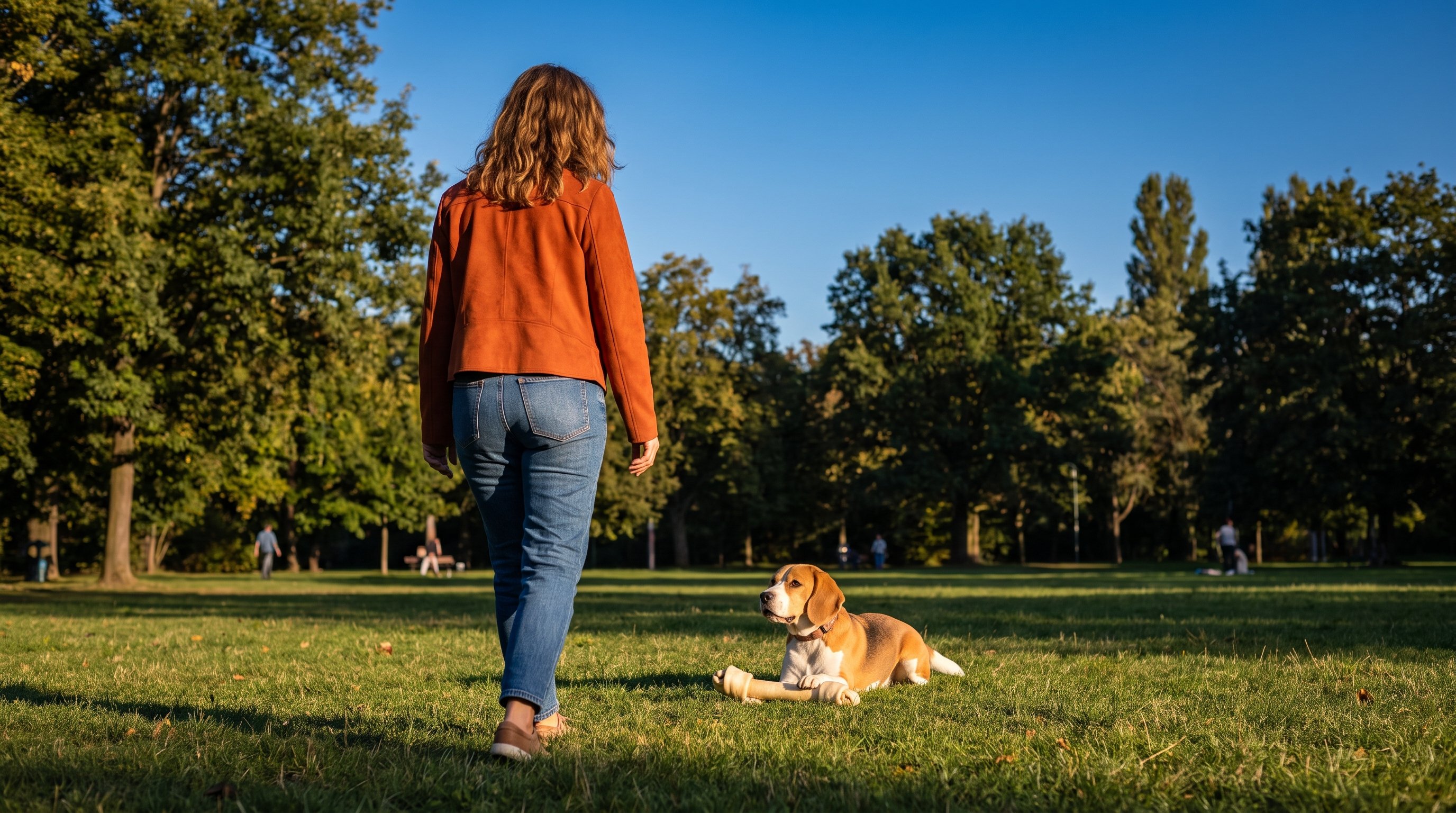
Only One Person Practising.
If the rest of the household keeps crowding the bowl or snatching toys, the dog is getting two contradictory lessons at once - get everyone on the same short routine.
Punishing the Growl.
A growl is useful information, not the problem itself - suppressing it can remove the warning without touching the underlying anxiety, which is a less safe outcome, not a better one.
Stopping As Soon As Things Look Calm.
Guarding can resurface with a new object or a stressful week, so keep the occasional easy rep going rather than dropping practice the moment it looks solved.
Easing Resource Guarding With Raising Dog's Lesson Plans
Generic advice about guarding tends to assume one type of dog, one type of trigger and one type of household, which is exactly where it falls apart in practice.
Raising Dog builds lessons around your dog's age and specific behaviour challenges, so the distance, pace and triggers you work with actually match the dog in front of you rather than a generic example. The companion app tracks sessions over time, so you can see whether the dog's response at a given distance is actually easing week to week instead of guessing from memory.
Raise A Happy Dog
Train Your Dog Right
Giving Mealtime a Calmer Starting Point
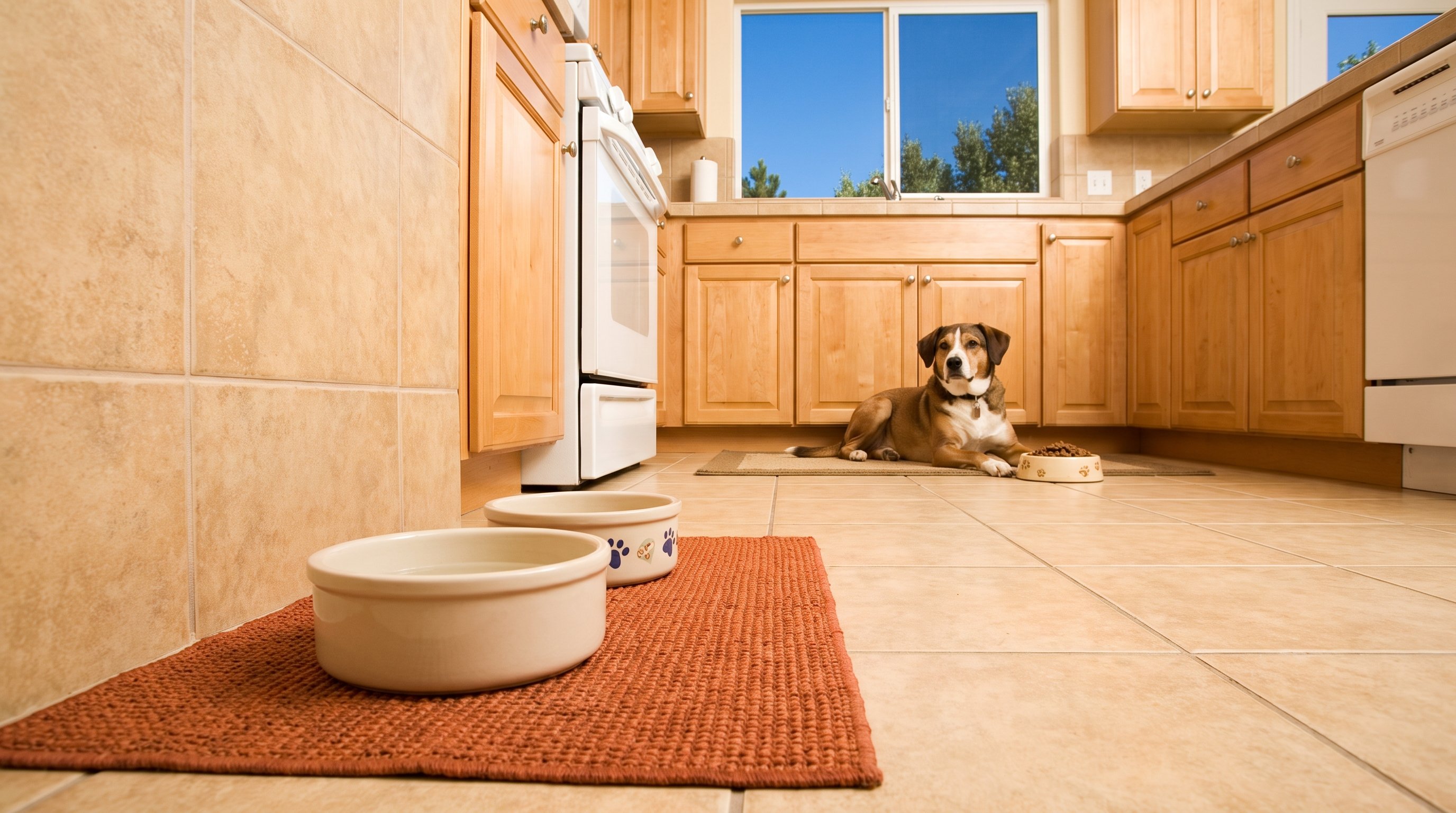
Start small tonight: feed the dog at a distance that feels almost too easy, toss in something extra, and walk away without hovering.
That one calm repetition is the whole method, just repeated patiently, and Raising Dog can help keep the pace and distance matched to your own dog as the weeks go on.
FAQ
Many dogs show a real, lasting improvement in how relaxed they are around their resources once calm practice becomes routine. It's rarely instant, and most dogs do better with ongoing, light maintenance rather than treating it as a one-time fix.
Avoidance can reduce risk short-term, but it doesn't change the underlying anxiety, so the guarding resurfaces the moment the trigger shows up unplanned. Gradual, structured practice at a safe distance addresses the cause instead of just managing around it.
That's useful information about where the current threshold sits, so back up to a distance where the dog stays relaxed and work from there instead. Raising Dog's tailored lessons can help you find that starting distance for your dog's specific history rather than guessing.
Early sessions often show quick, encouraging change because the dog is responding to novelty as much as the method itself. The real work happens in the slower weeks after, which is usually when people quit even though the dog is still adjusting underneath the surface.
Share this post